Key takeaways
- Experienced spotters take high ground above the coast rather than going out with the boat.
- Three metres above the water sees about six kilometres; three hundred metres sees roughly sixty.
- The boat is given a destination rather than a direction, which is a different operation from searching at sea.
- Guests record sightings within minutes of departure and multiple species inside a single three-hour trip.
The problem every whale boat has
Somebody standing on a boat has their eye roughly three metres above the water. That puts their horizon about six kilometres away, and everything beyond it is invisible no matter how good their eyes or their binoculars are. The curvature of the earth is not negotiable.
So a conventional whale watching trip is a search conducted from inside a very small circle that moves slowly. The crew know the area, they know where animals tend to be, and they steam about looking. On a good day that works. On a bad one the animals are four kilometres beyond the horizon, surfacing regularly, and nobody aboard will ever know they were there.
What height actually buys
Distance to the horizon grows with the square root of your height above the sea, and Madeira is an island of very steep ground. A spotter who climbs to three hundred metres, which on this coast is not a hike but a drive, can see roughly sixty kilometres in clear conditions.
The area covered grows faster still, because area goes as the square of the radius. Ten times the distance is a hundred times the sea surface. That is the entire argument for the arrangement, and it is why a person on a clifftop with binoculars is a more effective piece of whale-finding equipment than the boat they are helping.
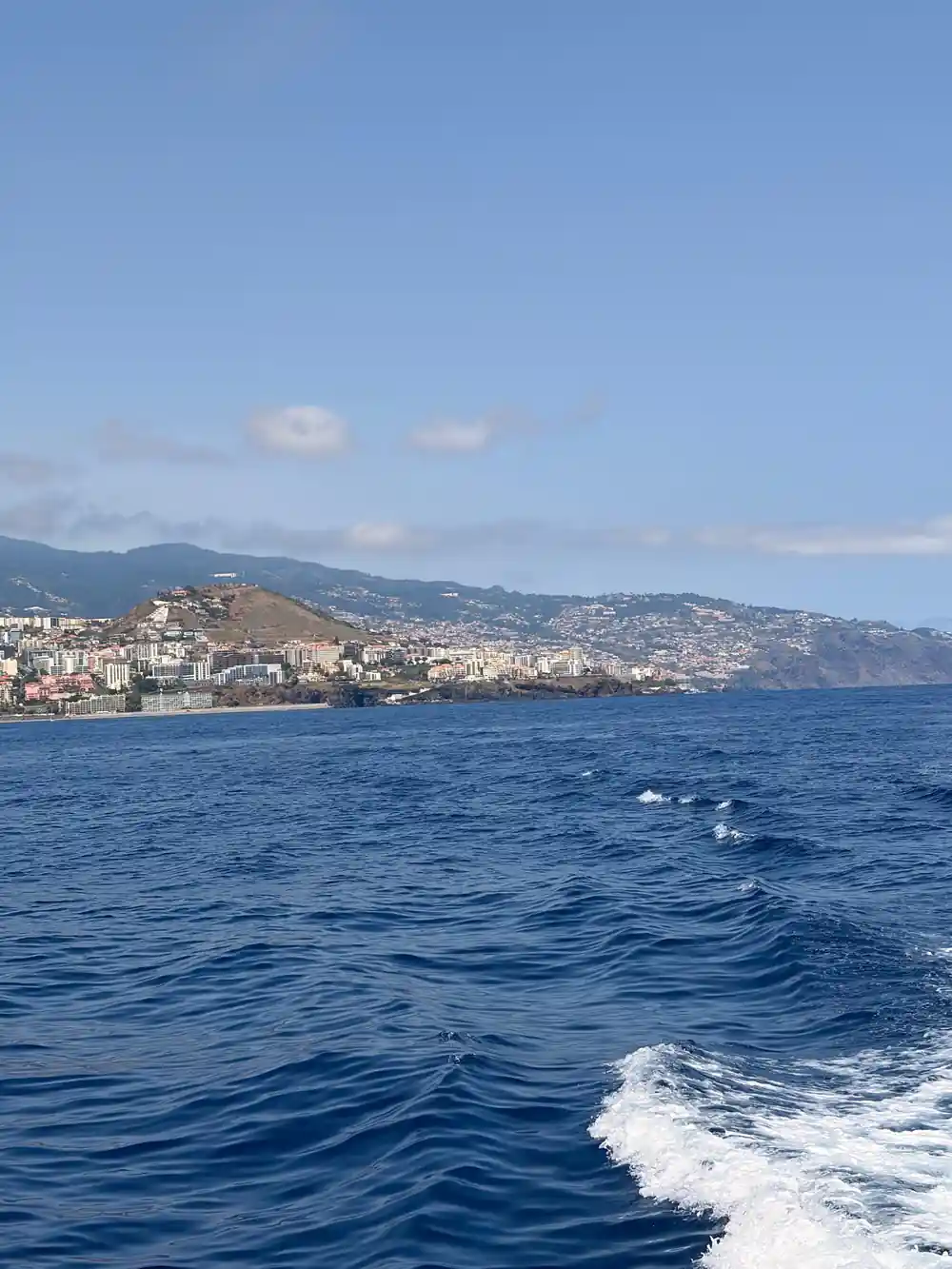
The Madeiran coast, where spotters take high ground above the sea
What a spotter is looking for
Not an animal. At those distances nobody is picking out a dolphin. What is visible is disturbance: a patch of white water where a group is surfacing together, the vertical puff of a whale's blow hanging in the air for a second or two, a change in the texture of the surface, birds concentrating over a feeding shoal.
Seabirds are one of the most useful indicators of all, because a flock working a patch of water usually means fish being driven upward, and fish being driven upward usually means something underneath doing the driving. An experienced spotter reads the sea for consequences rather than for animals.
How the information reaches the boat
By radio, in practical terms, and the exchange is a position rather than a description. The skipper is given somewhere to be, sets a course and covers the distance under power, and the spotter keeps watching to update as the group moves.
That changes the rhythm of the trip in a way passengers notice. Instead of a long meandering search, you get a purposeful run followed by a slow careful approach. Several reviews mention seeing animals very quickly after leaving, which is exactly what you would expect when the destination is known before the boat has cleared the harbour.
60km
Roughly how far a spotter at three hundred metres can see, against about six kilometres from the deck of a boat.
Why it is also better for the animals
This is the part that is easy to miss and matters most. A boat that does not know where to go covers a lot of water at speed, and engine noise is the main way vessels disturb cetaceans. Sound travels extraordinarily well underwater, and a fleet of boats criss-crossing a feeding area is a genuinely disruptive presence.
A boat with a destination spends far less time steaming about. It goes to a place, approaches carefully, holds position and leaves. That is less noise across less water, which is why a spotting arrangement fits so naturally with an operator describing itself as ecological. One guest specifically records the crew being respectful of the animals.
Is this common
It is more common in places with the right geography than anywhere else, and Madeira has that geography in abundance. An island of steep volcanic ground with deep water immediately offshore gives you high vantage points overlooking exactly the sea the animals use.
The practice has older roots than tourism. Shore-based lookouts were how whaling operations across the Atlantic islands found their quarry, from the Azores to Madeira itself, with watchers on clifftops signalling boats below. The technology has changed and the purpose has reversed entirely, but the geometry that made it work has not.
What it does not guarantee
Anything. These are wild animals in open ocean and no arrangement of people, boats and radios changes that. A spotter can only find what is there to be found, and there are days when the sea is empty or too rough to read.
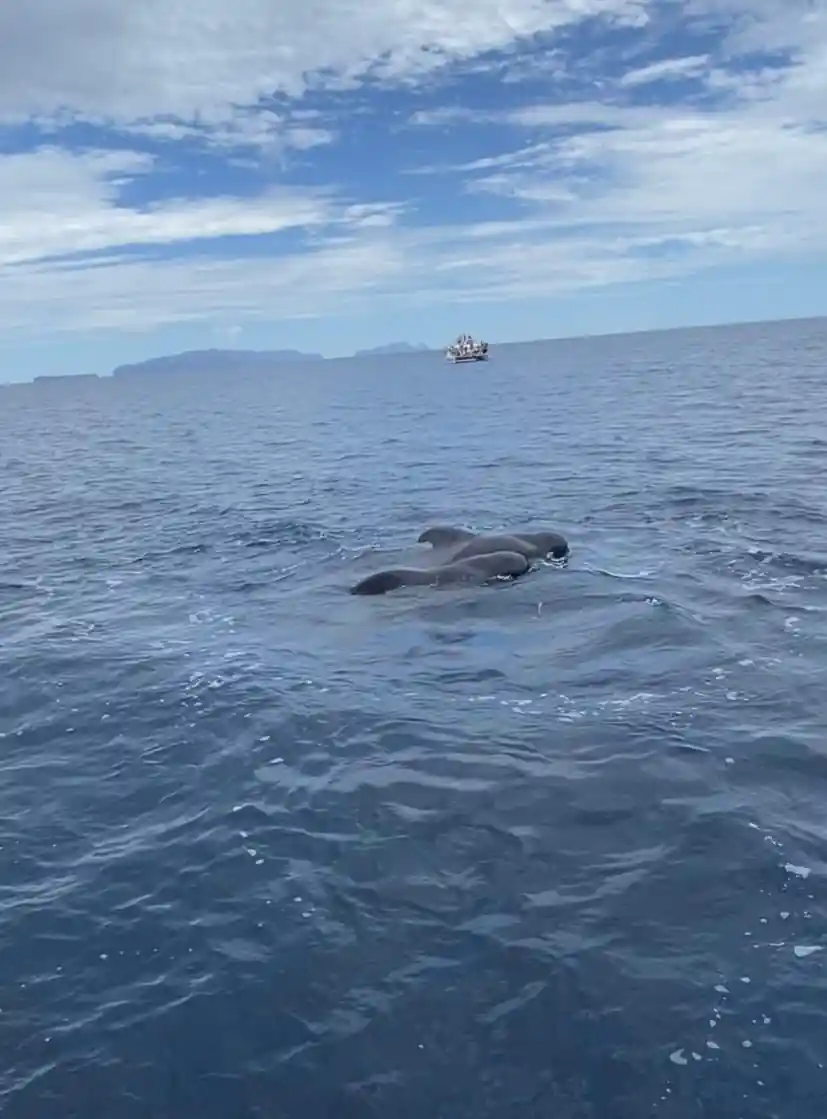
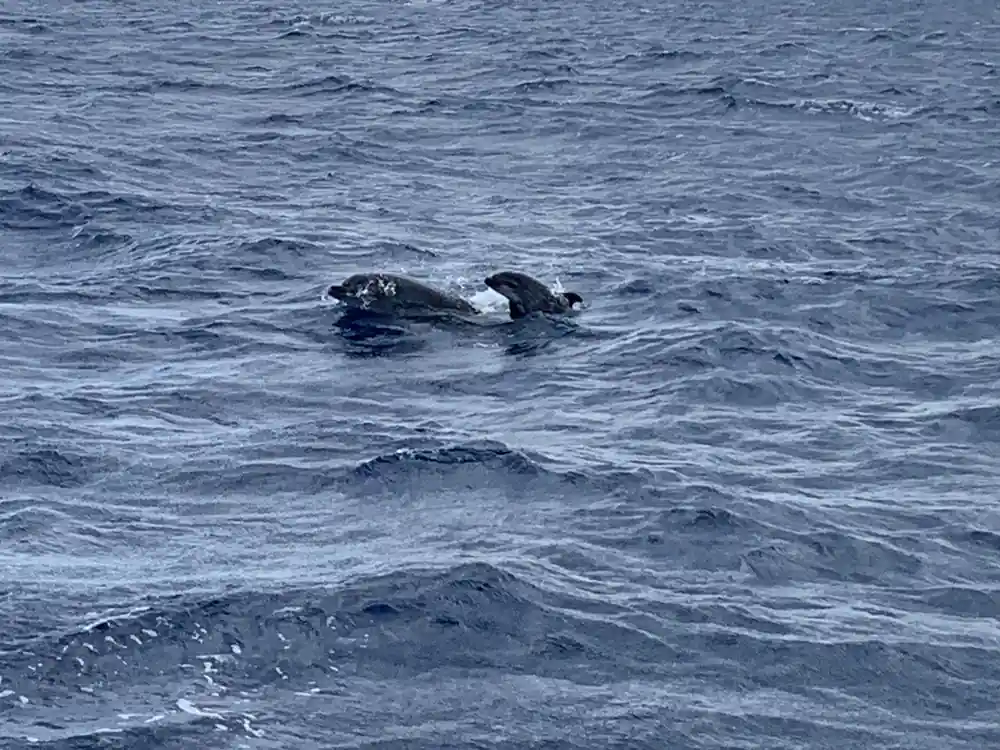
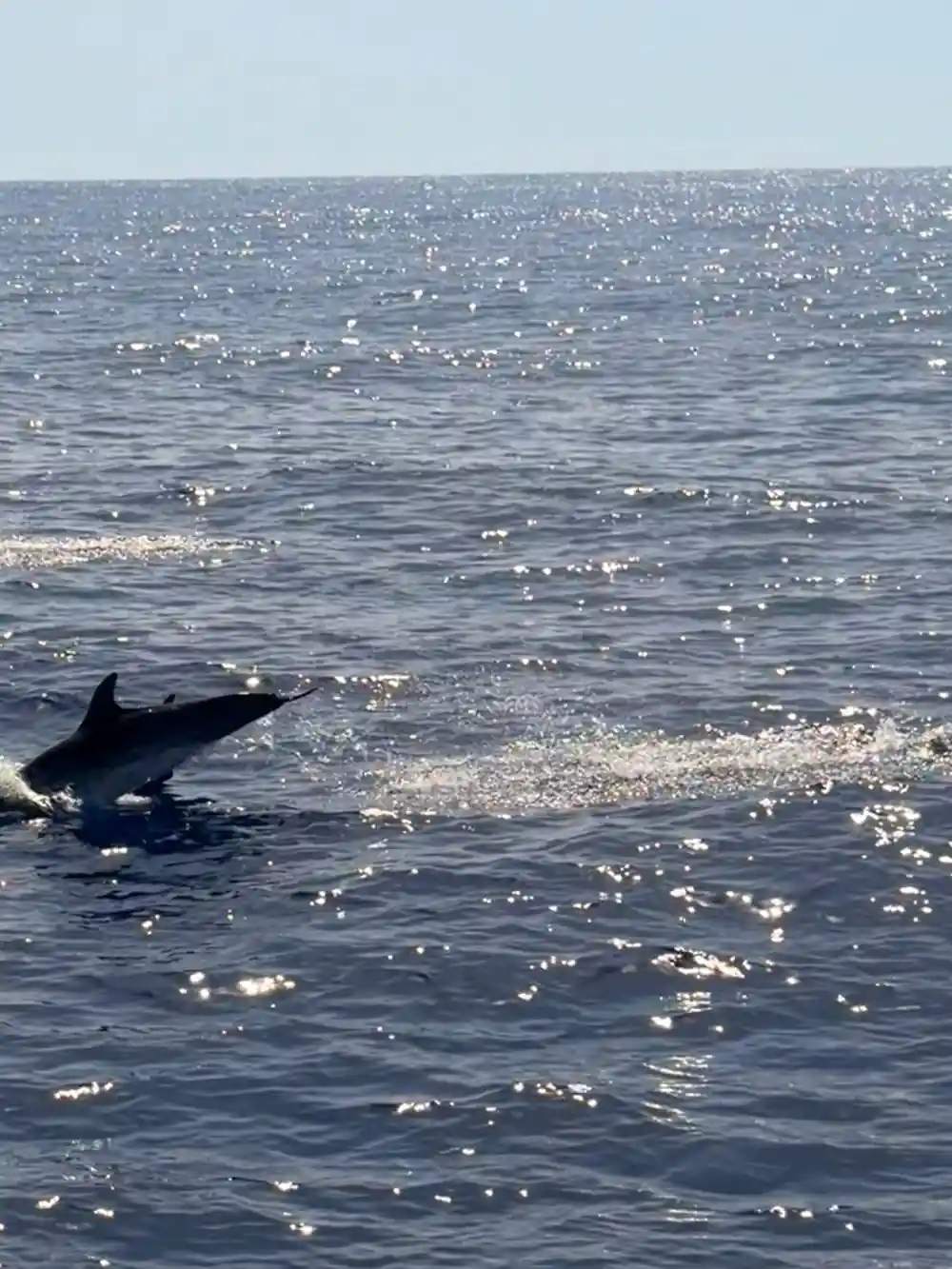
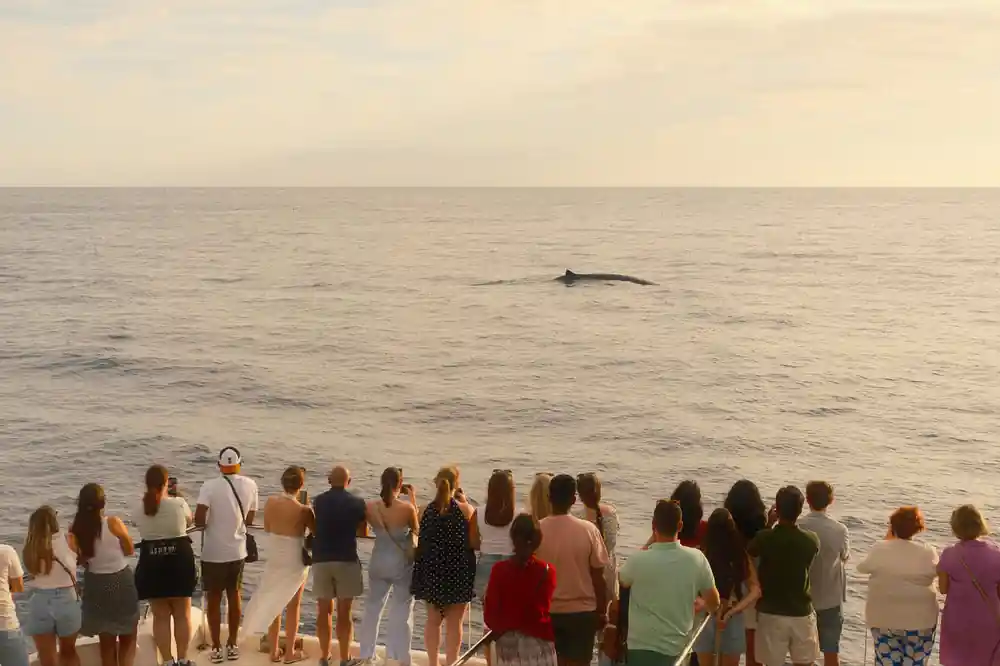
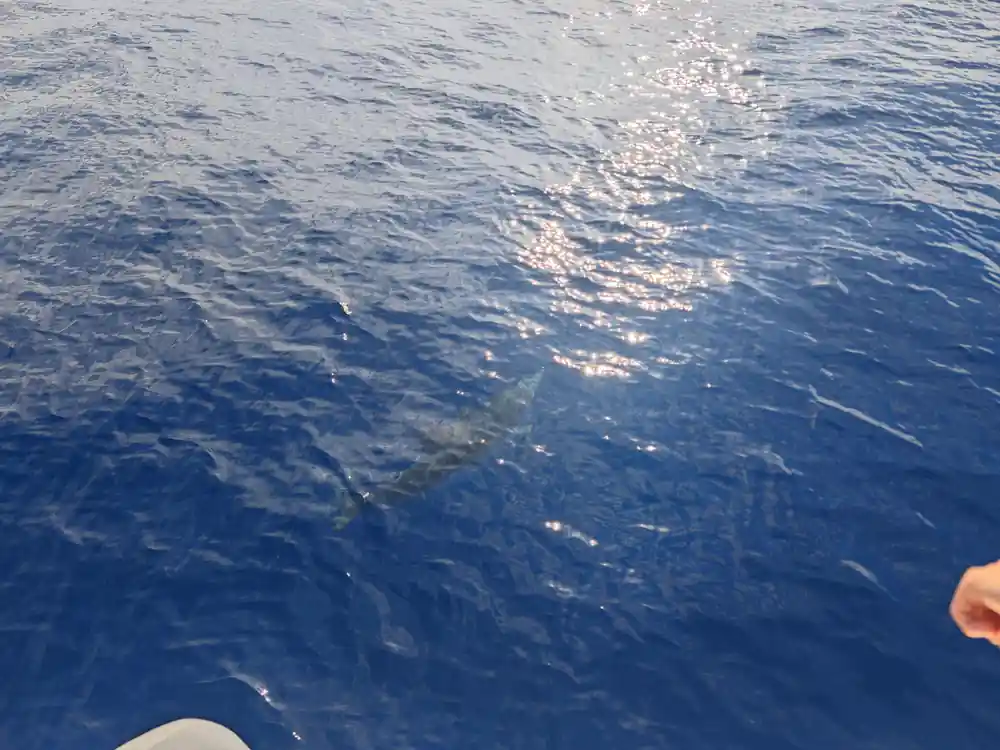
What the system does is shift the odds substantially, and the reviews are the evidence rather than the marketing. Guests describe three dolphins, five sperm whales and a turtle in one trip; bottlenose and spotted dolphins together; two Bryde's whales feeding. That is a strong record, and it is what a hundredfold increase in search area looks like from a passenger seat.
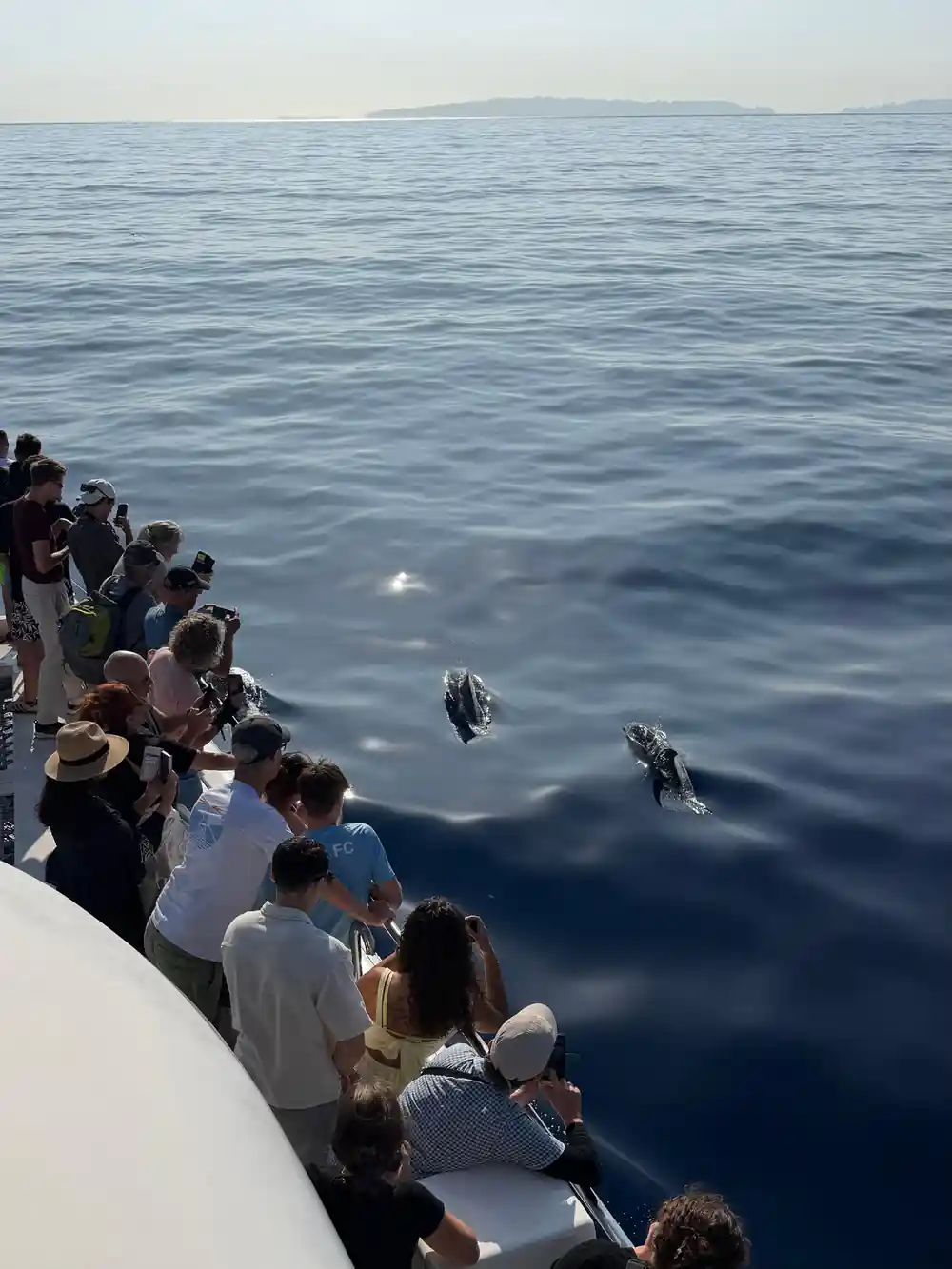
It is worth adding what the arrangement does for the quality of an encounter rather than just the odds of one. A boat that arrives at a known position is able to come in slowly, because it is not still searching. That means the animals are met by a vessel already at low speed rather than one that has just spotted them and is closing hard, which is the difference between an approach and an interception. Guests describe holding position and letting the dolphins decide, which is exactly what you would hope to read.