Key takeaways
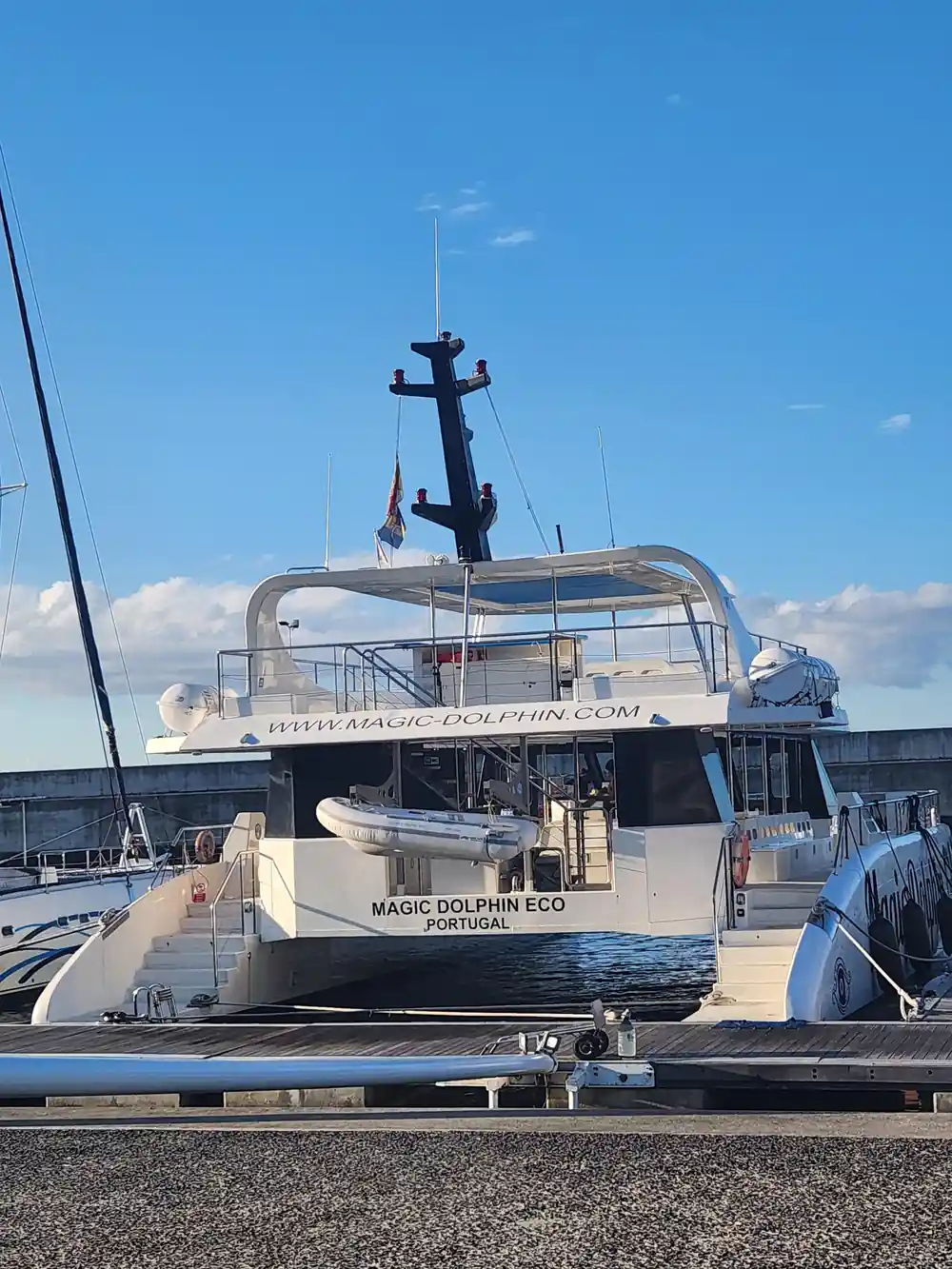
- Designed for wildlife watching rather than adapted from something else, which shows in how the deck space is arranged.
- Unlimited access to every area: upper deck, nets, indoor and outdoor seating and the bars, with no restricted zones.
- The trampoline area at the bow puts you directly above the water, which is where dolphins ride.
- Guests repeatedly mention not being crammed in, which matters when animals can surface on either side.
Why a catamaran for wildlife
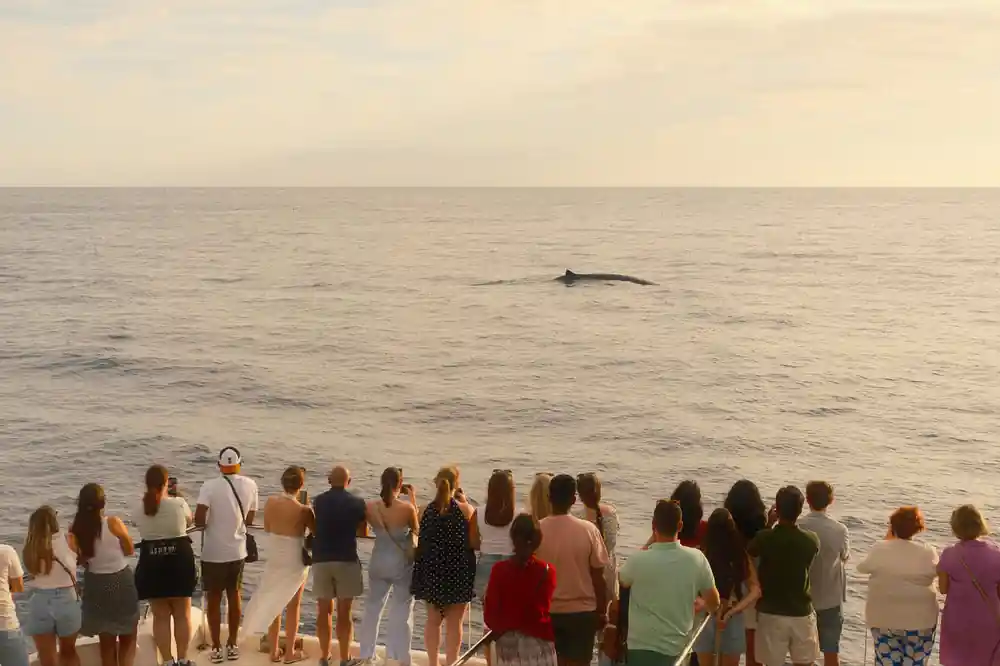
Two hulls set wide apart do two useful things at once. They resist rolling, which keeps the deck level enough to stand and watch and photograph from without bracing, and they provide a great deal more usable deck area than a single hull of the same length.
For a wildlife trip both matter. A stable platform is the difference between watching an animal and hanging on, and deck area is what lets forty people all reach a rail when something surfaces to port. A monohull of comparable size would give you a fraction of the space and considerably more motion.
Built for the job rather than adapted
The operator describes the vessel as custom-built, and the layout bears that out. There is an upper deck for the long view, a nets area between the bows, indoor seating for shade and shelter, outdoor seating for everyone else, and bars serving through the trip.
The distinction from an adapted boat is real. A converted ferry or fishing vessel gives you a passenger space designed for getting somewhere, with viewing arranged around it. A boat built for watching arranges everything around sightlines, which is why so much of this one is open deck at different heights.
The nets
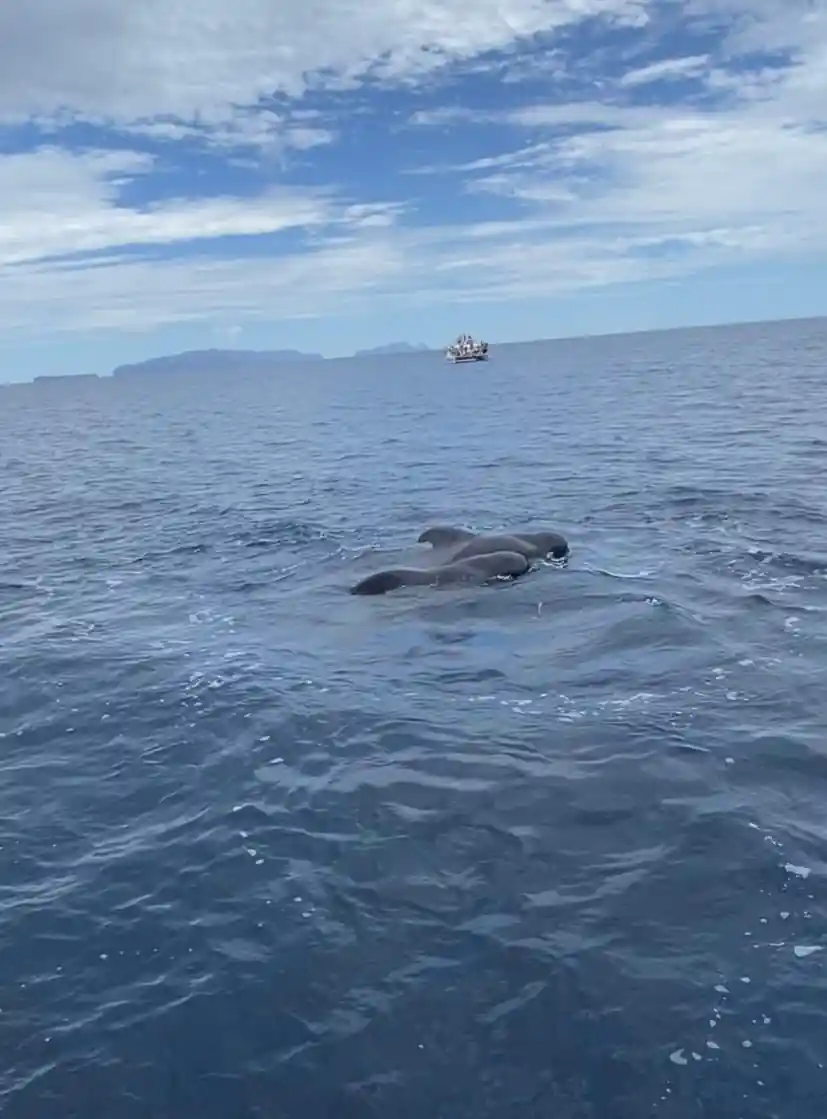
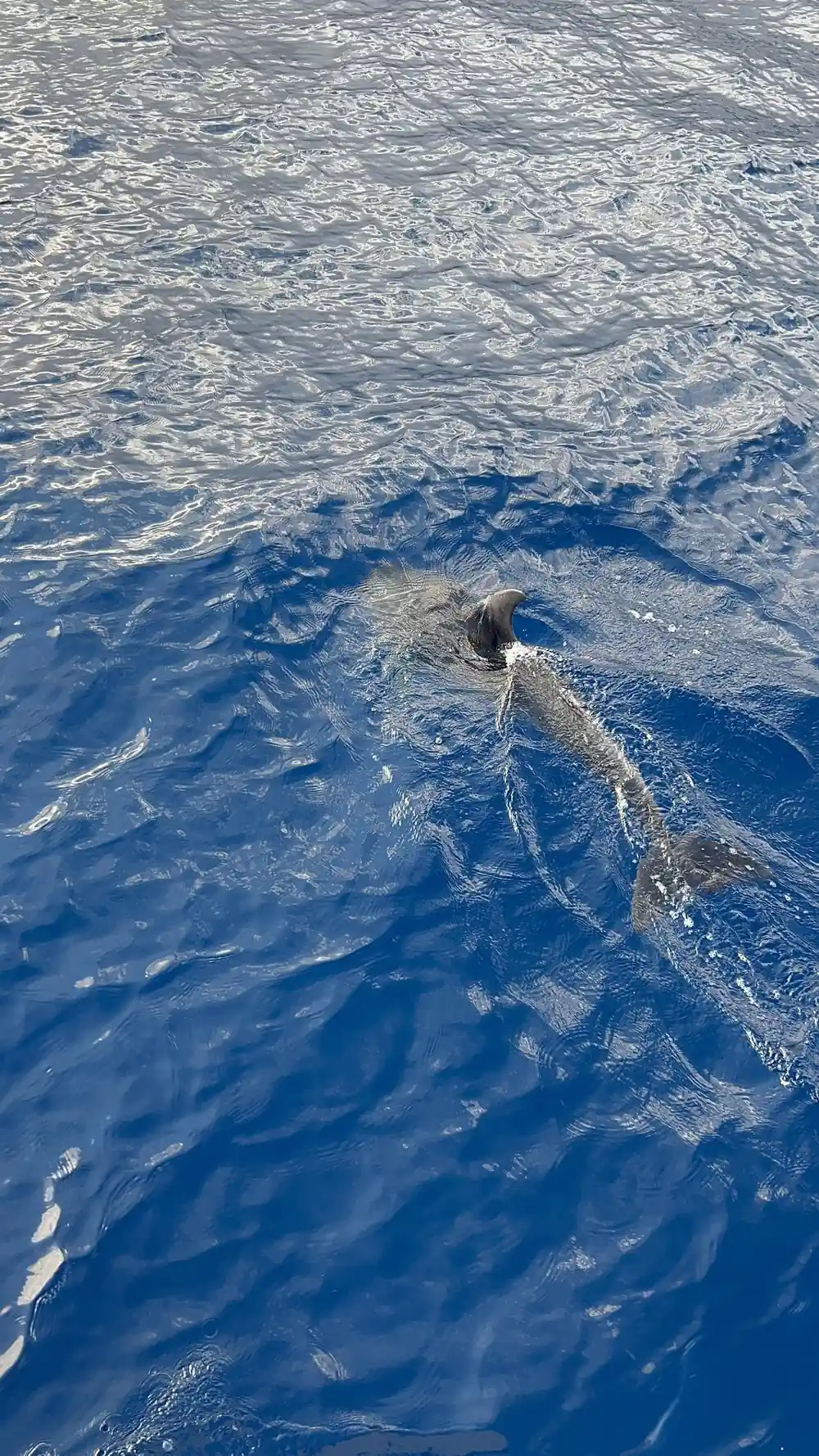
The trampoline area stretched between the two bows is the single best place on any catamaran and it is where most people end up. You lie or sit on mesh with the sea passing directly beneath you, a metre or so down, and when dolphins come to ride the pressure wave off the bows they are right below your face.
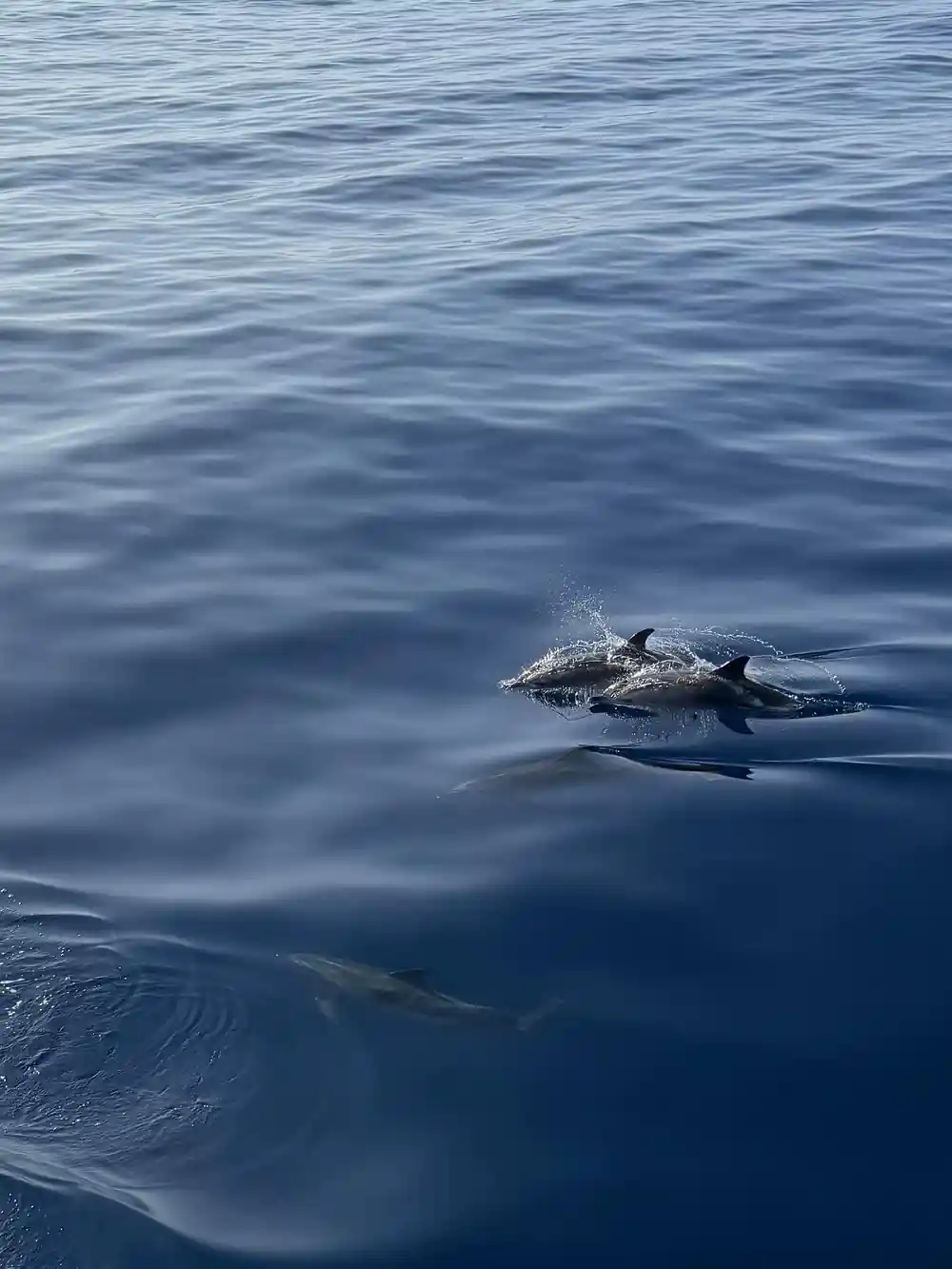
That is not a coincidence of design. Bow-riding is a real behaviour, dolphins do it deliberately because a moving hull generates a wave they can surf without effort, and a catamaran generates two of them. The nets put you exactly where the animals choose to be.
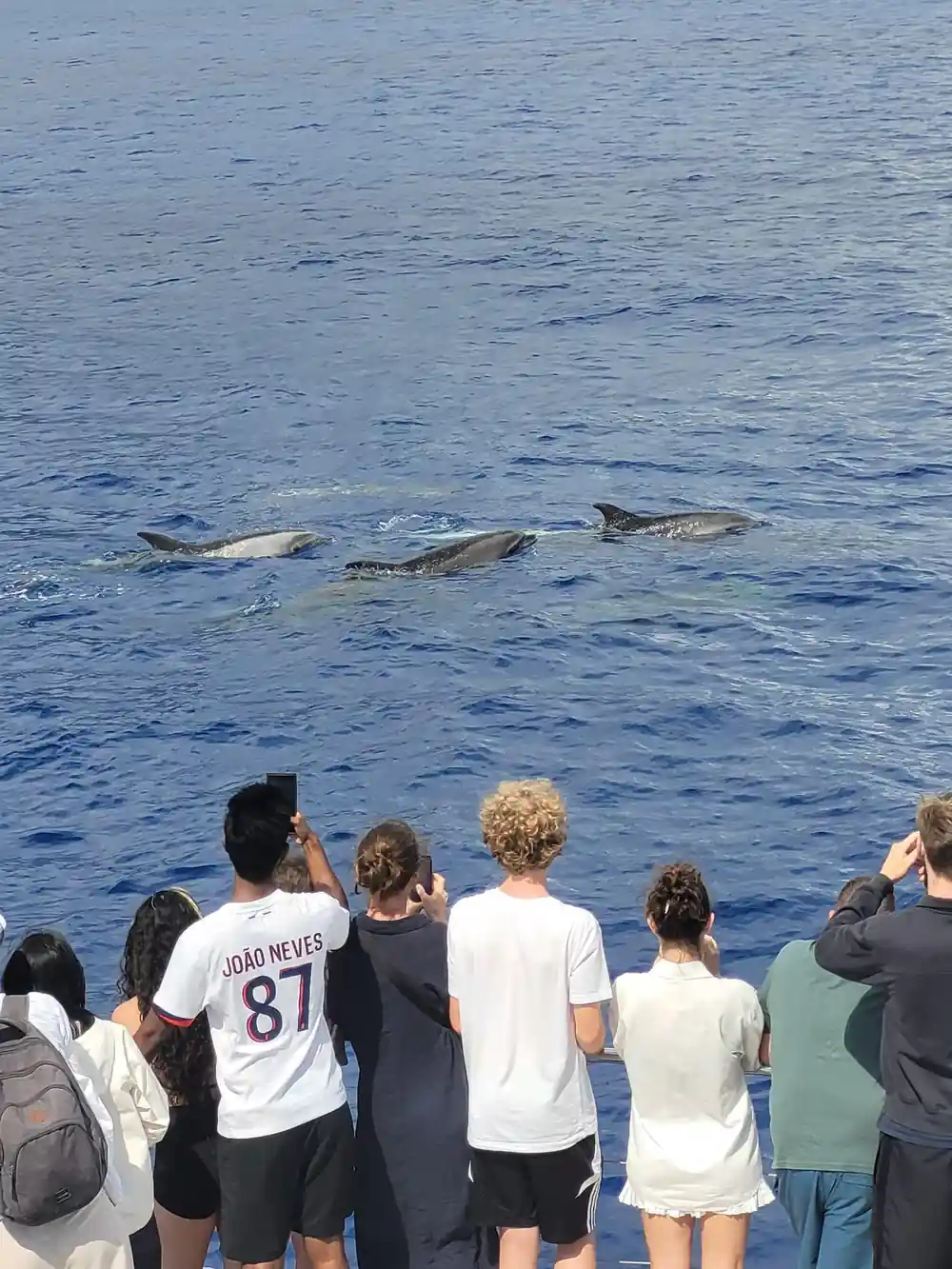
The Magic Dolphin eco-catamaran off the Madeiran coast
Unlimited access, and why it is stated
The operator makes a point of saying you have full use of the vessel and are free to move around and make the most of every viewpoint. That reads like boilerplate until you have been on a boat where the upper deck is crew-only or the bow is roped off.
On a wildlife trip that restriction ruins the day, because animals do not appear on the side you happen to be sitting on. Guests here mention the freedom to move about repeatedly, and one specifically notes using the nets, the upper deck and the shade in turn across three hours. That is the boat working as intended.
Shade, sun and the Madeiran climate
Madeira is mild rather than punishing, but three hours on open water in July with reflection off the surface is more sun than most visitors plan for. The indoor seating and the shaded areas are the reason nobody has to make a choice between the trip and their skin.
The practical pattern is the same one that works on any boat with options: outside when something is happening, inside to cool down, back out when the shout goes up. Because access is unrestricted, nothing stands in the way of that rotation and everybody does it.
The bars
There are bars on board and they are listed among the inclusions, which is a slightly confusing pairing with food and drinks appearing on the exclusion list. The resolution is simple: the bars are part of the vessel and available to you, but food and drinks are not part of what the ticket covers.
In practice that is the arrangement most people want on a three-hour trip. Nobody needs a meal, everybody wants something to drink, and a bar that is open the whole time beats a single welcome drink handed over at the gangway. Bring a card.
What ecological means for the hull
A vessel built for cetacean watching is designed around noise as much as around comfort. Underwater sound is the main way boats disturb whales and dolphins, and a hull that can approach slowly and hold position quietly is doing the single most important thing an operator can do.
Combined with the shore spotters, who cut the amount of searching the boat has to do at all, that is a coherent approach rather than a label. Less time under power across less water, and a quiet careful approach when the animals are found. Guests noticing that the crew were respectful of the animals is the visible end of a set of decisions made when the boat was designed.
There is a broader point here about what the word is usually worth. Ecological appears on a great many tour listings and means very little on most of them, so it is reasonable to be sceptical. What makes it checkable in this case is that the claims are structural rather than aspirational: a hull built to run quietly, spotters that reduce how far the boat has to travel, and crew described by guests as careful around the animals. Those are things you can observe on the day rather than statements you have to take on trust.