★★★★★
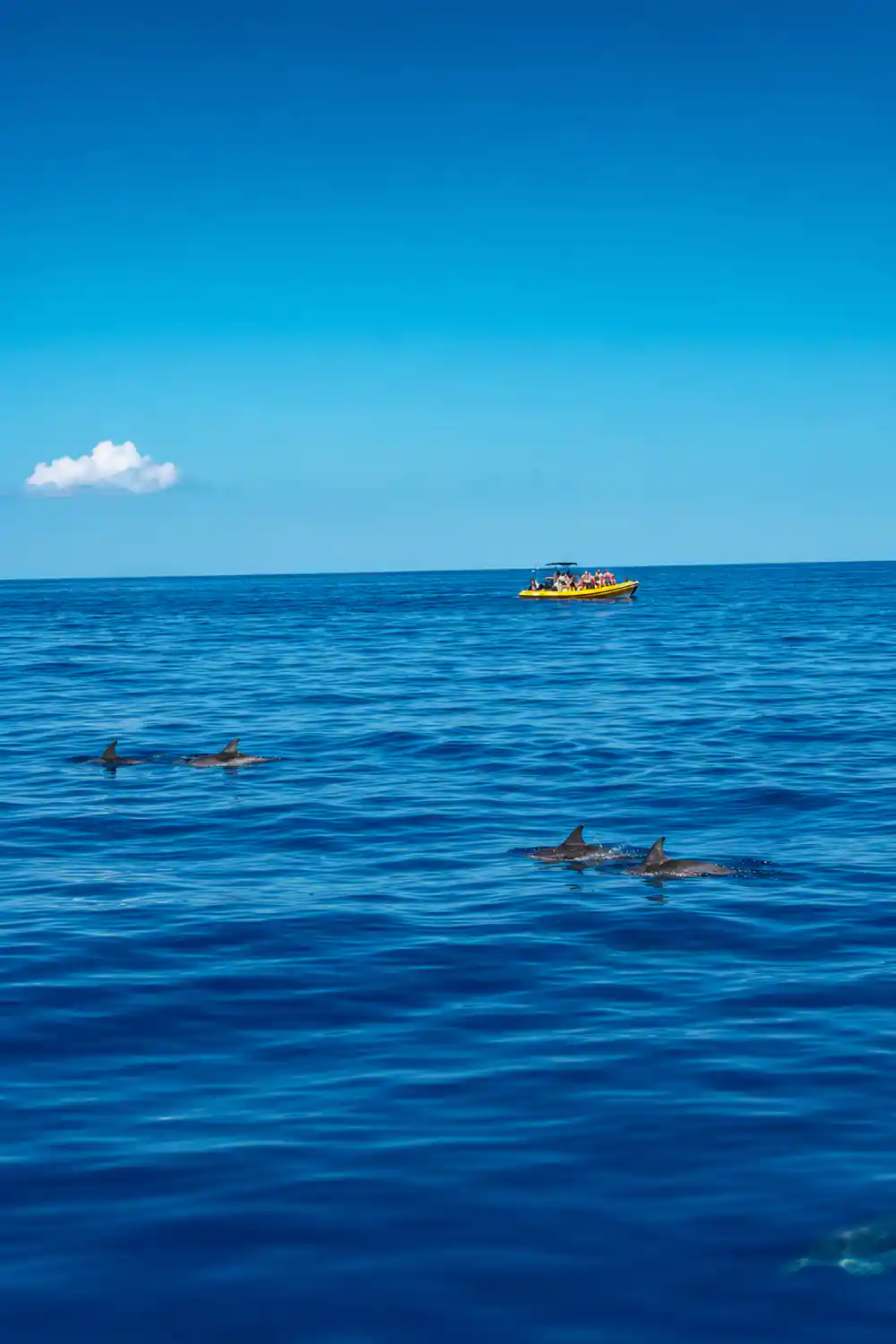
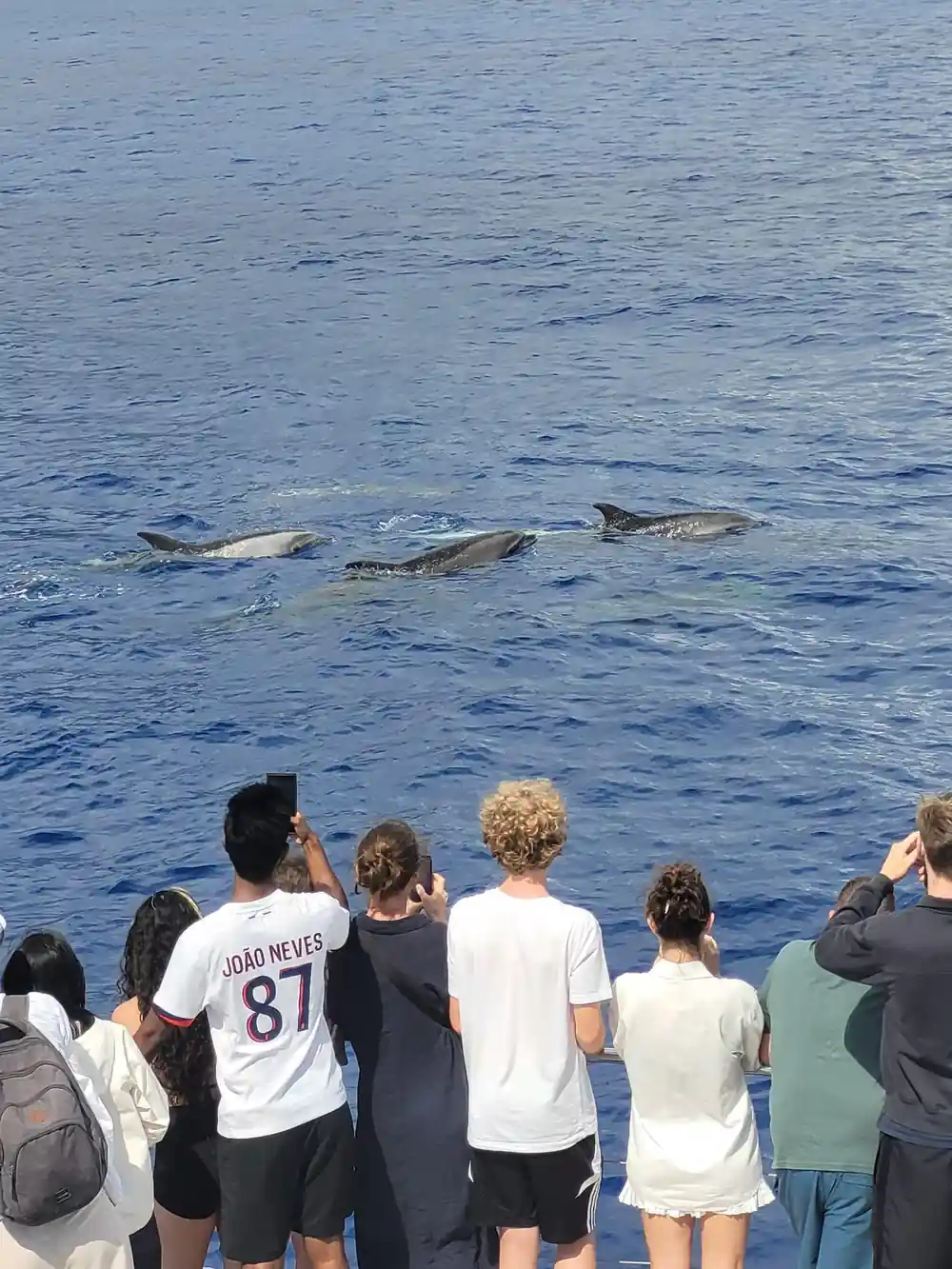
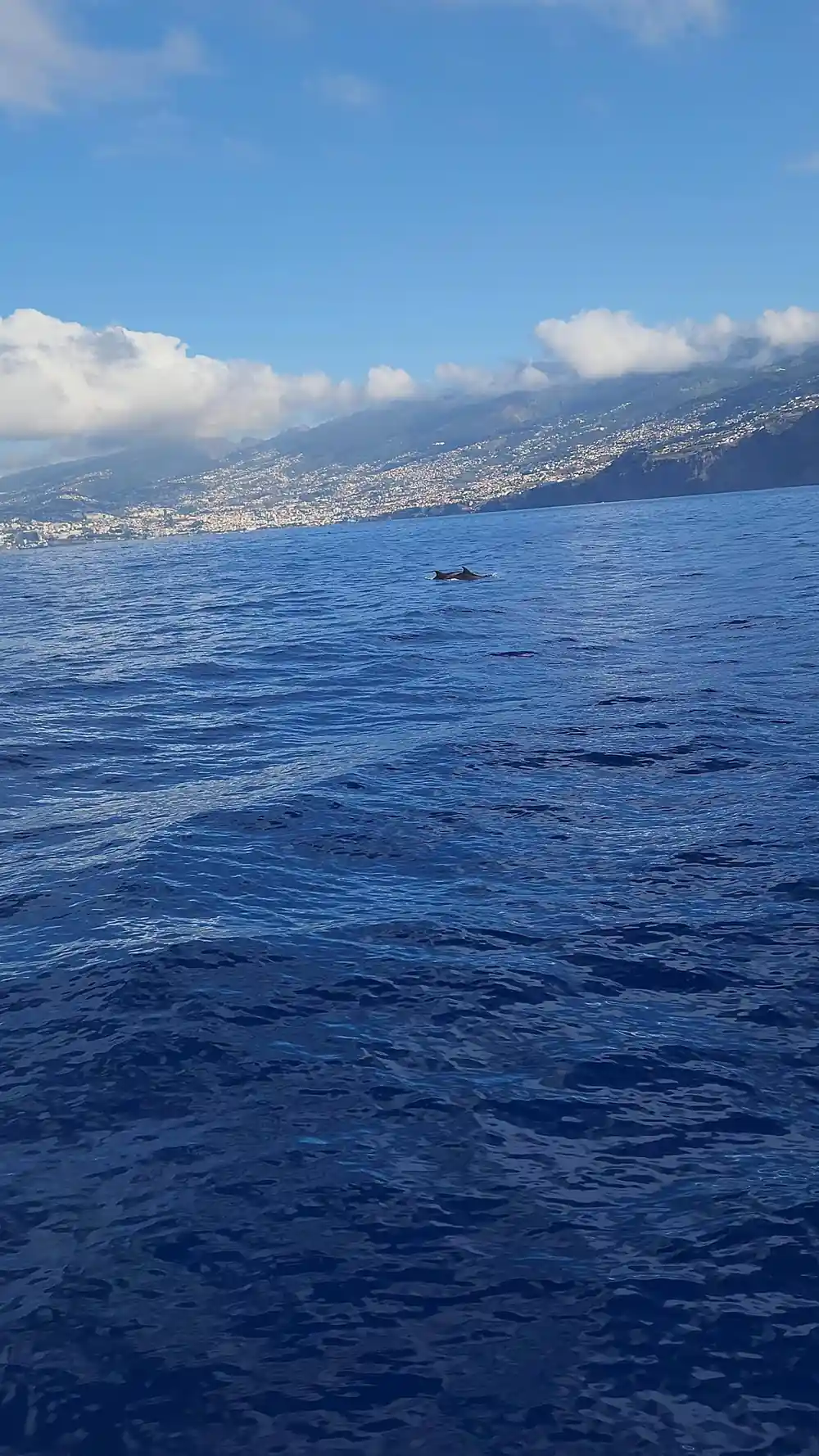
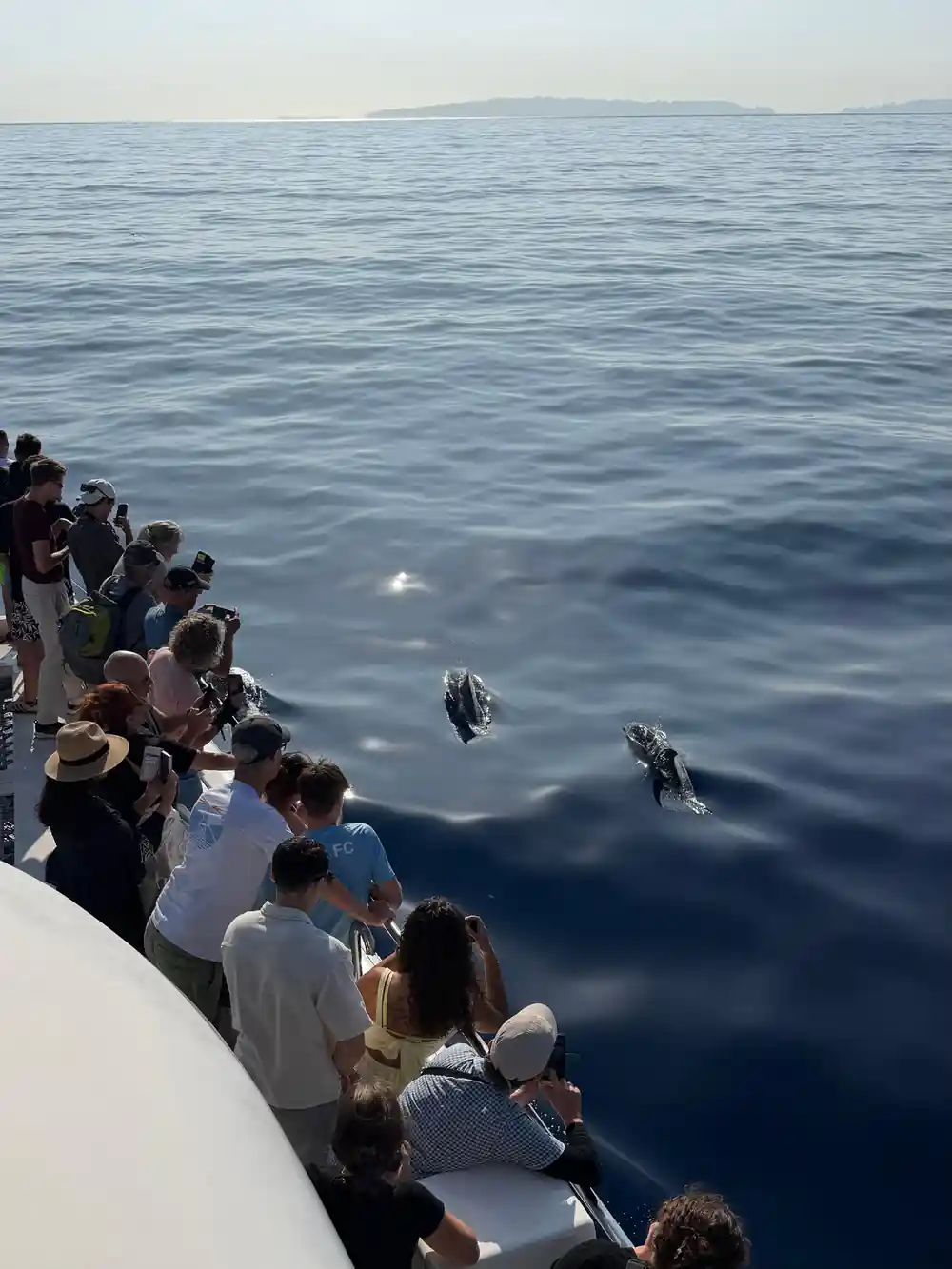
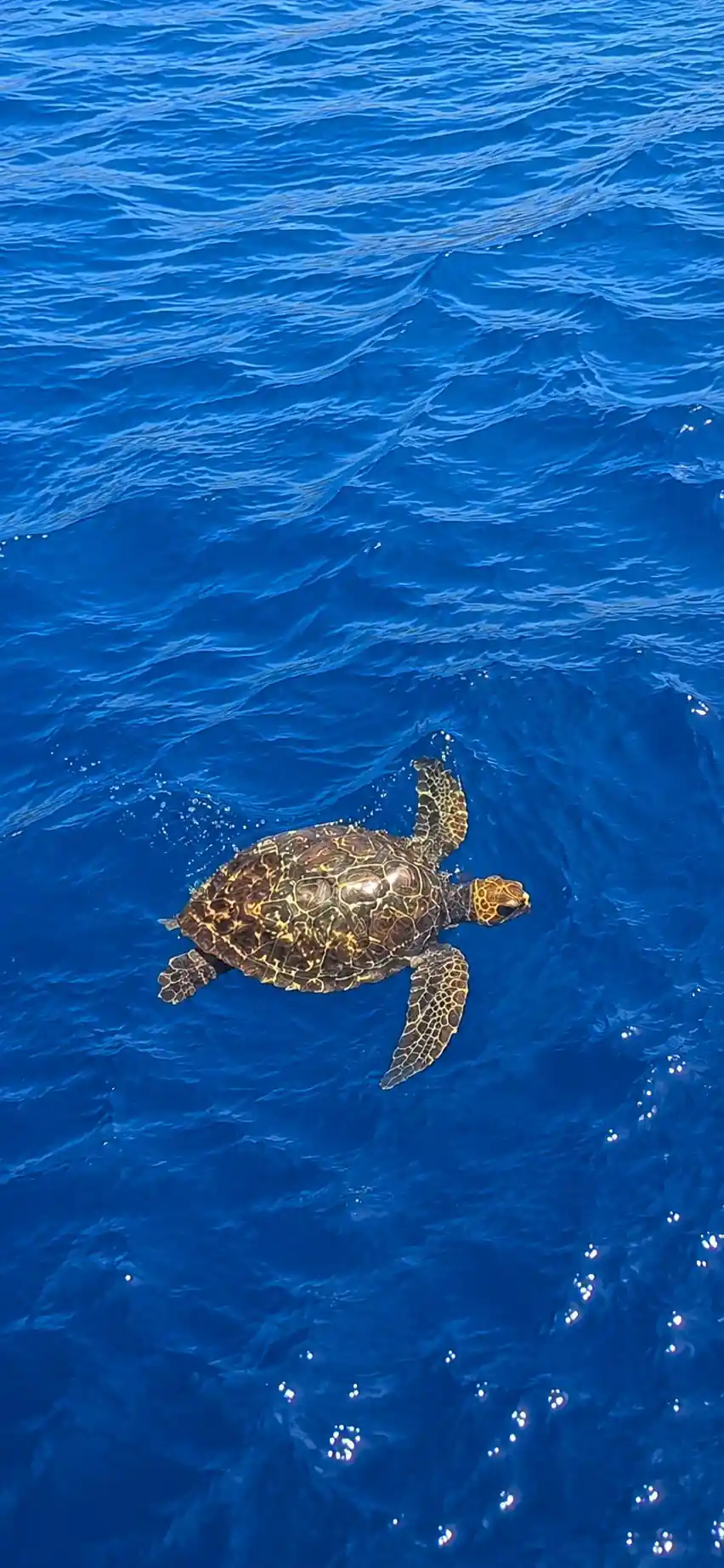
Three hours and we saw dolphins, five sperm whales and a turtle. The crew gave us fifteen minutes to swim as well.
 Silvia W.
Madeira
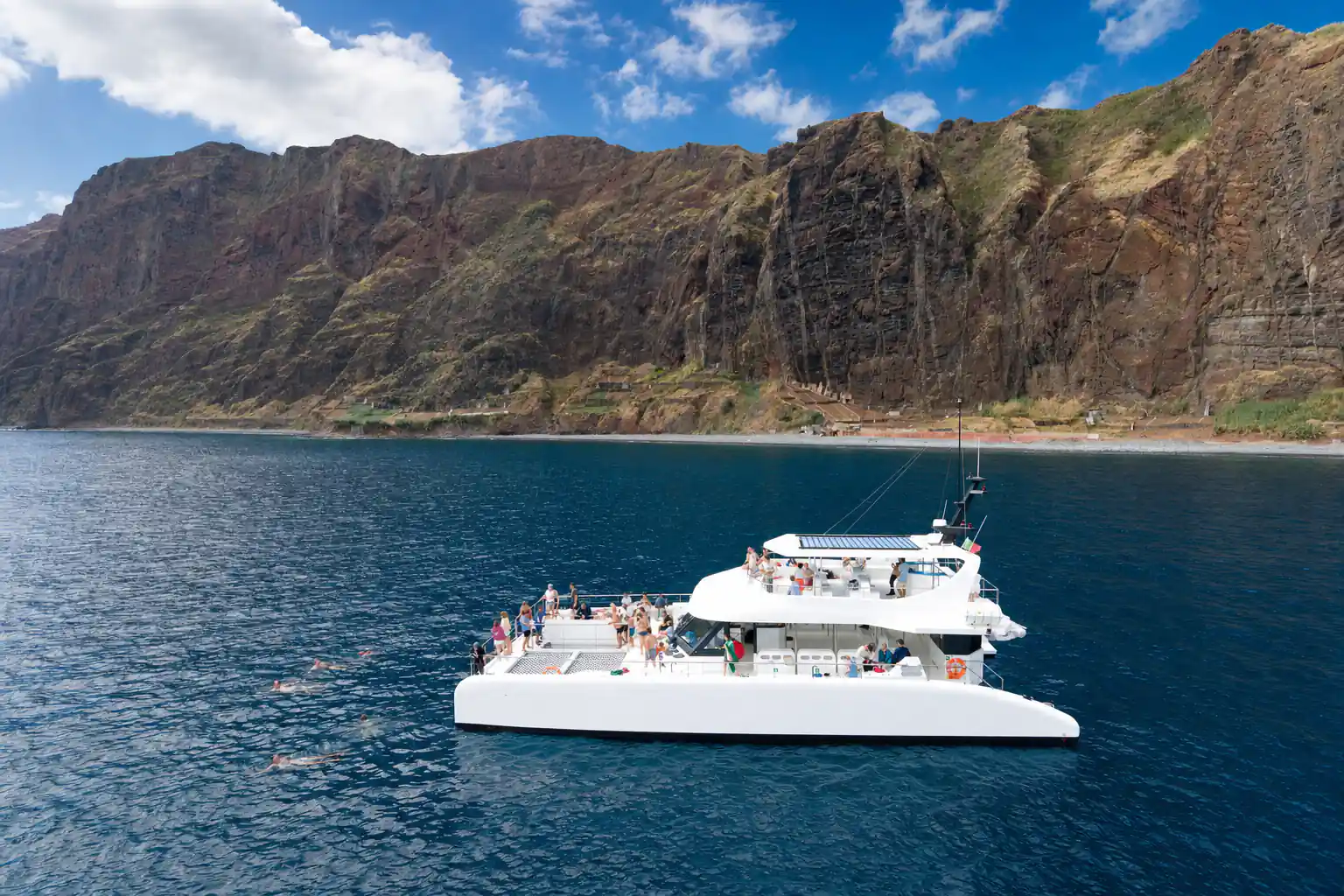
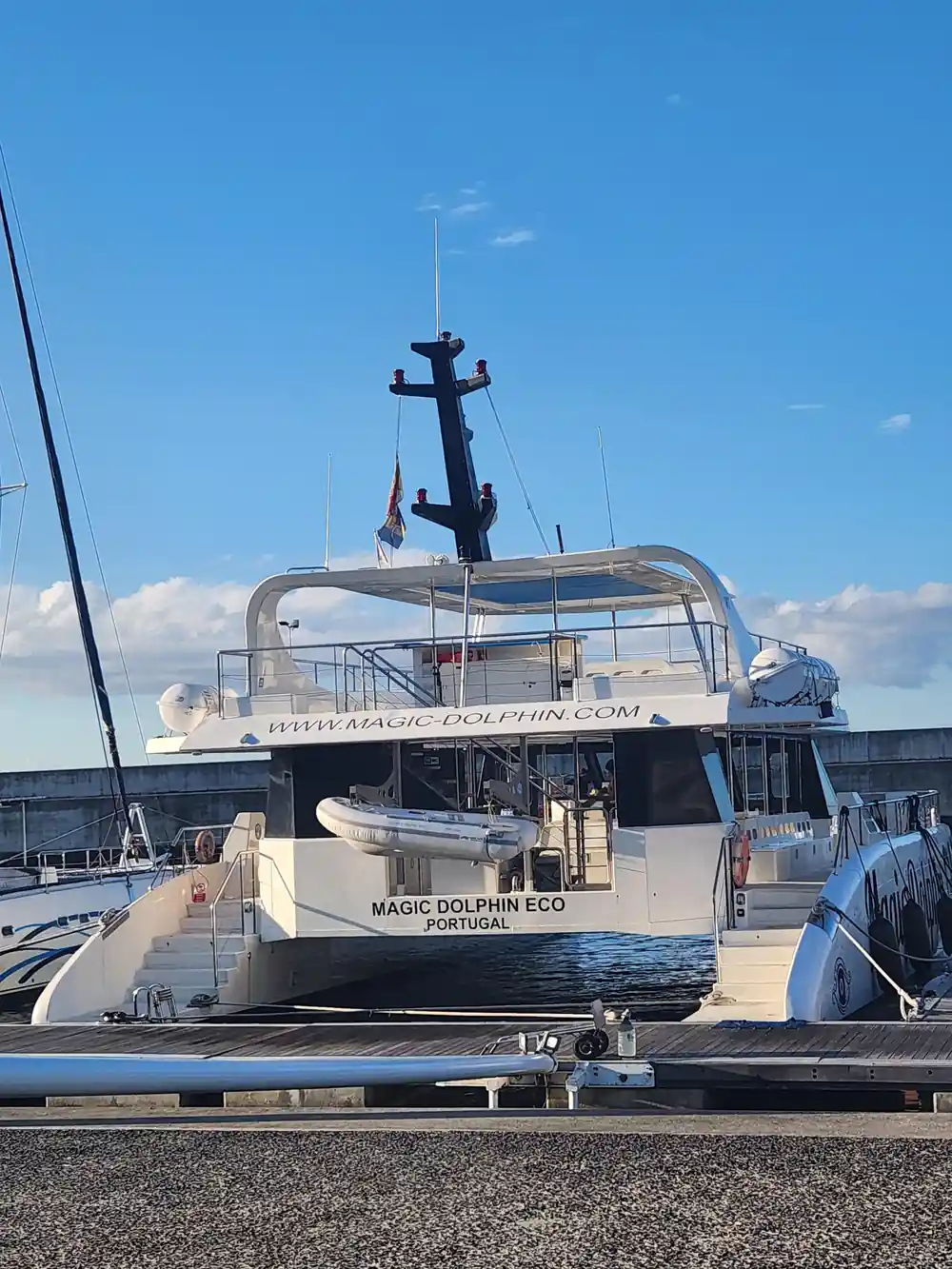
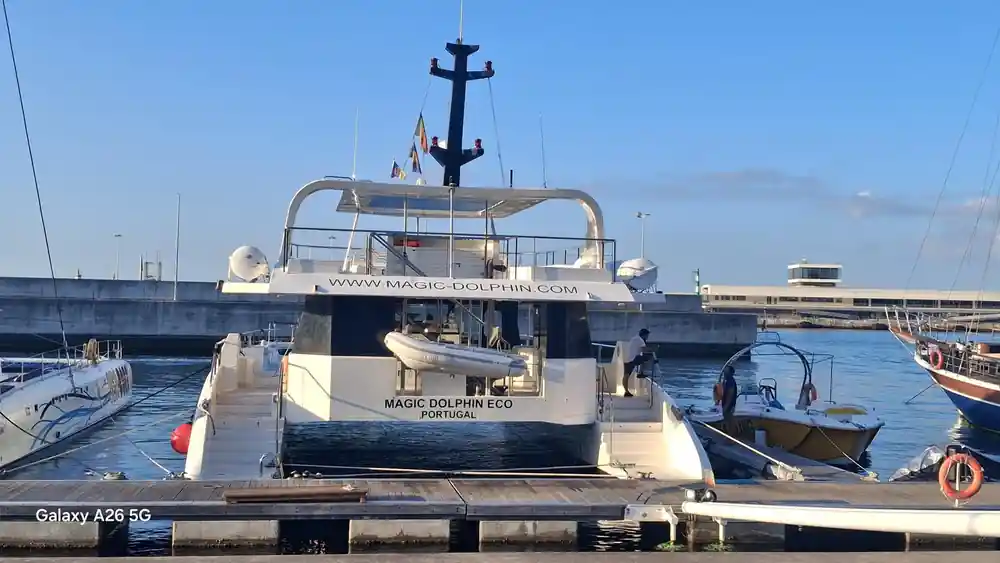
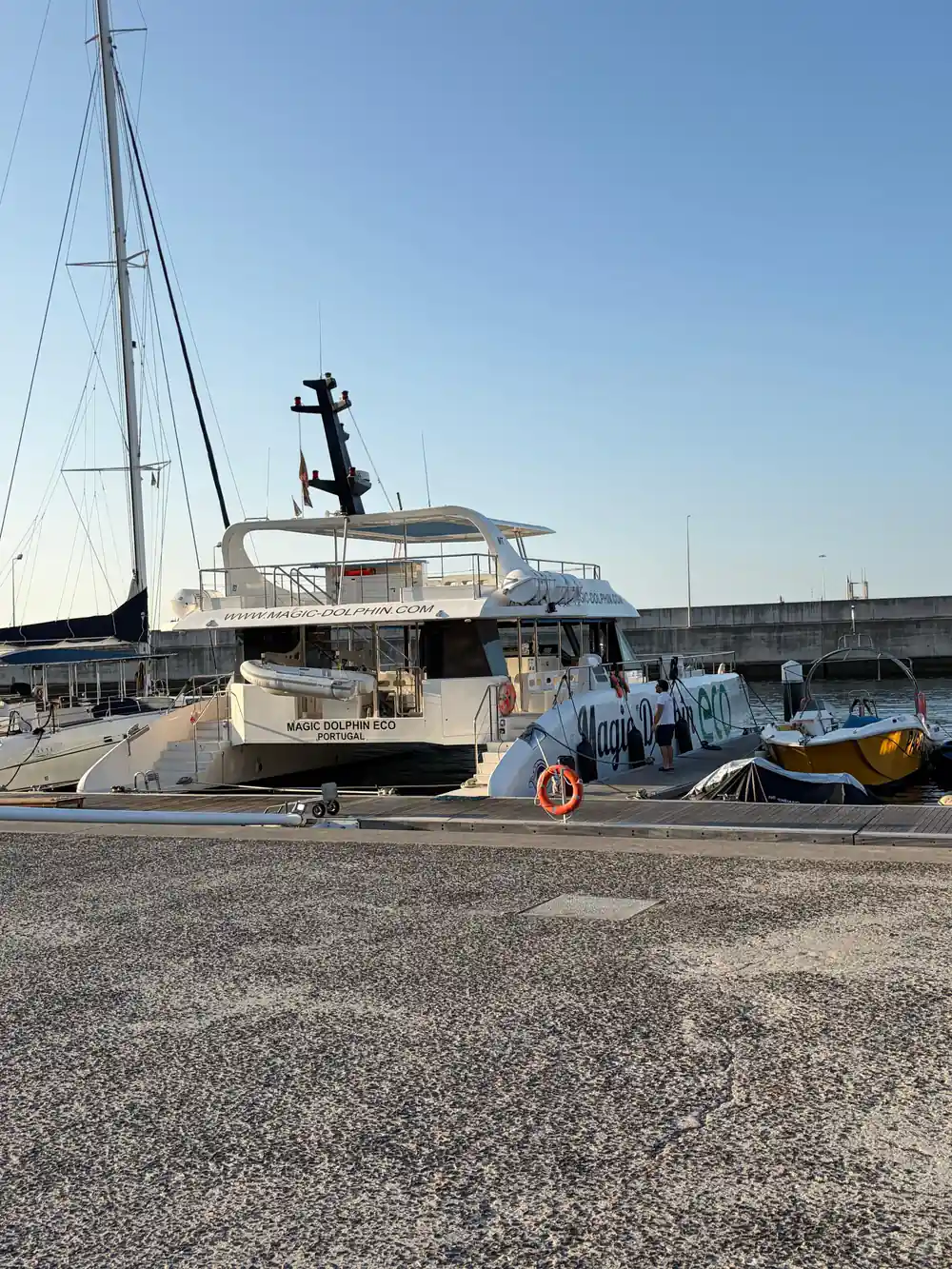
A custom-built eco-catamaran with the run of every deck, directed toward the animals by professional spotters standing on land with binoculars, then west to the cliffs at Cabo Girao.
Most whale watching boats go out and look. This one is directed from shore: professional spotters on high ground scan a far wider area than anyone at sea level can, and radio the skipper toward whatever they find.
Reviews
★★★★★
Three hours and we saw dolphins, five sperm whales and a turtle. The crew gave us fifteen minutes to swim as well.
Silvia W.
★★★★★
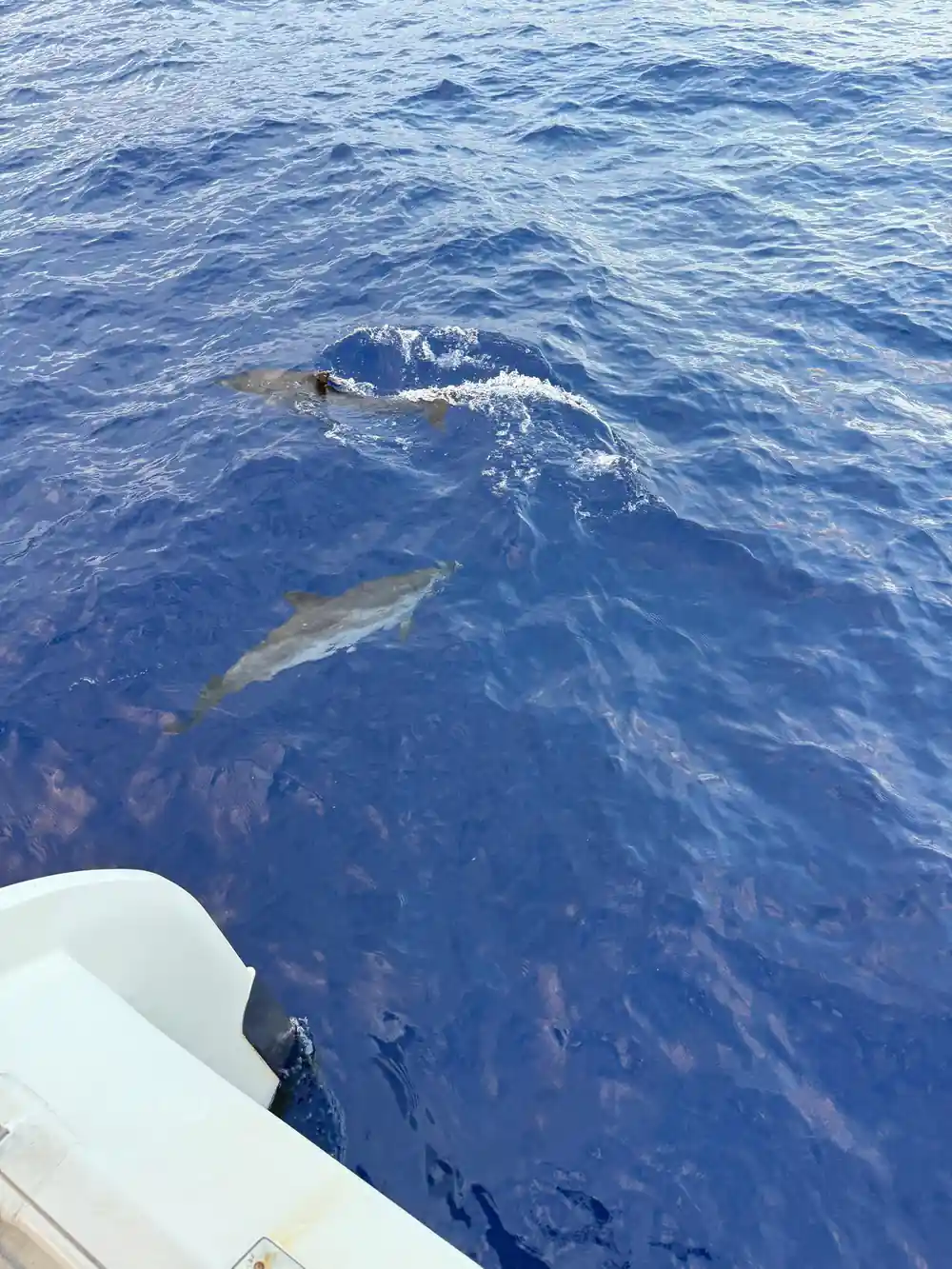
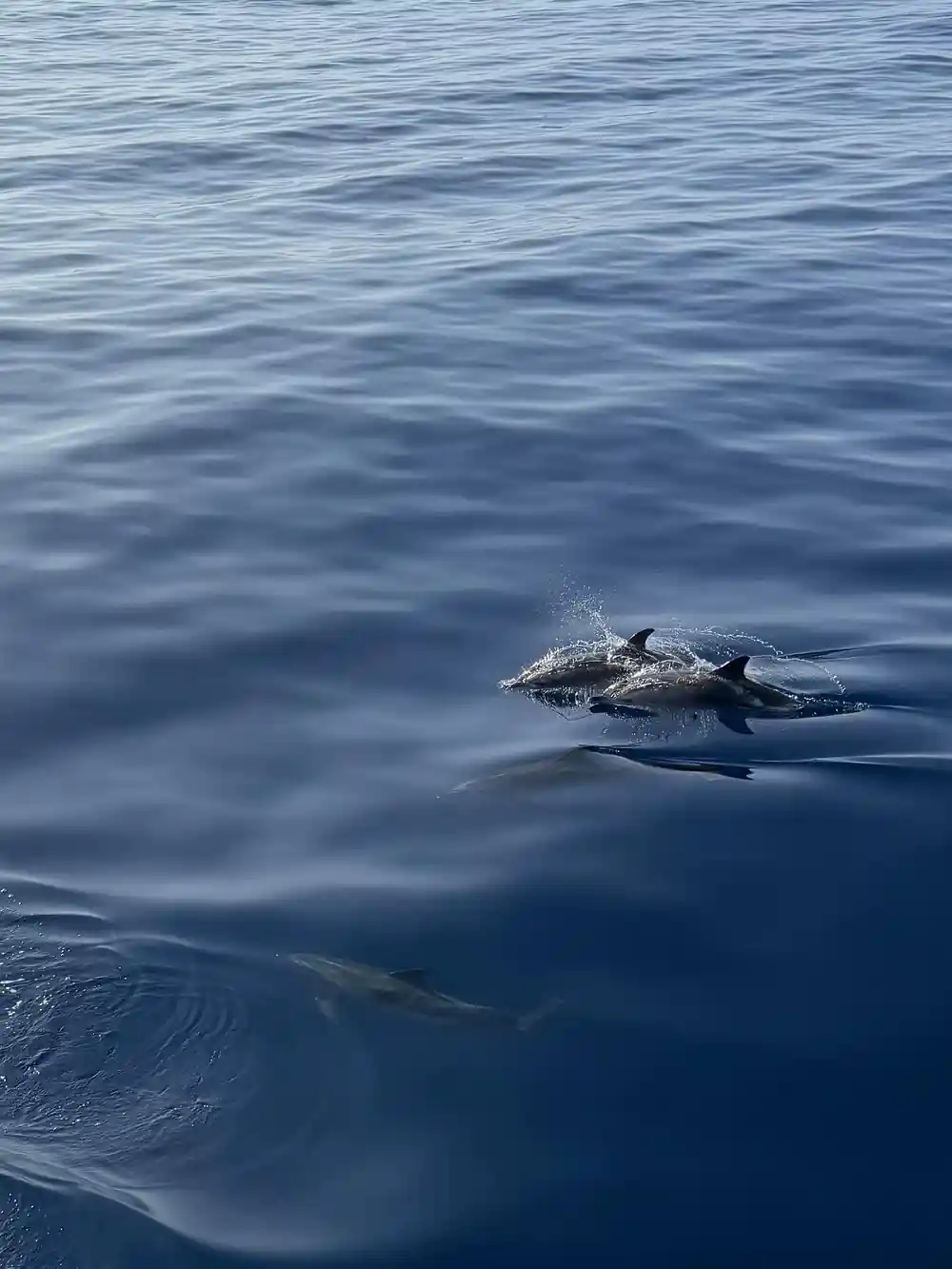
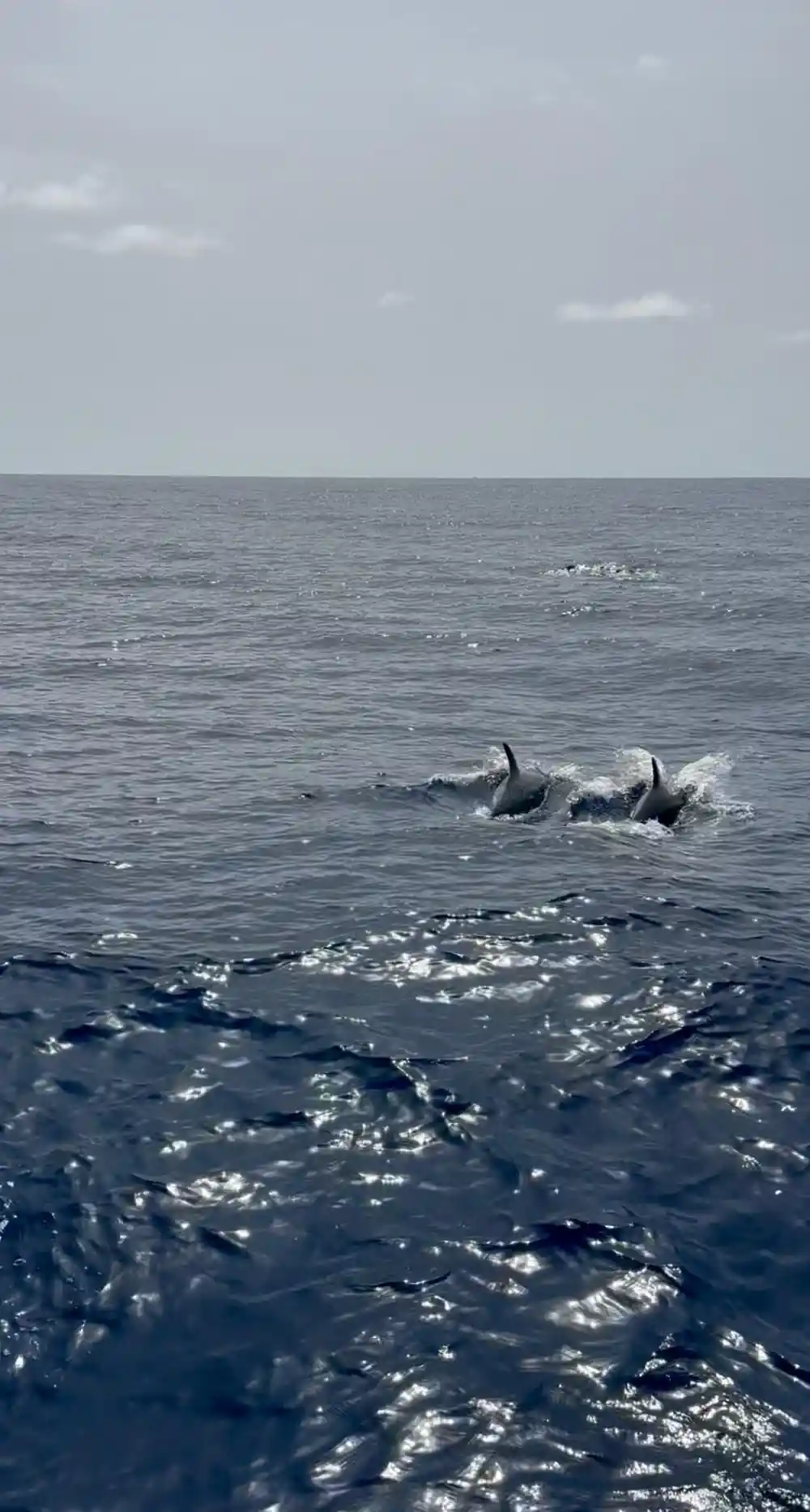
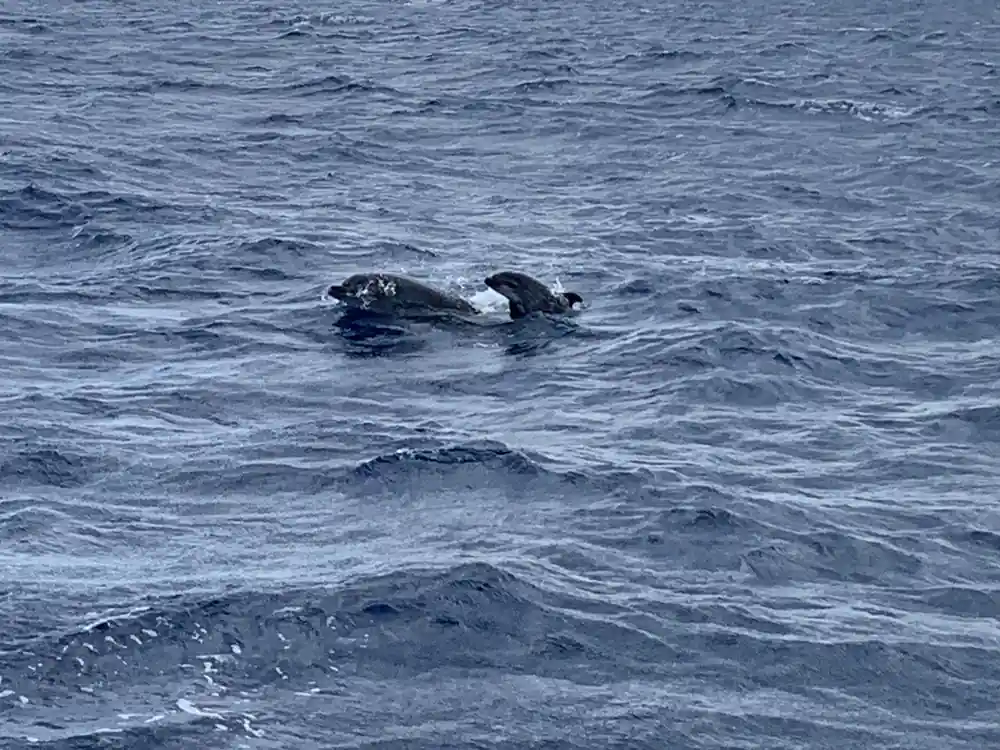
Bottlenose and spotted dolphins both. No breaching tails, but watching these animals in their own environment was exceptional.
 Pedro M.
★★★★★
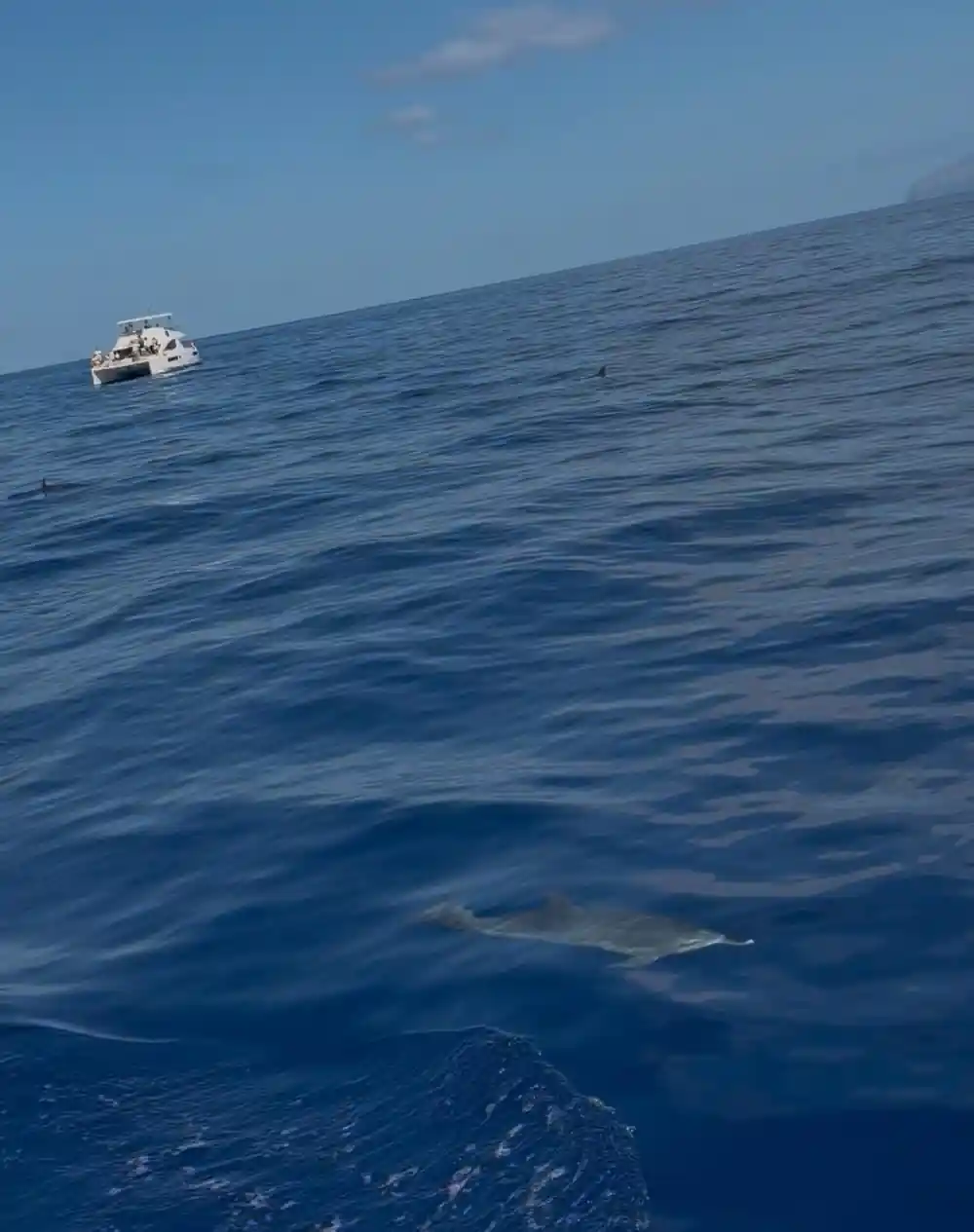
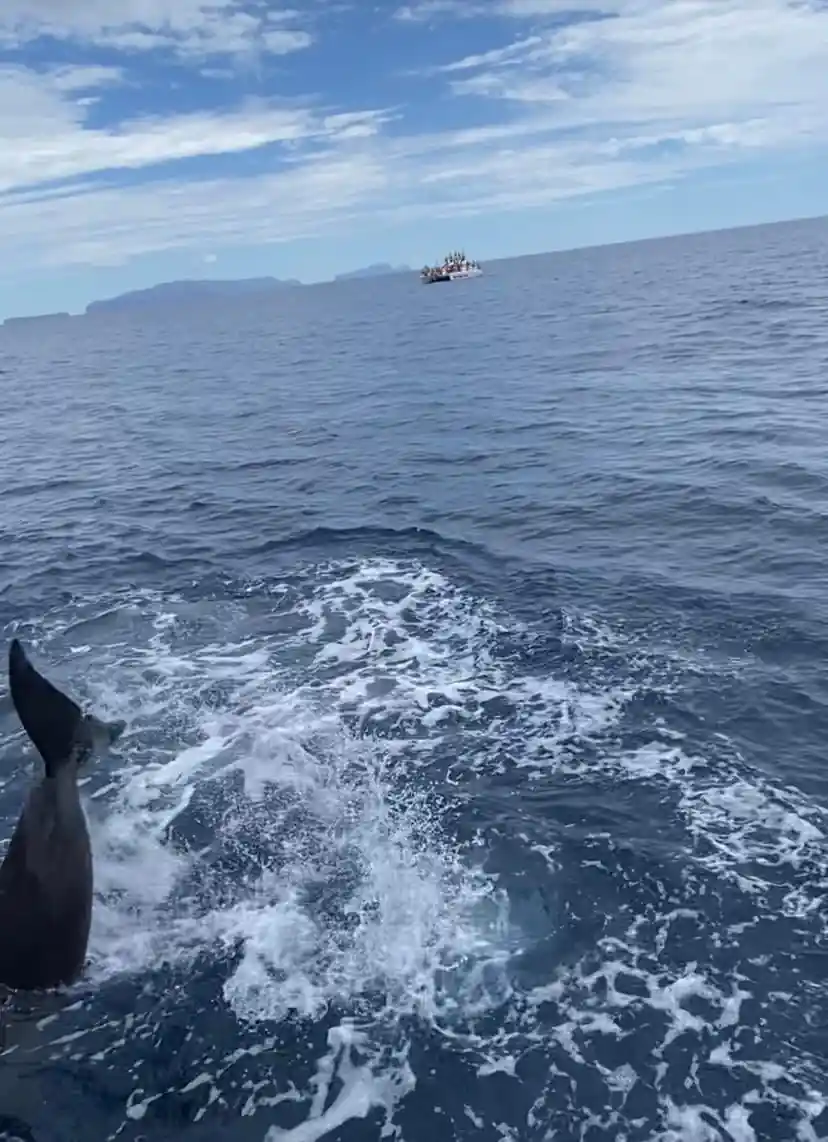
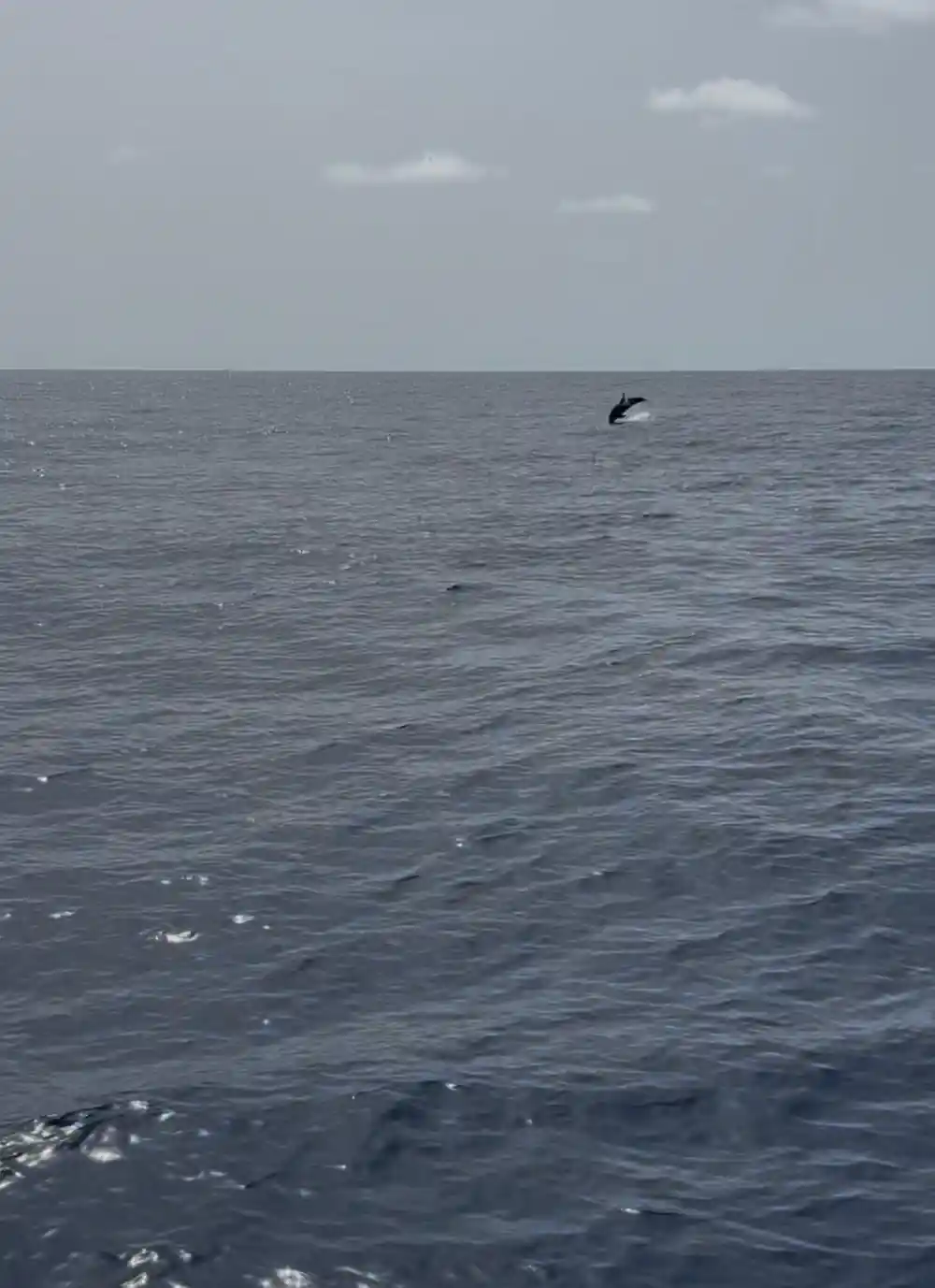
Spotted dolphins jumping all around the boat, then two enormous Bryde's whales feeding. The spotters knew exactly where to go and were respectful of the animals.
 Francesco R.
★★★★★
Dolphins and a whale, a fantastic crew, and nobody crammed in. There was plenty of space to move about.
 Tyler H.
★★★★★
I liked hearing about how the dolphins behave as much as seeing them. Lovely boat and helpful staff.
 Gary M.
★★★★★
Dolphins and a whale inside five minutes, which felt like remarkable luck. Clean boat, plenty of room, informative and funny crew.
 Emily Y.
★★★★★
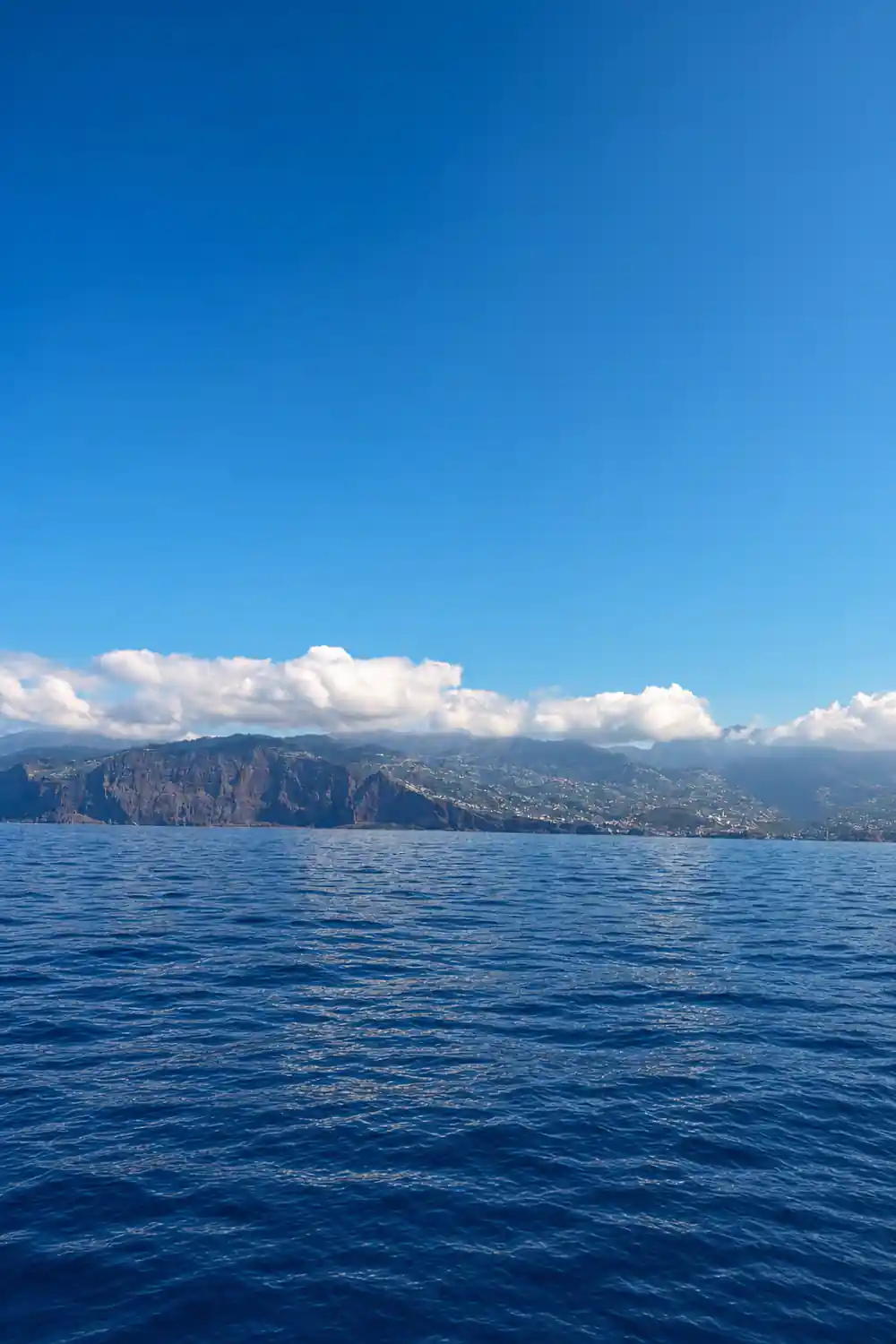
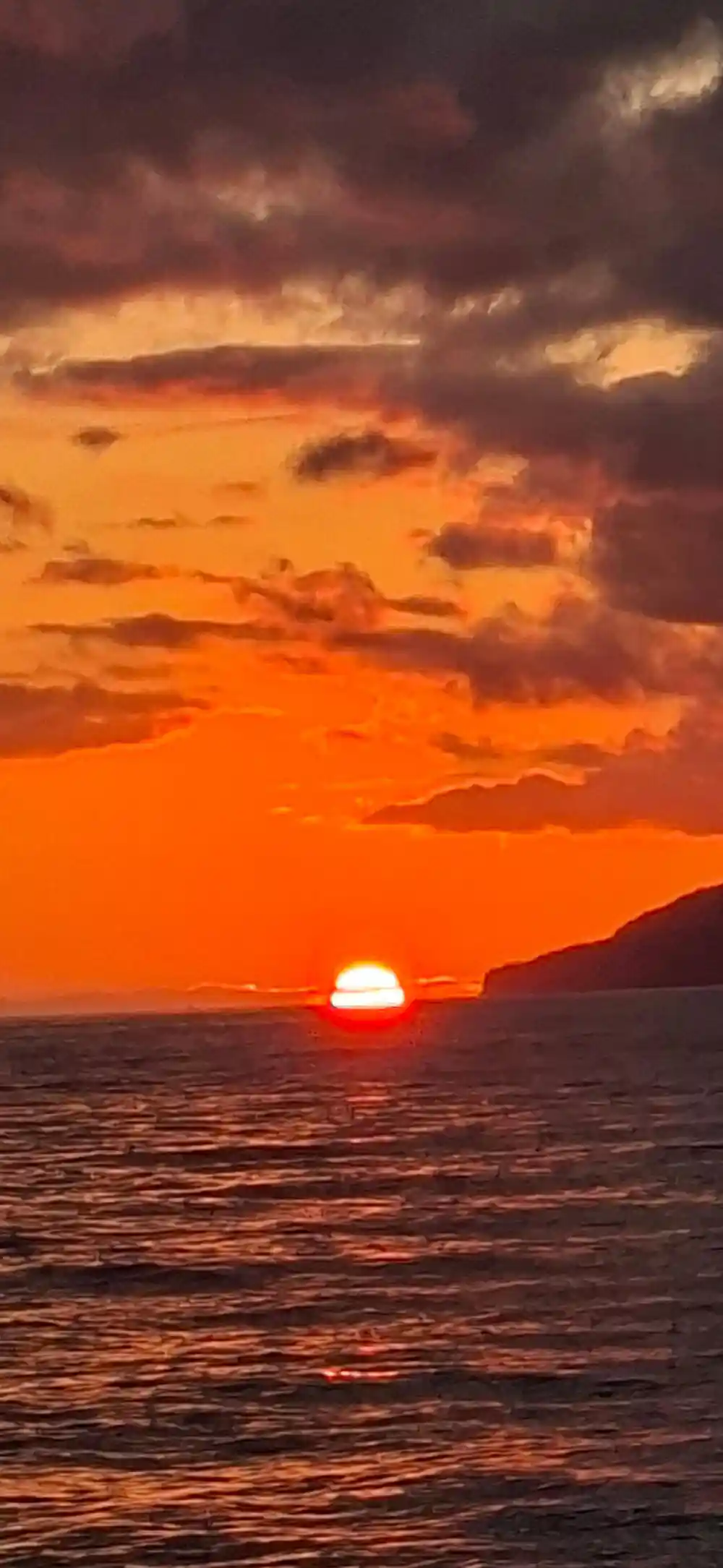
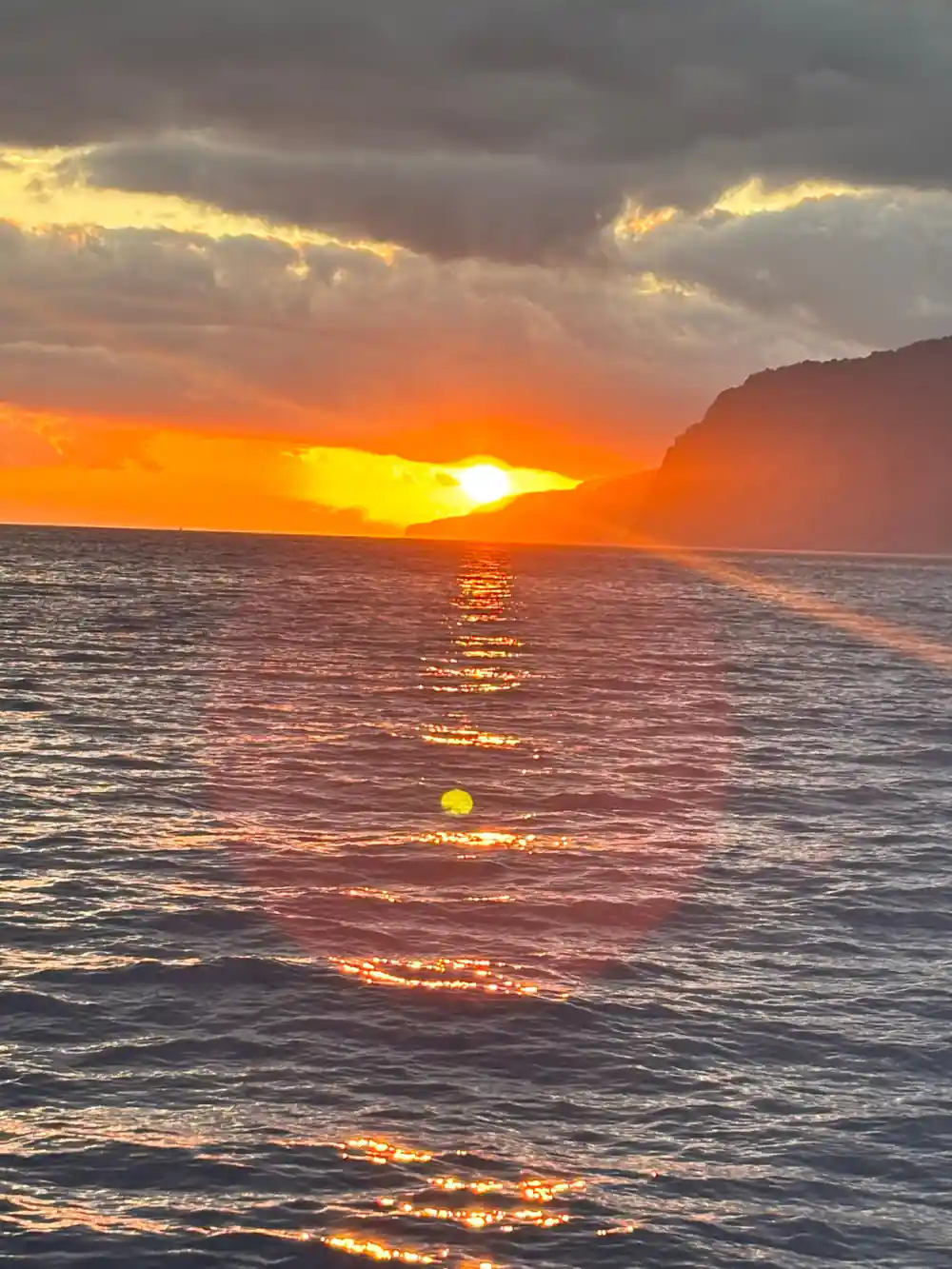
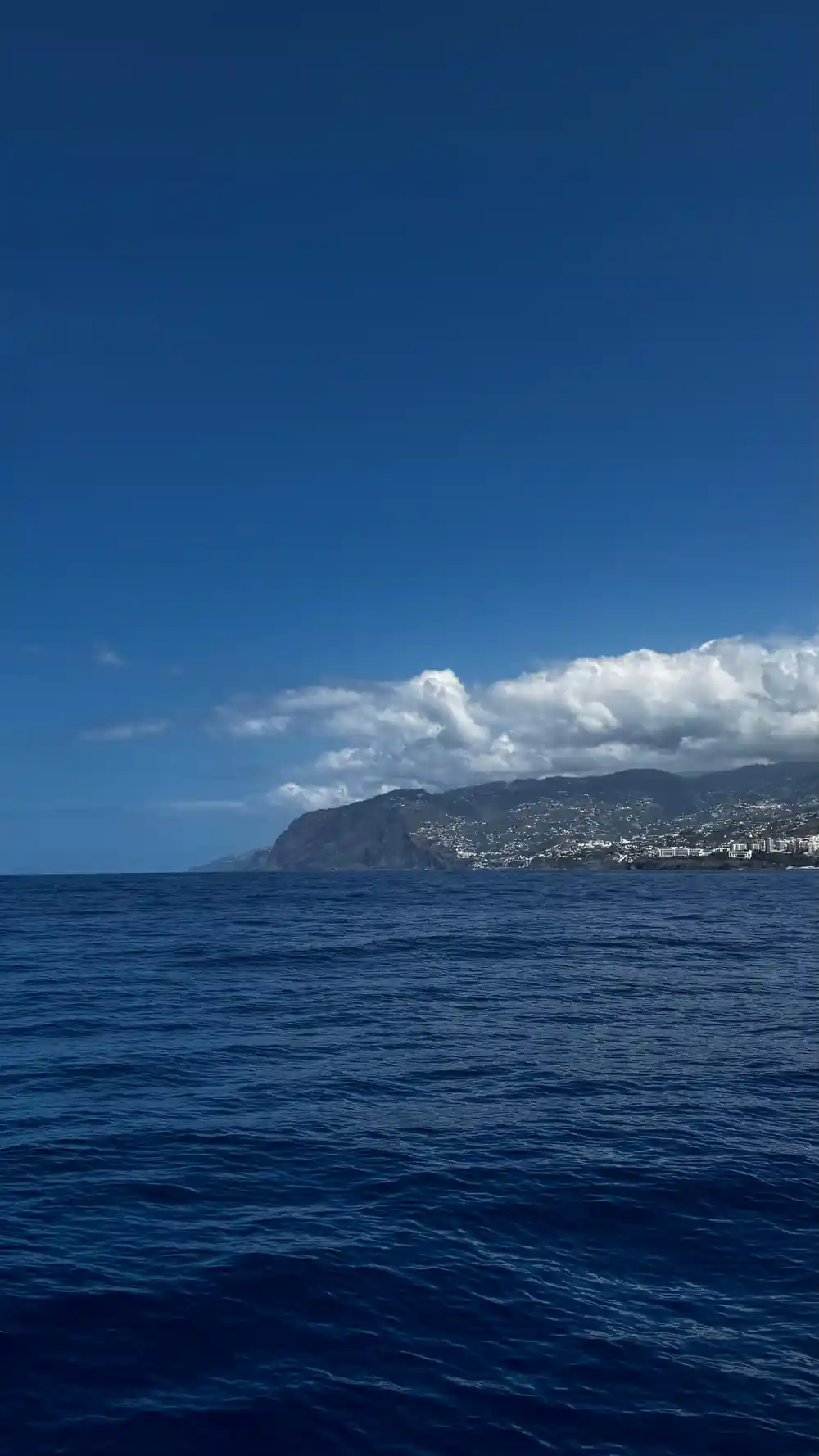
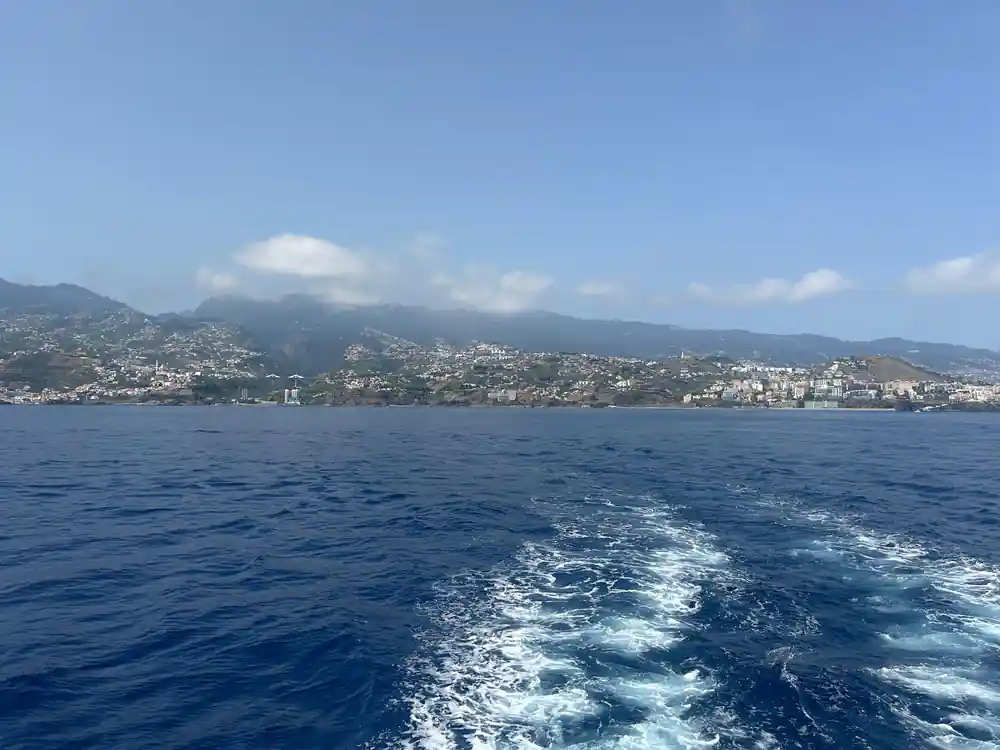
Seeing Funchal from the ocean with those clouds behind it was terrific. If you worry about seasickness, take something beforehand and you will be fine.
 Gary E.
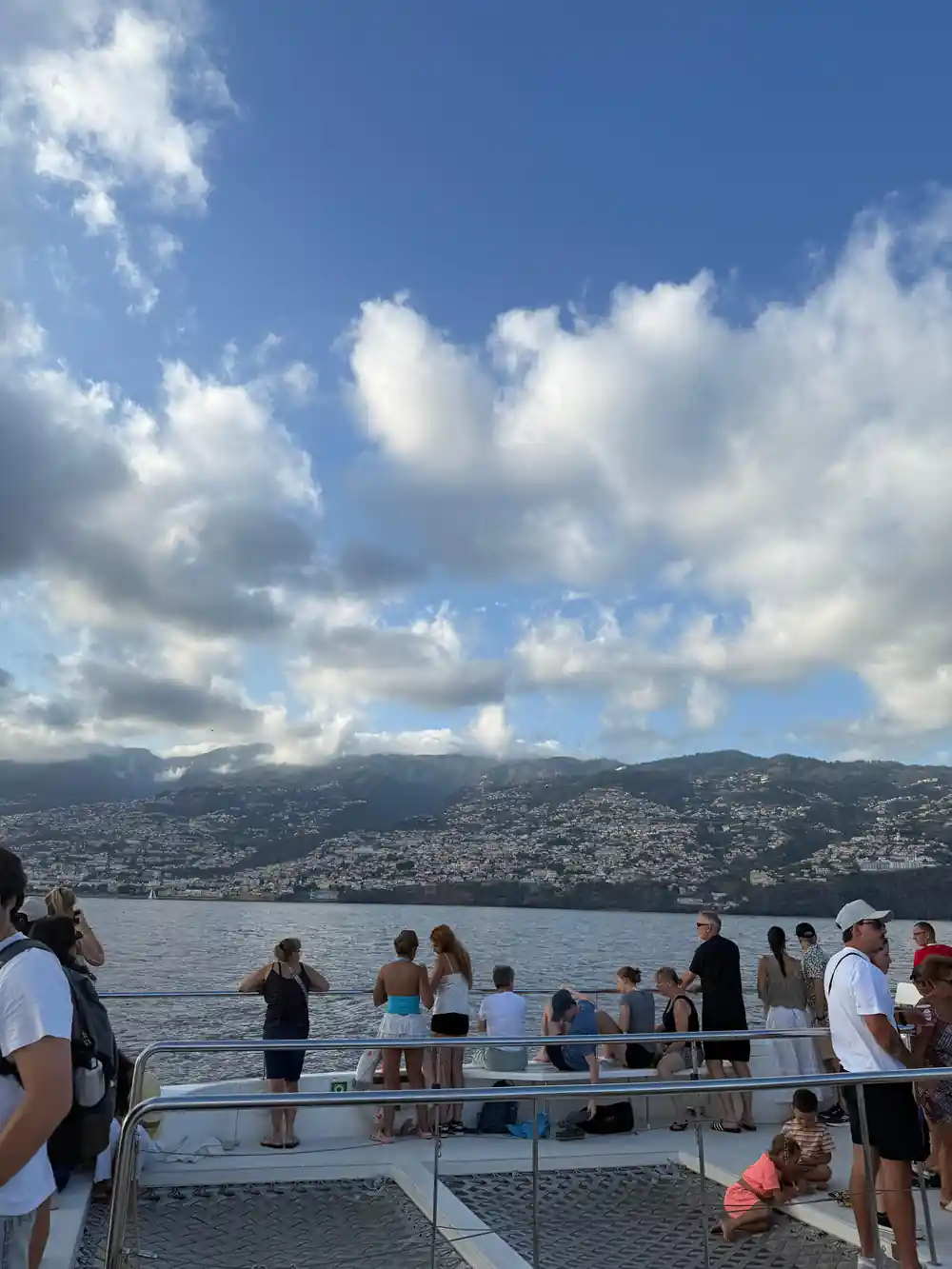
★★★★★
The eco-catamaran was comfortable and the crew were friendly, knowledgeable and genuinely passionate about the wildlife.
 Jason L.
★★★★★
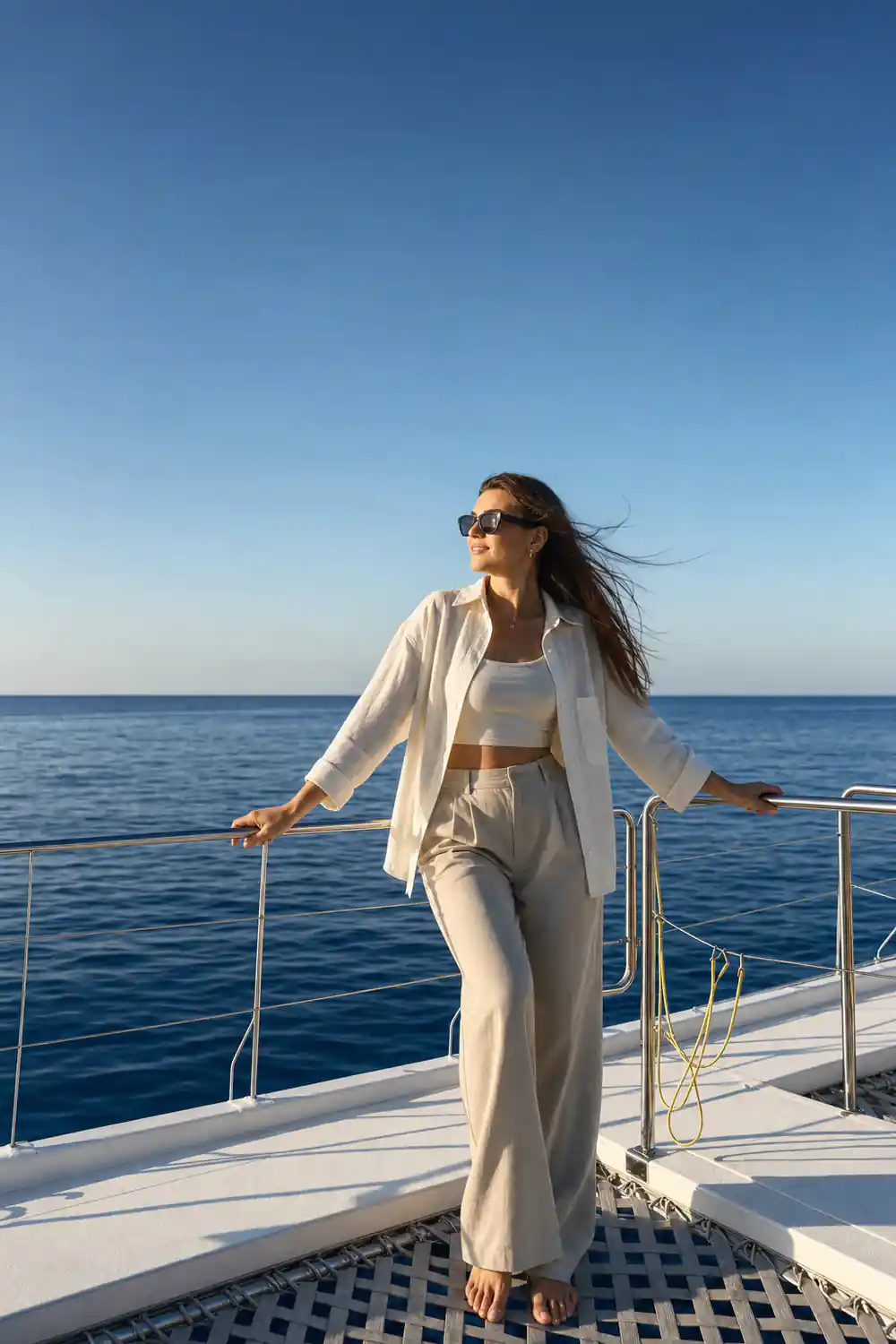
You are free to move around the whole boat, which makes a difference over three hours. We used the nets, the upper deck and the shade in turn.
 Patricia B.
★★★★★
What struck me was how carefully they approached. No chasing, no engine noise, just holding position and letting the animals decide.
 James F.
Gallery

Weather
3h
The whole trip, of which the searching is directed from shore rather than guessed at from the bridge.
Practical
What's included
Key facts
Book
Reviews
Every whale watching operation faces the same problem: a person standing on a boat has their eye about three metres above the water, which puts the horizon roughly six kilometres away. Beyond that, an animal could be surfacing repeatedly and nobody aboard would ever know.
The answer this operator uses is to put experienced spotters on high ground instead. From a clifftop several hundred metres up, the same pair of eyes commands a vastly larger area of sea, and they radio the boat toward whatever they find. Guests notice the effect directly: one describes the spotters knowing exactly where to go, and another records seeing dolphins and a whale within five minutes of leaving.
It is straightforward geometry and it is worth understanding because it explains the whole shape of the trip. Distance to the horizon grows with the square root of your height above the water. Three metres up gives you about six kilometres; three hundred metres up gives you sixty.
So a spotter on a Madeiran clifftop is scanning an area a hundred times larger than the boat can. They are not looking for the animal you will eventually see; they are looking at a stretch of ocean and finding where the activity is, then handing the boat a destination rather than a direction. That is a fundamentally different operation from steaming out and hoping.
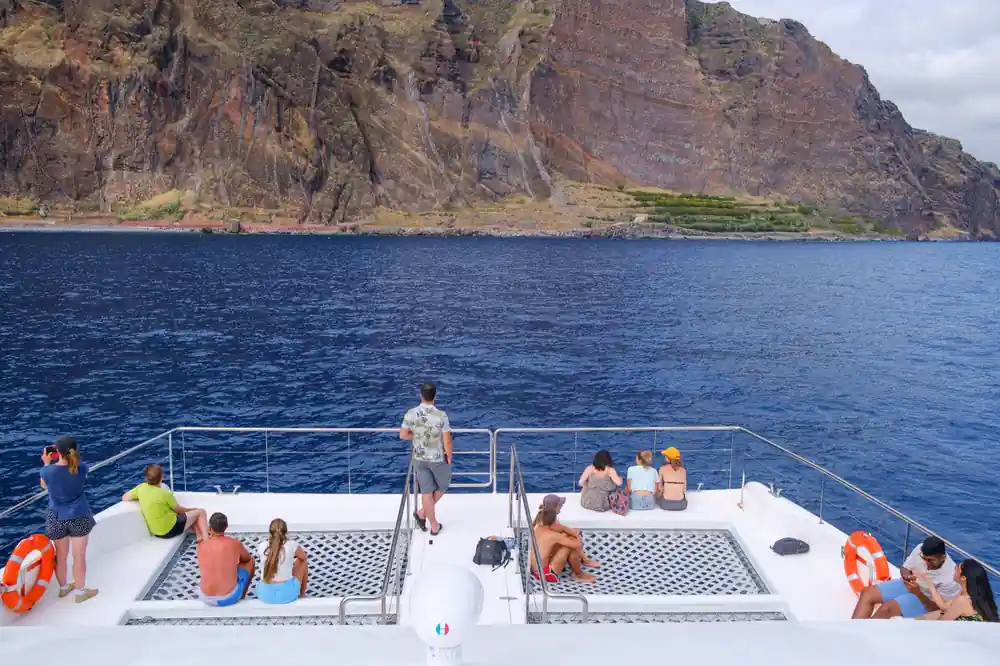
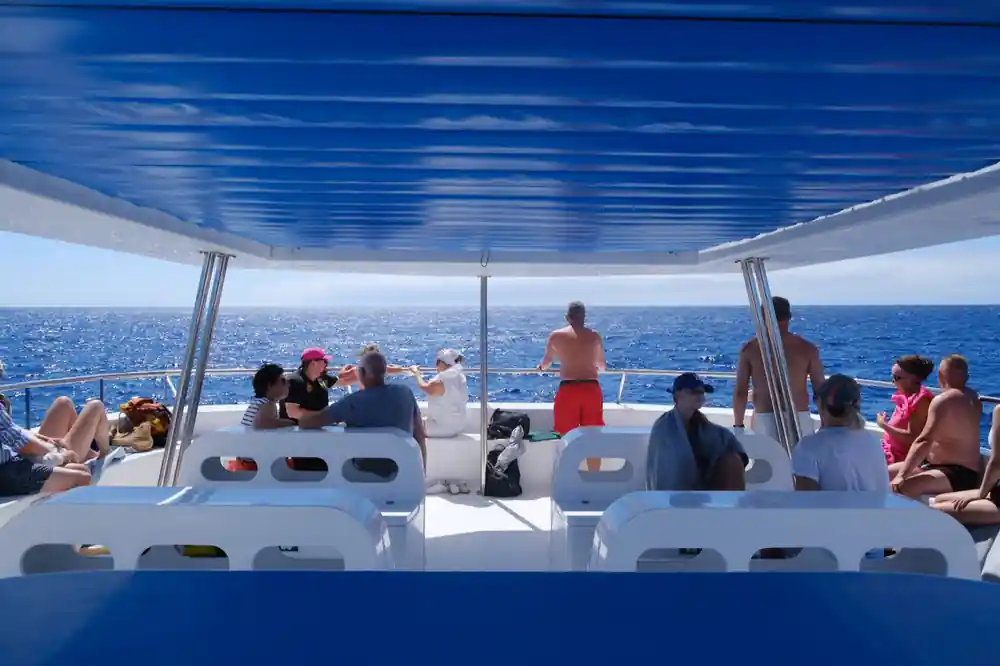
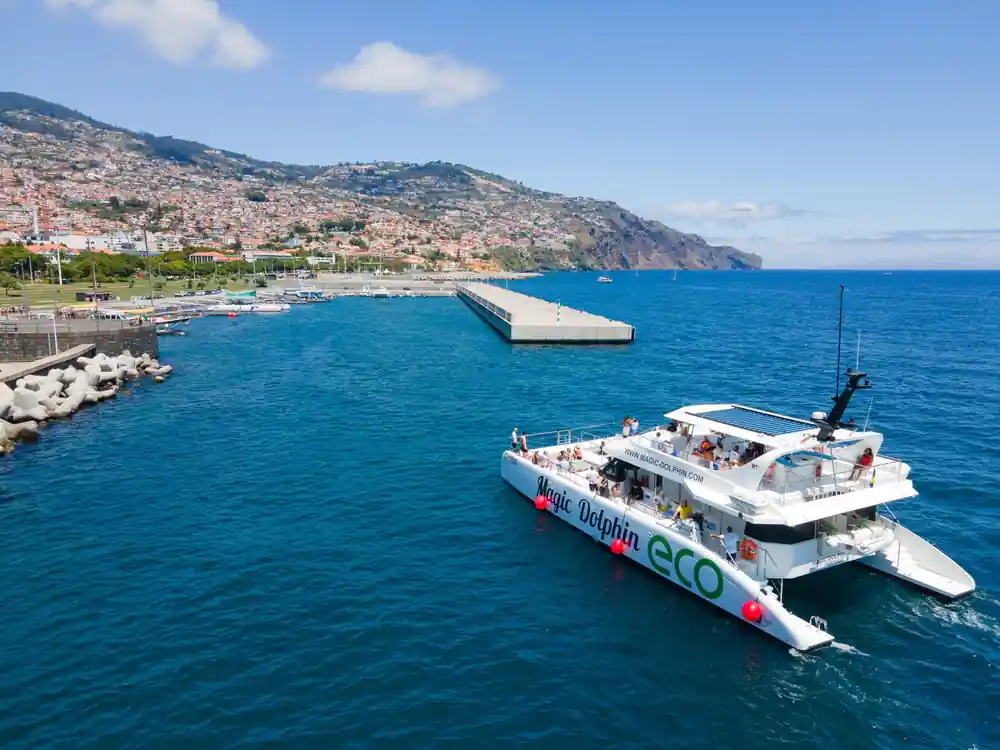
Custom-built for this, rather than a boat adapted to it. What that buys a passenger is space and choice: an upper deck, a generous nets area between the hulls, indoor and outdoor seating, and bars on board, with unlimited access to all of it.
The operator is explicit that you are free to move around and use every viewpoint, and guests confirm the practical effect. Several mention not being crammed in and having room to move, which over three hours matters more than any single feature. On a wildlife trip where the animals can appear on either side, being able to cross the boat quickly is not a luxury.
Partly the vessel and partly the method. A catamaran built for wildlife watching is designed to approach quietly and hold position without churning, because engine noise carries a very long way underwater and is the main way a boat disturbs a cetacean.
The spotters contribute here too, in a way that is easy to miss. A boat that knows where to go spends less time steaming about the search area, which means less noise, less fuel and less disturbance spread across a wider stretch of sea. One guest specifically notes the crew being respectful of the animals, which is the outcome all of this is arranged to produce.
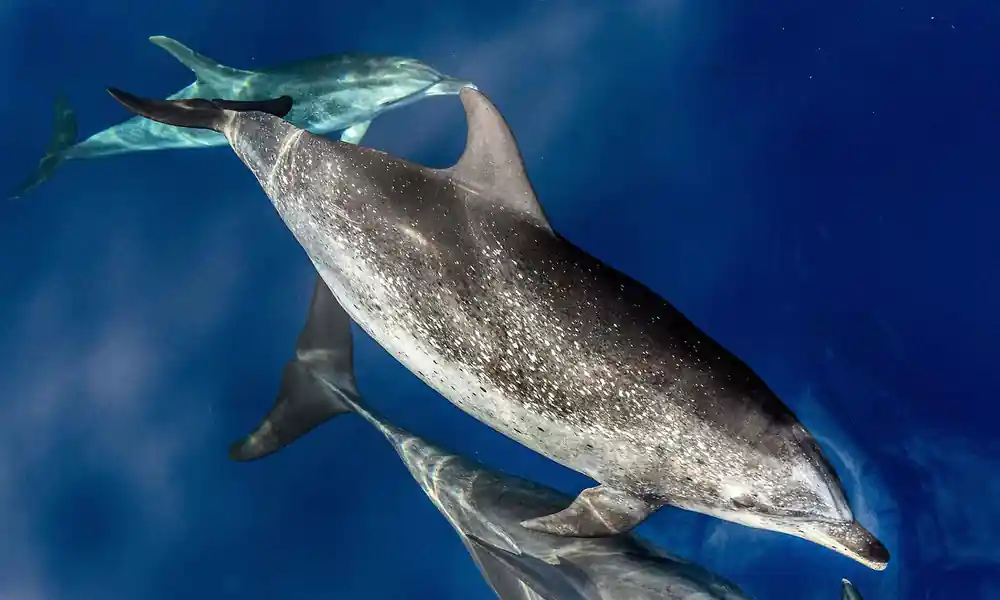
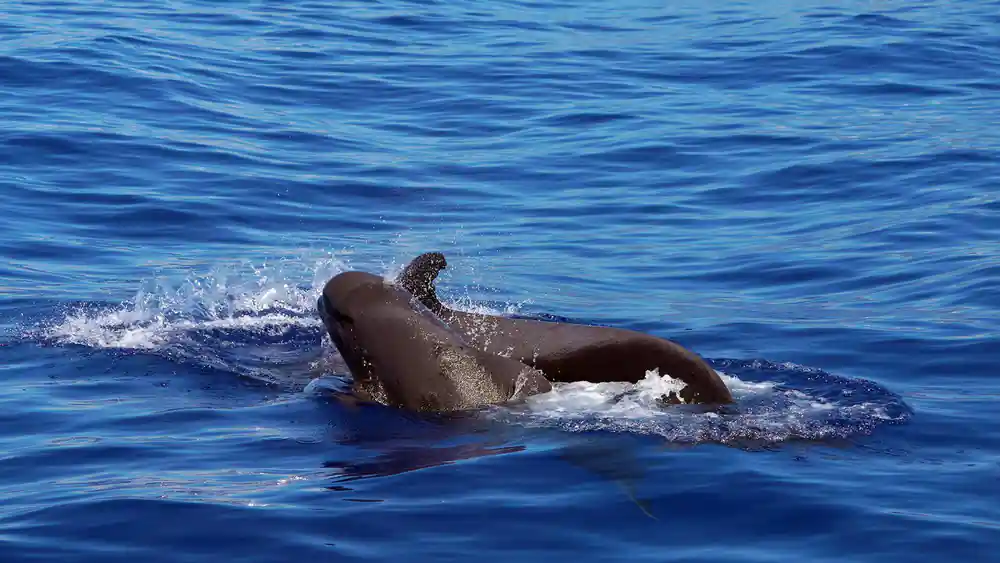
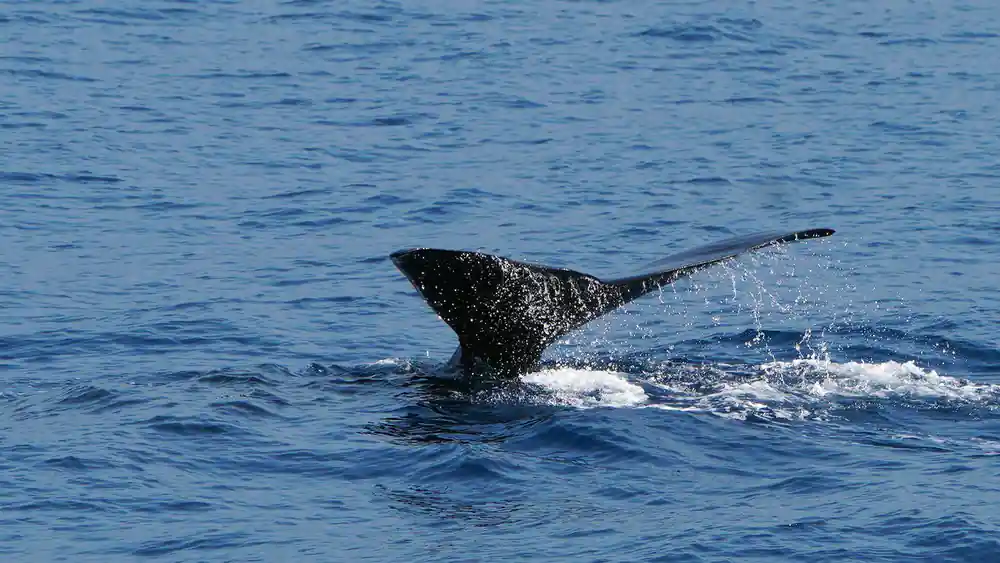
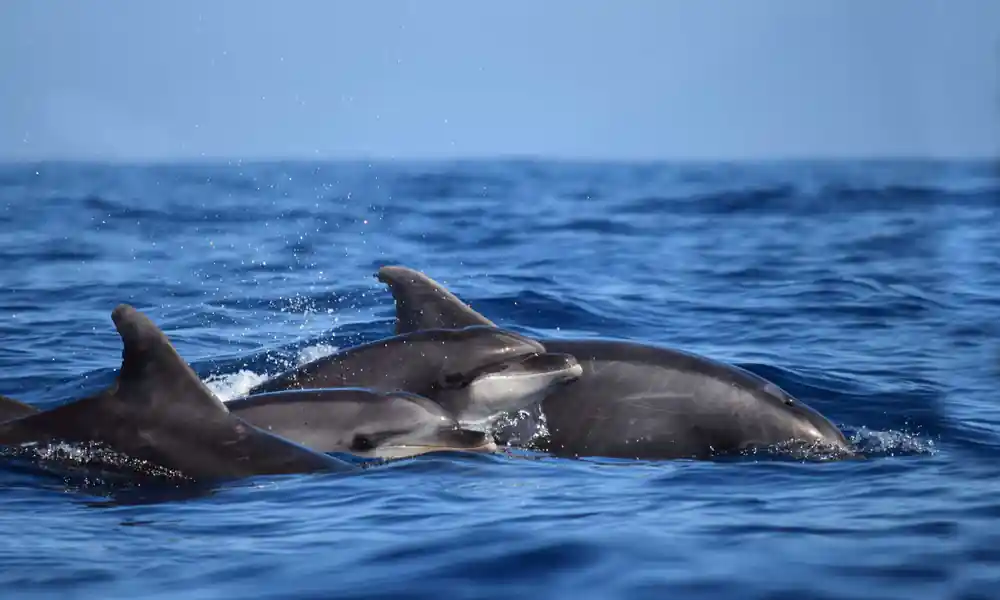
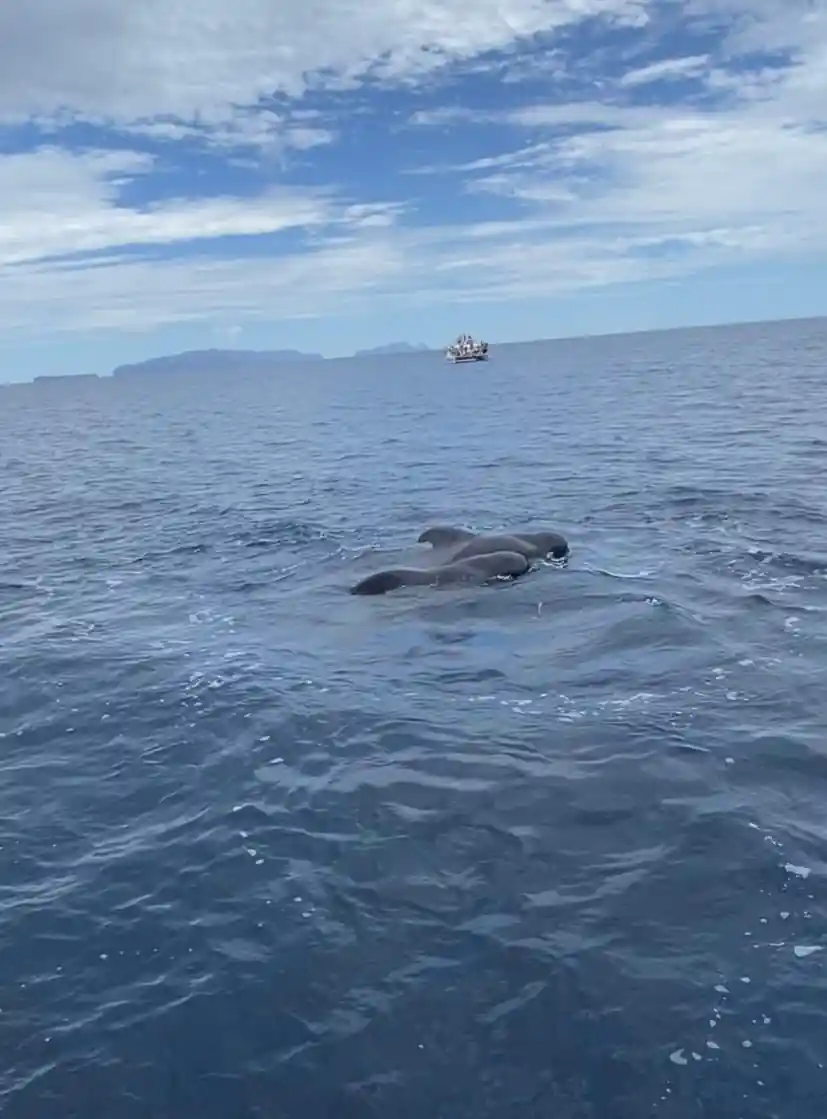
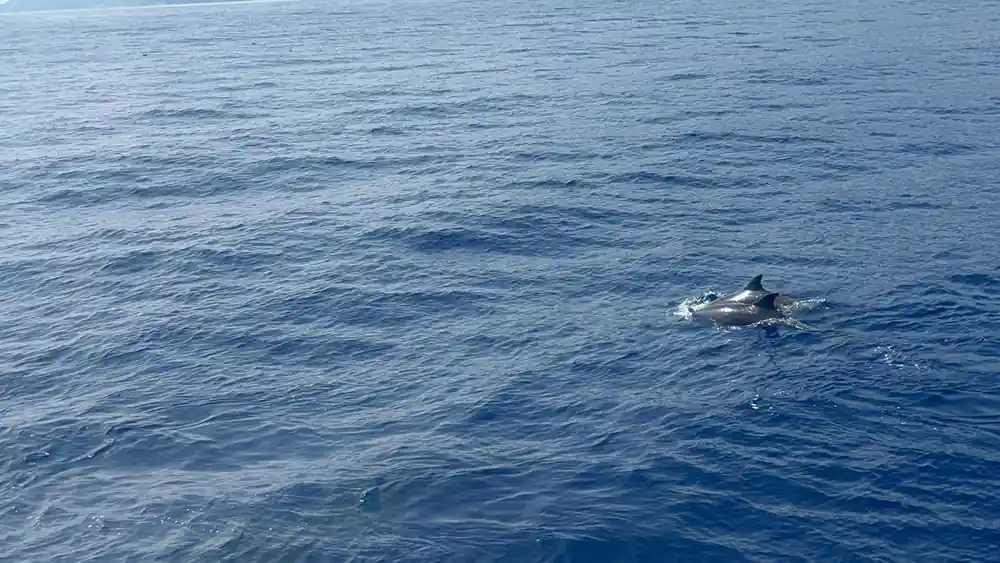
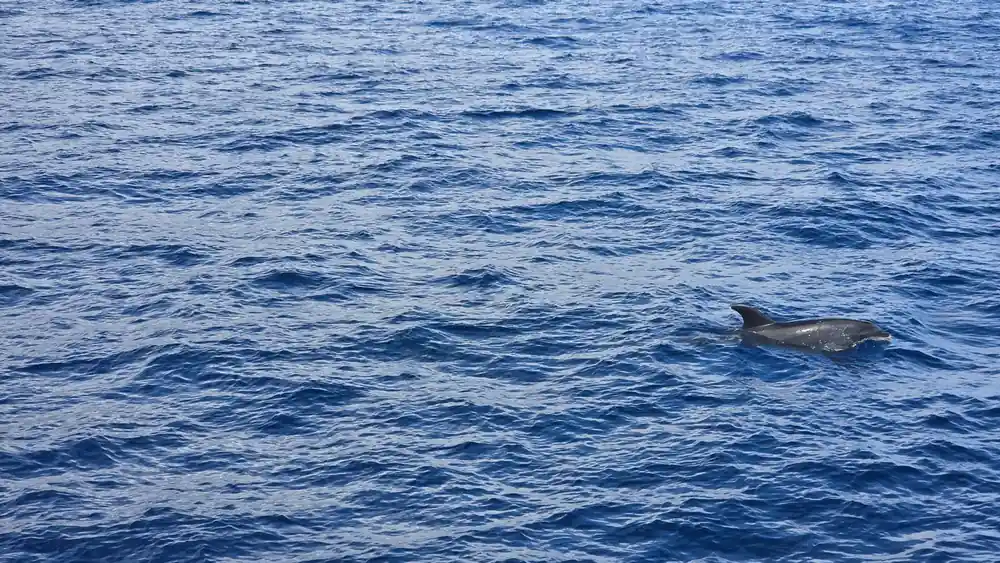
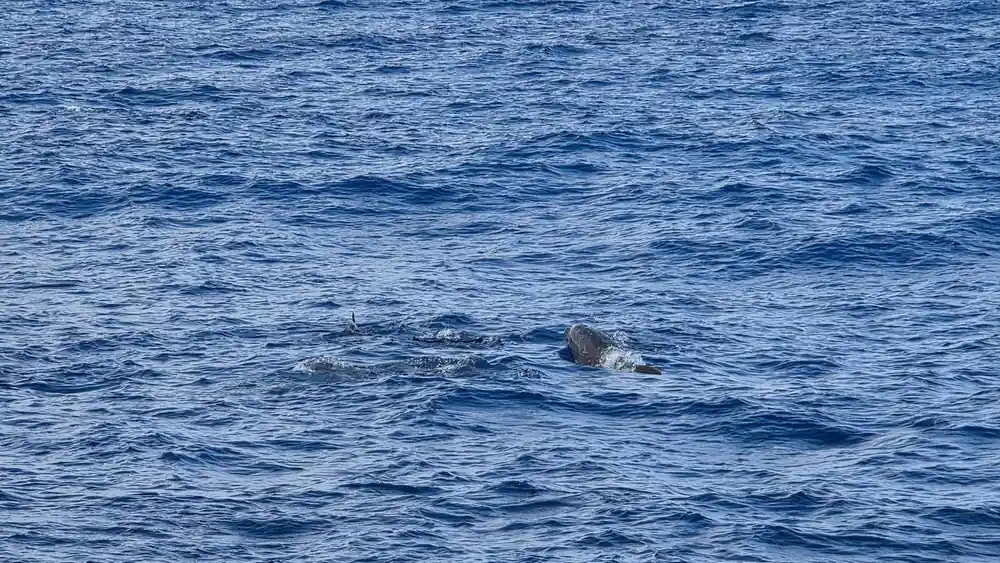
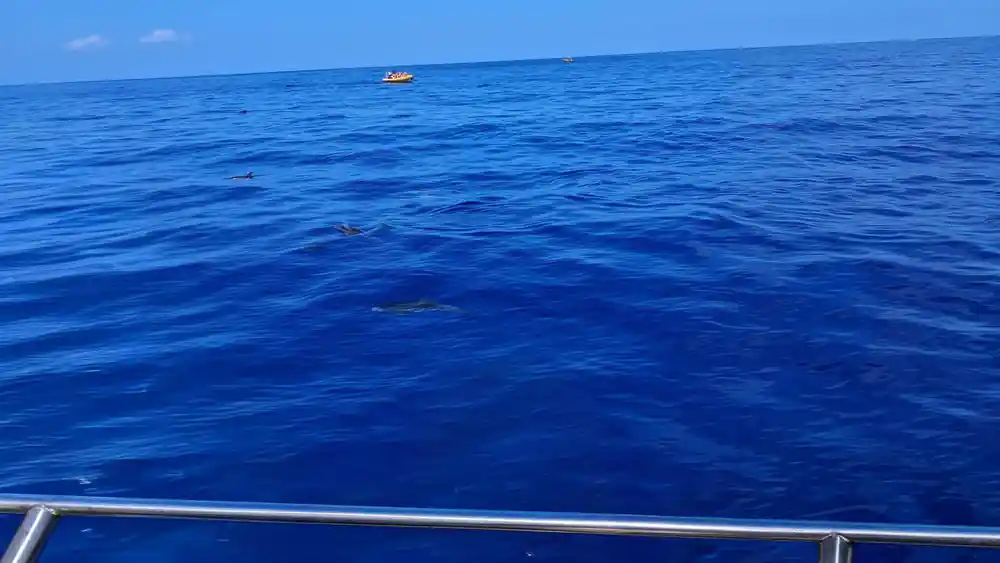
Dolphins, most reliably. Bottlenose and Atlantic spotted dolphins both appear in the reviews, often in numbers and often close to the hull. Beyond them the reviews record Bryde's whales feeding, sperm whales, pilot whales and loggerhead turtles.
None of it is guaranteed and nobody sensible would promise it. What the reviews do show is an unusually high hit rate, with guests reporting multiple species inside a single three-hour trip. That is what the spotting arrangement is for, and it appears to work.
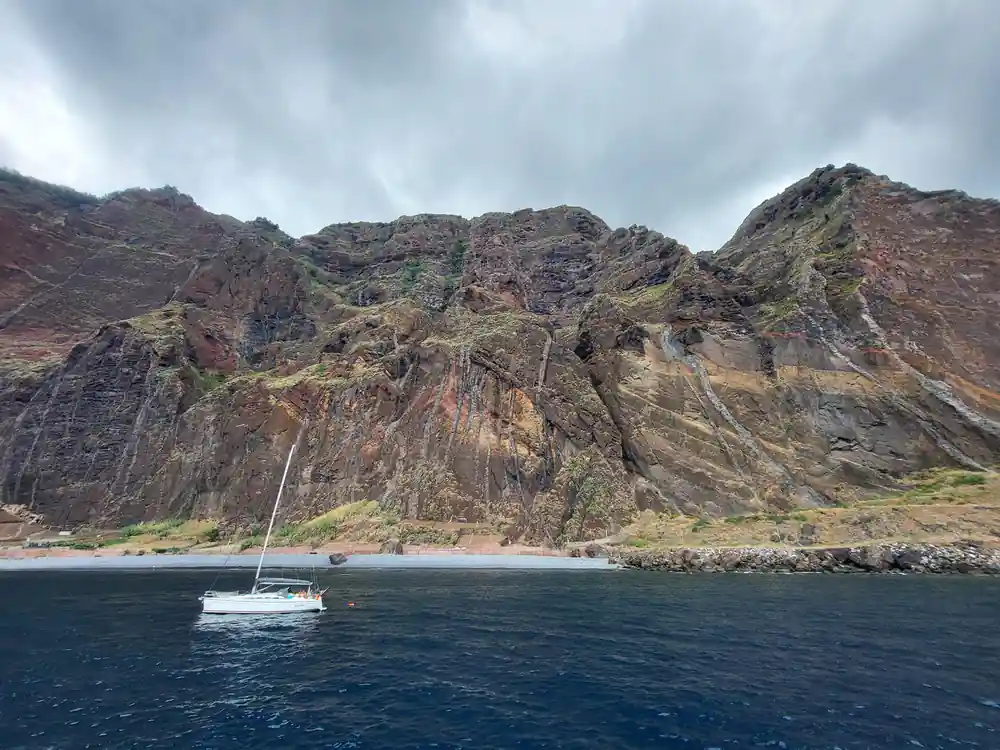
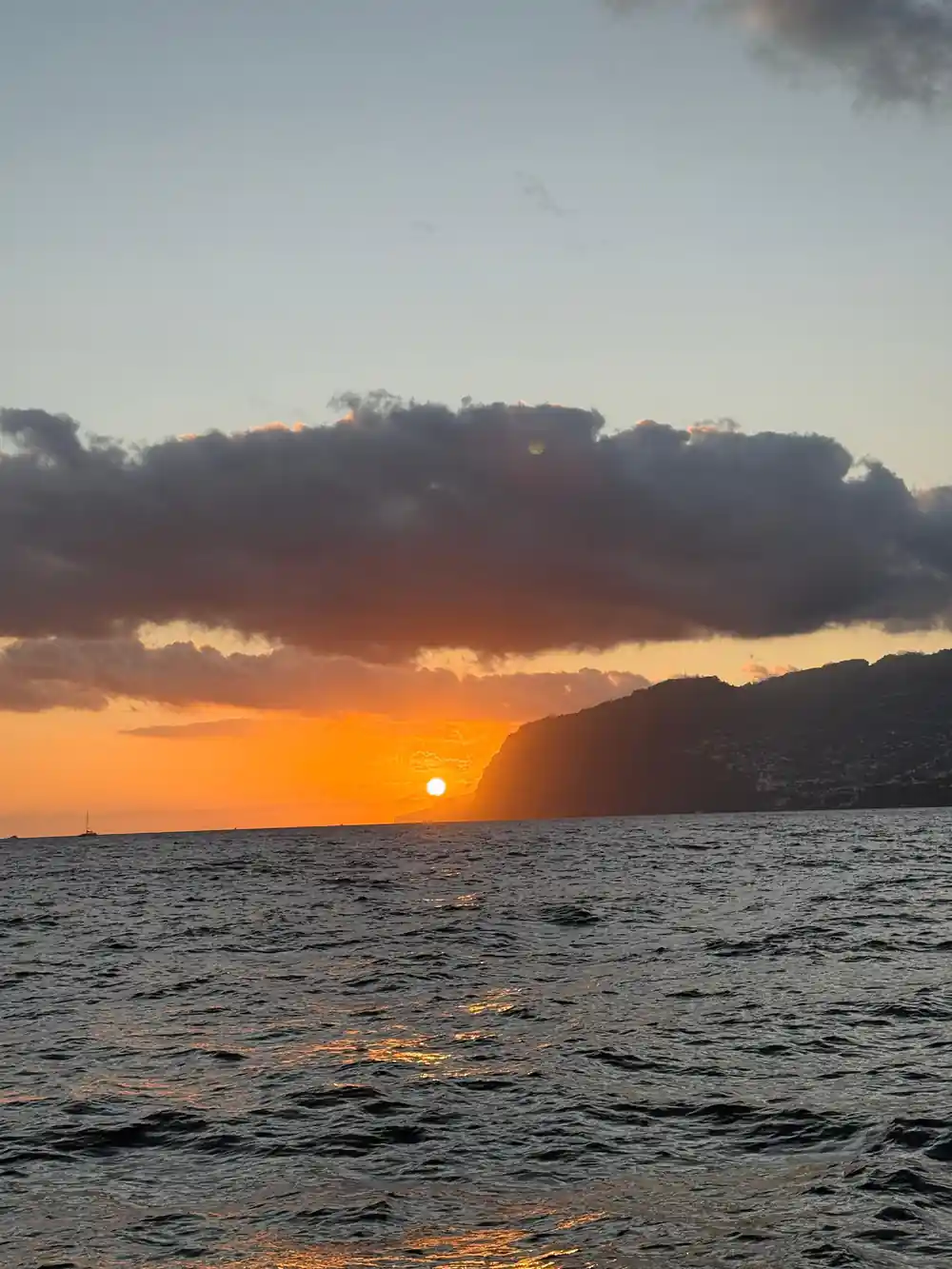
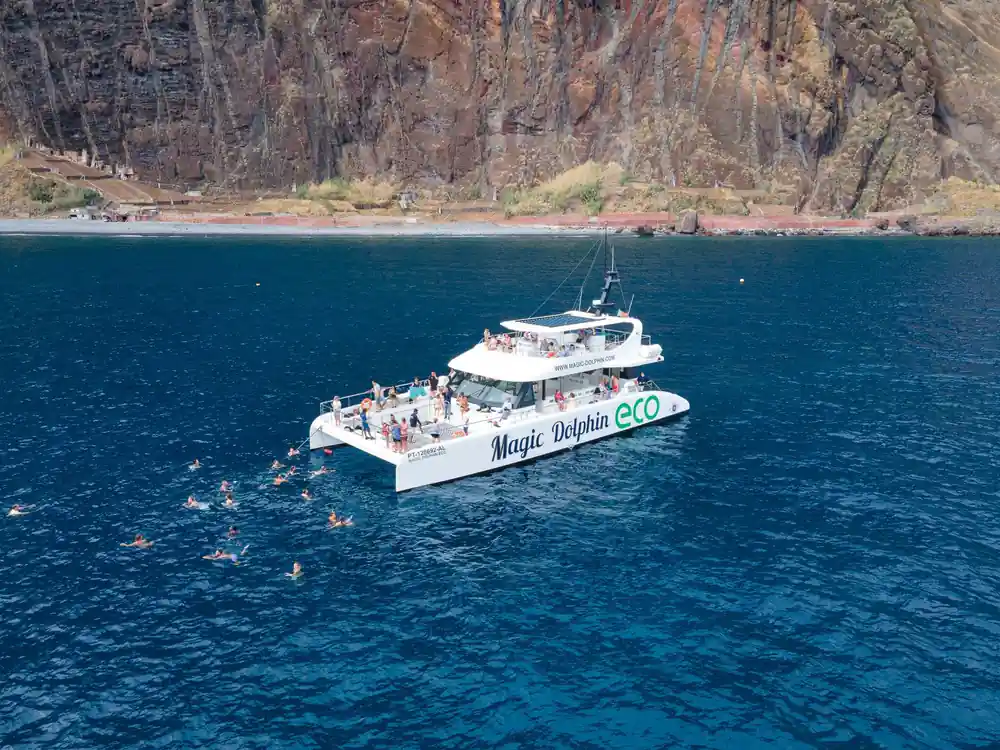
After the wildlife the boat continues west to Cabo Girao, the cliff that dominates this stretch of the Madeiran coast, a sheer 580 metre wall and among the tallest sea cliffs anywhere in Europe. Seen from a boat at its foot rather than from the skywalk above, it is a genuinely difficult thing to take in.
Some trips include time in the water there. One guest describes the crew allowing a fifteen-minute swim, though snorkelling equipment is not provided and the operator recommends bringing your own for hygiene. If you want to get in, pack a mask.
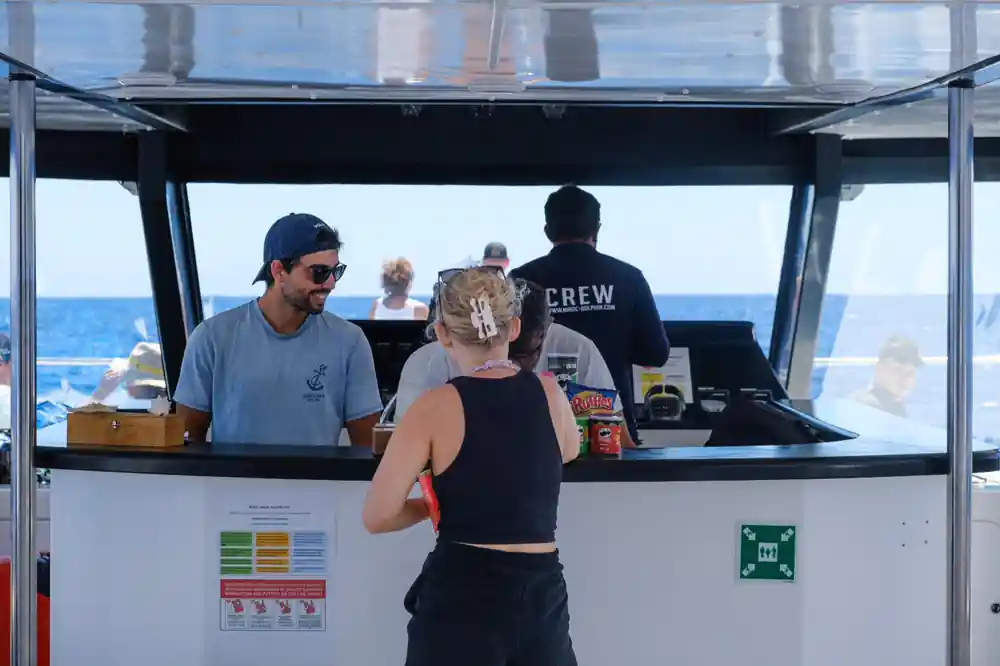
Three things are explicitly not included and all three are worth knowing before the day. Transportation is not provided and all guests make their own way to the departure point. Food and drinks are not included, though there are bars aboard selling both.
And snorkelling gear is not supplied, with the operator recommending you bring your own for hygiene and comfort. That is a reasonable position and an unusual one, and it is the exclusion most likely to disappoint somebody who assumed otherwise at the moment the boat anchors.
None of the three is unreasonable and together they say something about how the operation is run. A company that would rather you brought your own mask than handed you one that has been on forty other faces this week is thinking about the same things the eco framing implies. The bars on board mean nobody goes without a drink; the absence of transfers means nobody is waiting on a minibus they did not need. Read them as choices rather than as gaps and they make more sense. It is a straightforward proposition, and the boat does what it says it does.
Questions
More to do
Guides
How they find them
The boat
Doing it properly
The cliff
Getting there
In the water
On board
The sailing