Key takeaways
- The shape of the morning is set by what the land spotters find, not by a timetable.
- Observers on Madeira's cliffs scan the water and radio the boat towards what they can see.
- The sailing takes in the Cabo Girao cliff face and the deeper water where the animals are.
- Conditions allowing, the catamaran stops and shuts down so people can get into the Atlantic.
Why there is no fixed itinerary
Because the subjects move. A trip that promised the same three hours every morning would either be lying about what it finds or ignoring what it found in order to keep to a plan. Neither is what you want from a boat whose purpose is meeting wild animals.
What is fixed is the frame. You leave from the Funchal waterfront, you are out for three hours, and you come back to the same place. Inside that frame the route is written by the sea on the day, and the crew make the calls as the information arrives.
This is worth knowing before you board because it changes what a good trip looks like. The measure is not whether the morning matched a description. It is whether the boat went to the right place when there was somewhere right to go.
Leaving the marina
The first ten minutes are a view of Funchal that residents rarely get. The city is built up a natural amphitheatre and from the water that geography reads instantly, with the old town low at one end, the hotels climbing west, and terraces and houses stacked up the slopes until the cloud line takes over.
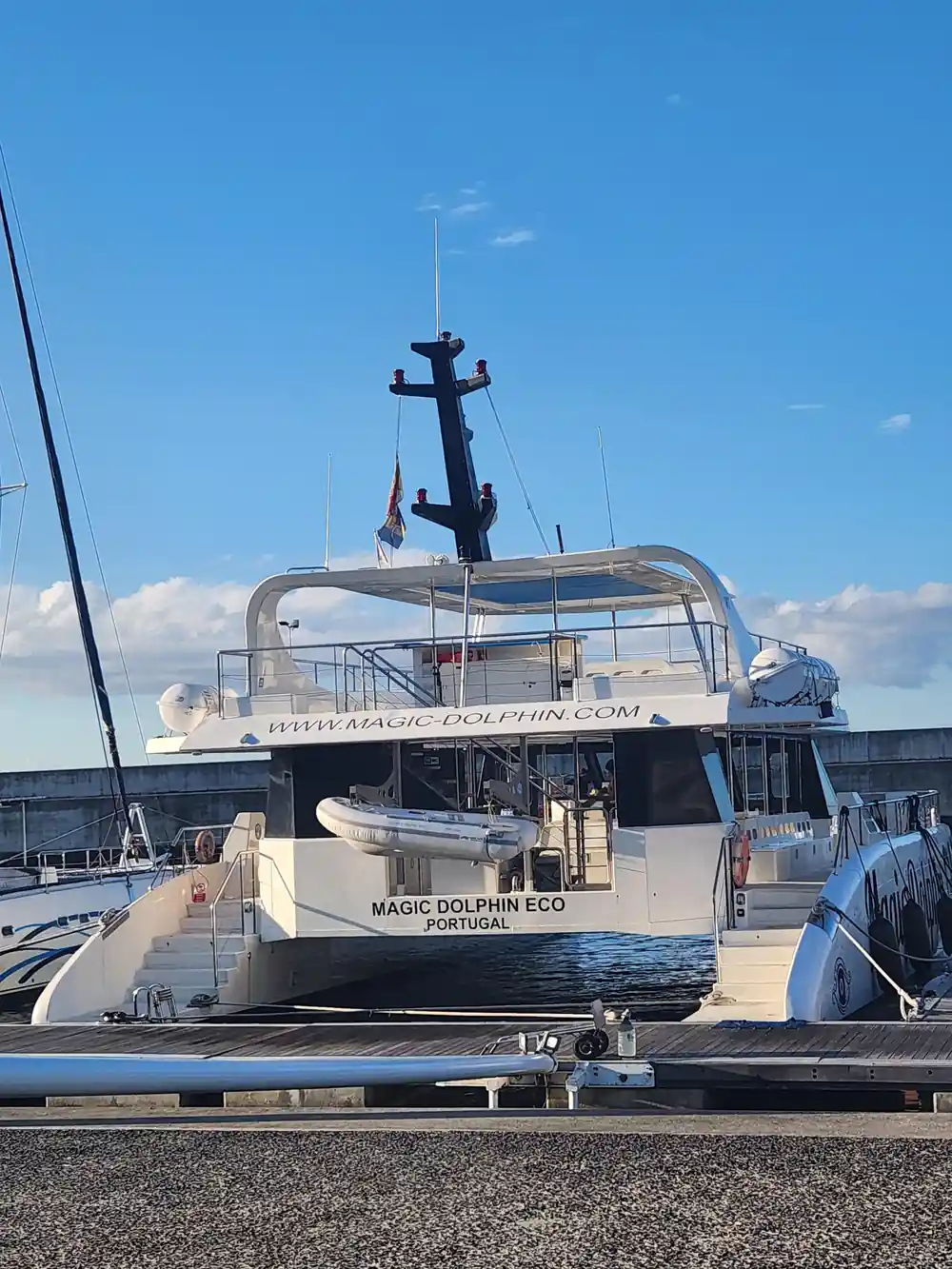
It is also when you settle into wherever you have chosen to sit. The trampoline nets slung between the hulls are the best seat on the boat for most people, with the water passing directly underneath. The upper deck gives height and the widest view. The shaded benches are the sensible option in August.
Move around during the trip rather than committing for three hours. A catamaran is stable enough to walk on comfortably, and the boat looks different from each of its positions.
How the spotters change the odds
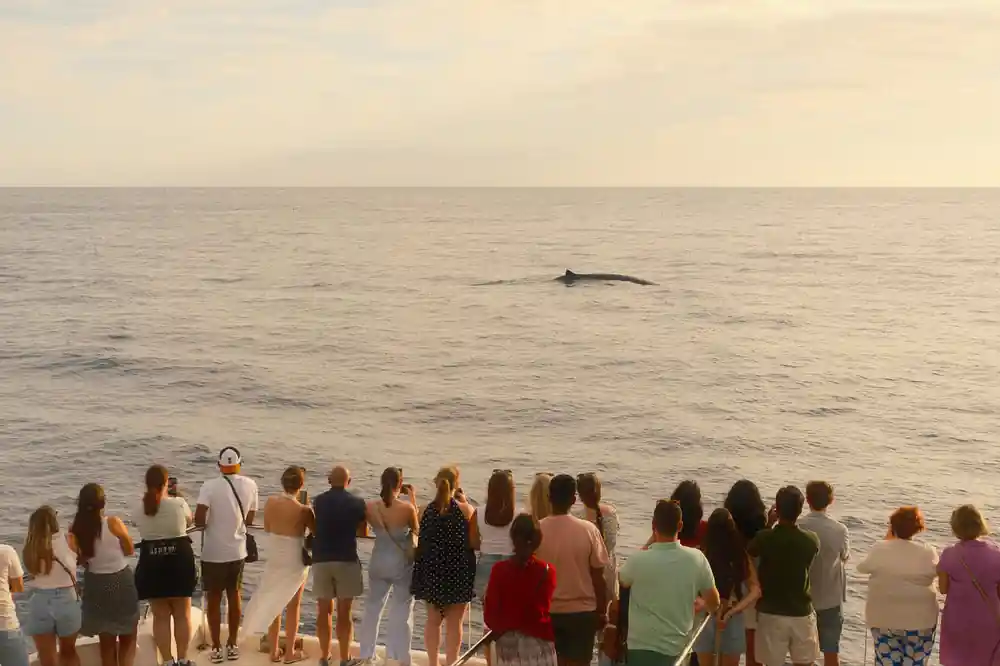
There are observers on the high ground above the coast with binoculars, scanning water that the boat cannot see all of at once. From a cliff several hundred metres up, a blow or a fin or a change in the surface texture reads clearly across a wide area of sea.
They pass what they find to the boat by radio. So instead of the catamaran wandering hopefully and looking for luck, it is being pointed. It leaves harbour with an idea of where to go and it updates that idea continuously while it is out.
The effect is a better hit rate without going faster or further, which matters because speed and distance are exactly what stress marine mammals. A trip guided from the land does less chasing, and does it in the right direction.
The approach, and why it is slow
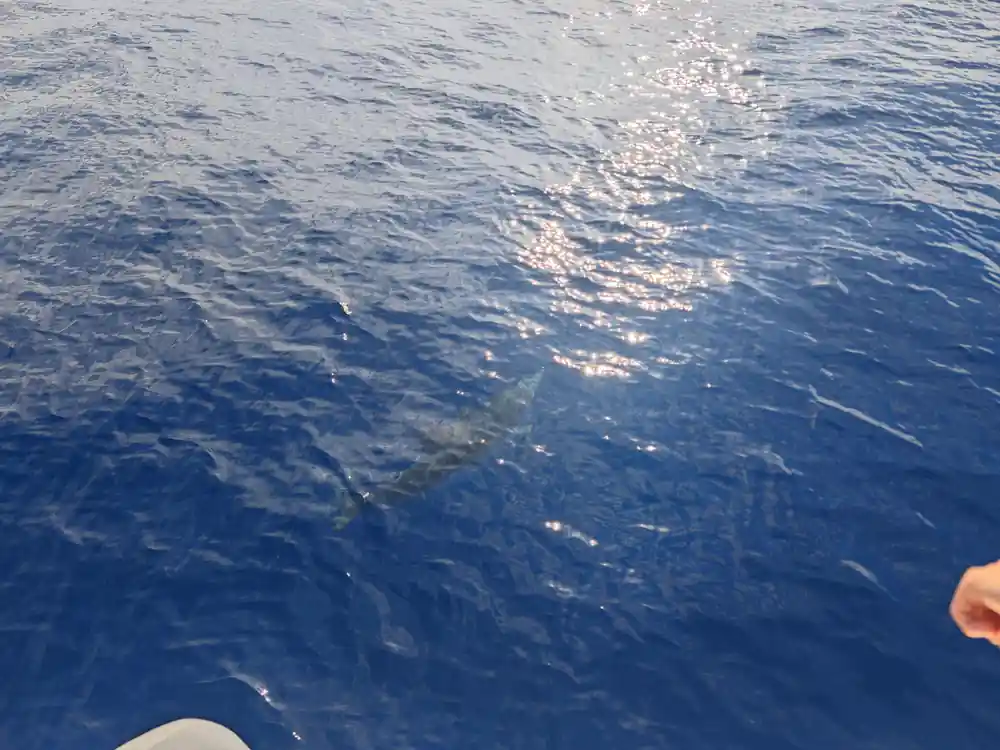
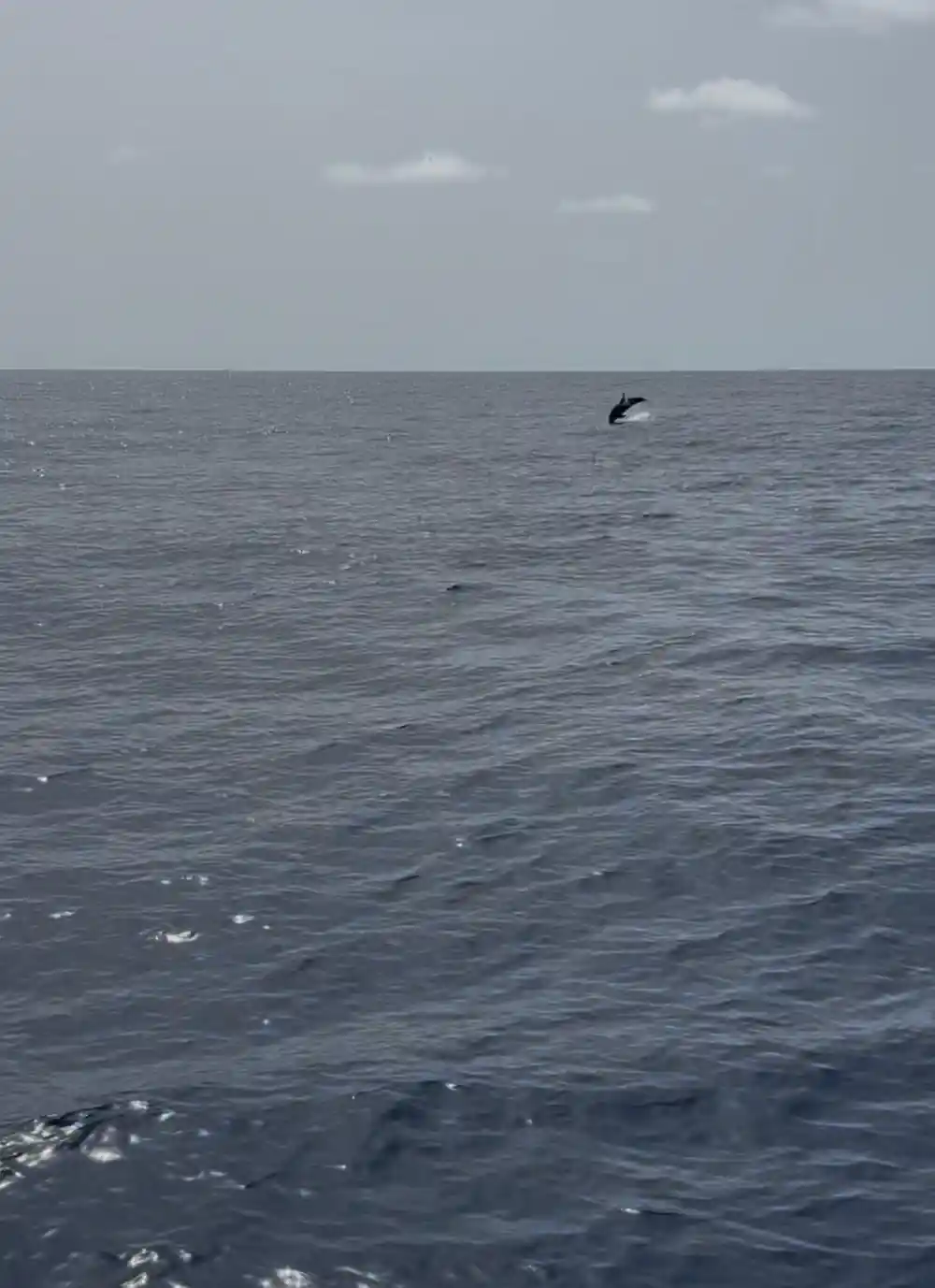
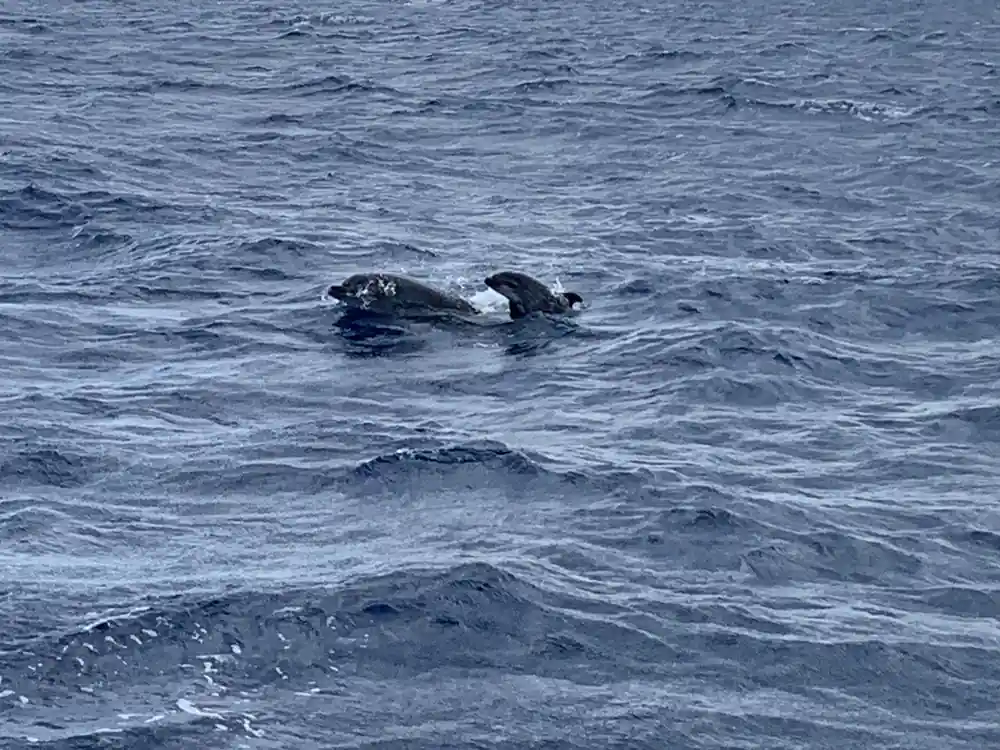
When something is found, the catamaran closes the distance and then eases off well short of it. The engines come down, the boat settles, and everything after that is on the animals' terms. Dolphins frequently choose to come and look, which is the whole reason the approach is done this way.
It can feel counterintuitive if you were expecting to be driven right up to something. Sitting a respectful distance off with the engines quiet is the version that produces the better encounter, because a pod that has not been crowded stays where it is and often comes closer of its own accord.
It is also the version that leaves the animals available tomorrow. A boat that harasses a resident pod for a better photograph today is spending down a resource that every operator on the island depends on.
The cliffs and the coast
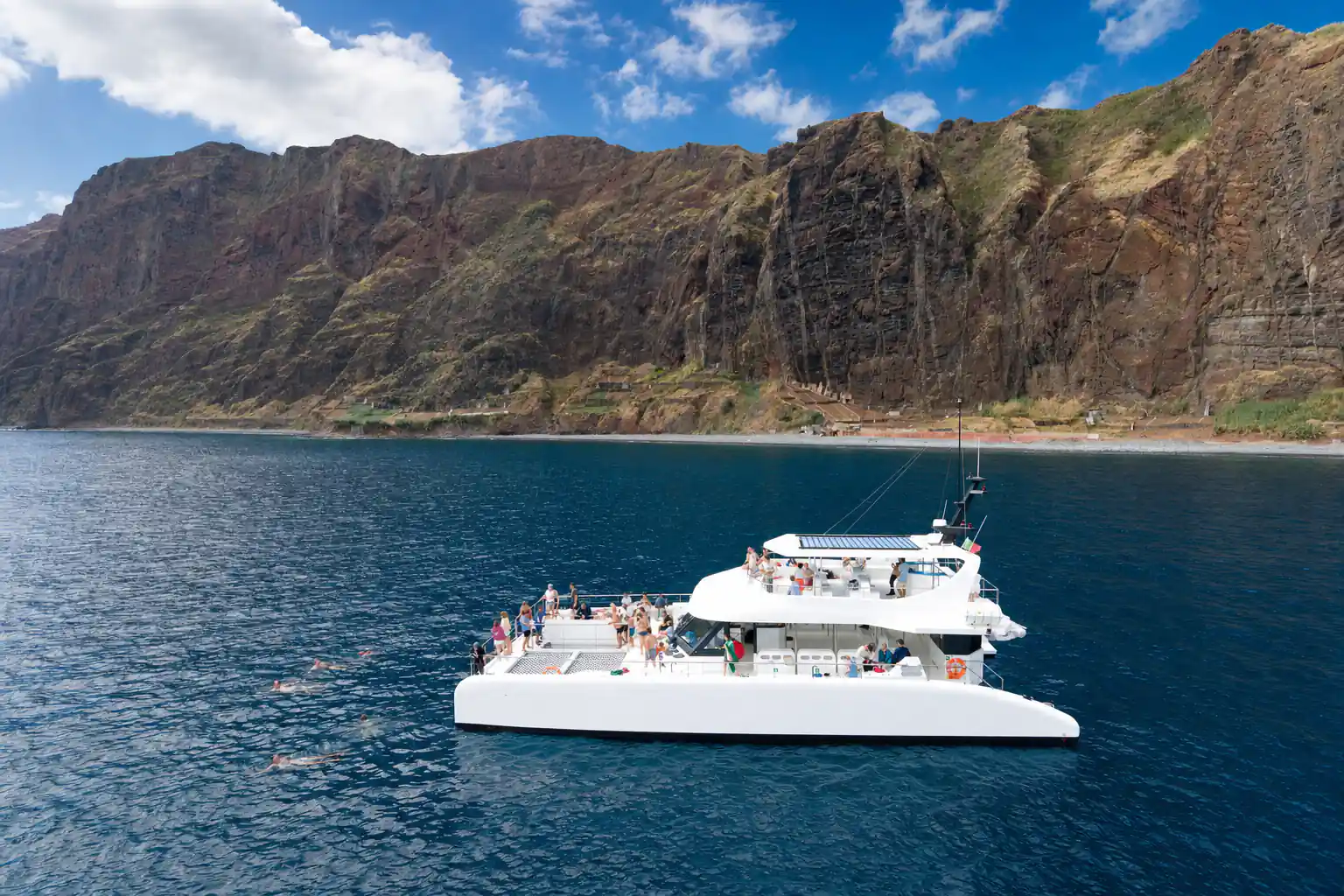
Between sightings, the sailing takes in Madeira's south coast, which is a serious piece of scenery in its own right. The headline is the Cabo Girao cliff face, among the highest sea cliffs in Europe, rising almost sheer out of the water.
From the top of it, on the glass skywalk that most visitors use, you look down. From a boat at the base you look up, and the difference is enormous. Height is very hard to read from above and completely legible from below, and this is the view that gives you the number in your stomach rather than on a sign.
The coast either side of it is volcanic rock, terracing that climbs improbably far up, and small settlements wedged into whatever flat ground exists. Very little of it is visible from the roads, which run inland or through tunnels for most of their length.
The swim stop
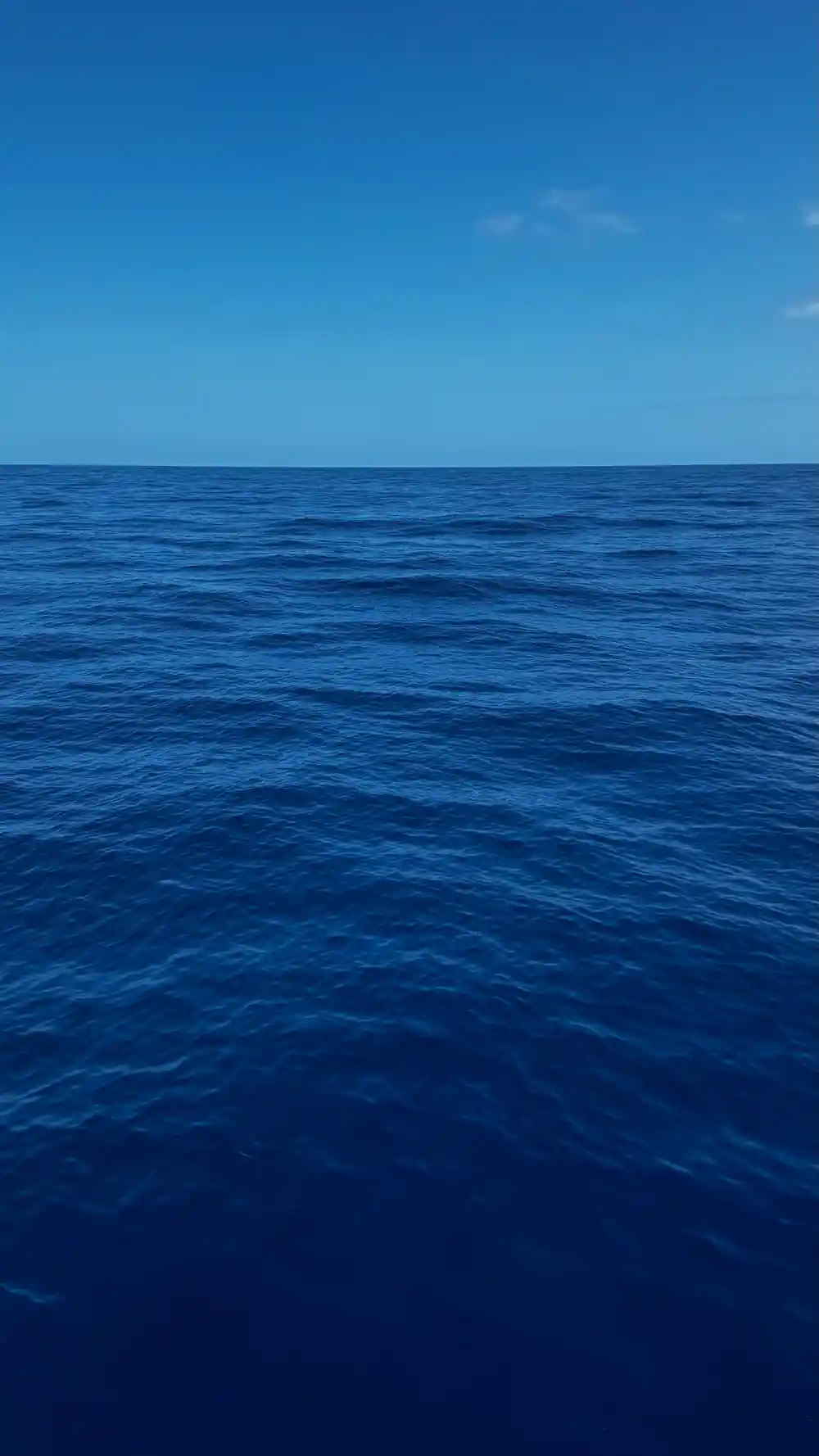
Conditions allowing, the boat stops somewhere suitable and shuts down, and anyone who wants to can go down the ladder into open Atlantic water. It is not a beach and there is no shallow end, so it suits confident swimmers and the crew will say so honestly.
For the people who go in, it is usually the part they talk about afterwards. Deep blue water, an island filling the horizon, and a boat that has switched off. For the people who stay aboard, a stationary catamaran with the engines quiet is one of the more peaceful places to sit in Madeira.
Whether it happens at all is the sea's decision rather than anybody's preference. Swell and wind decide it, and the crew make that call out on the water rather than at the quay before you leave.
What a blank morning looks like
It happens, because these are wild animals and no operator on any coast can promise them. The relevant question is what the trip is worth when the water stays empty, and this one holds up better than most.
You still get the coast from the sea, the cliff face from the bottom, three hours on a catamaran built for comfort rather than speed, and probably a swim in the Atlantic. The spotters have still done everything possible to change the odds in your favour.
And blank mornings are the minority. The waters off Madeira hold resident dolphin populations year round and are on the route of migrating whales, which is why the island became a serious watching destination in the first place. Most sailings find something. This one is looking with more eyes than most.