Key takeaways
- The swim stop happens when sea conditions allow it. It is a genuine part of the trip, not a guarantee.
- Mask and snorkel are not on the equipment list, so pack them if you want to see below the surface.
- This is a stop in deep water off the coast, not a sheltered lagoon or a beach entry.
- Nobody has to go in. Staying aboard while others swim is entirely normal on a sailing like this.
What weather permitting actually means
It means the crew decide on the day, out on the water, based on what the sea is doing. It is not a legal disclaimer stapled to a sure thing. Some sailings stop and swim, some do not, and the difference is swell and wind rather than anybody's mood.
This matters for how you set your expectations before you step aboard. Treat the swim as a very good possibility rather than a fixture, and a cancelled stop becomes a shrug instead of a disappointment. Treat it as guaranteed and you have handed the Atlantic the power to ruin your morning.
The upside of an honest policy is that when the stop does happen, it happens in conditions somebody experienced judged suitable. A boat that promised a swim regardless would eventually have to deliver one in water where it was a bad idea.
Deep water, not a beach
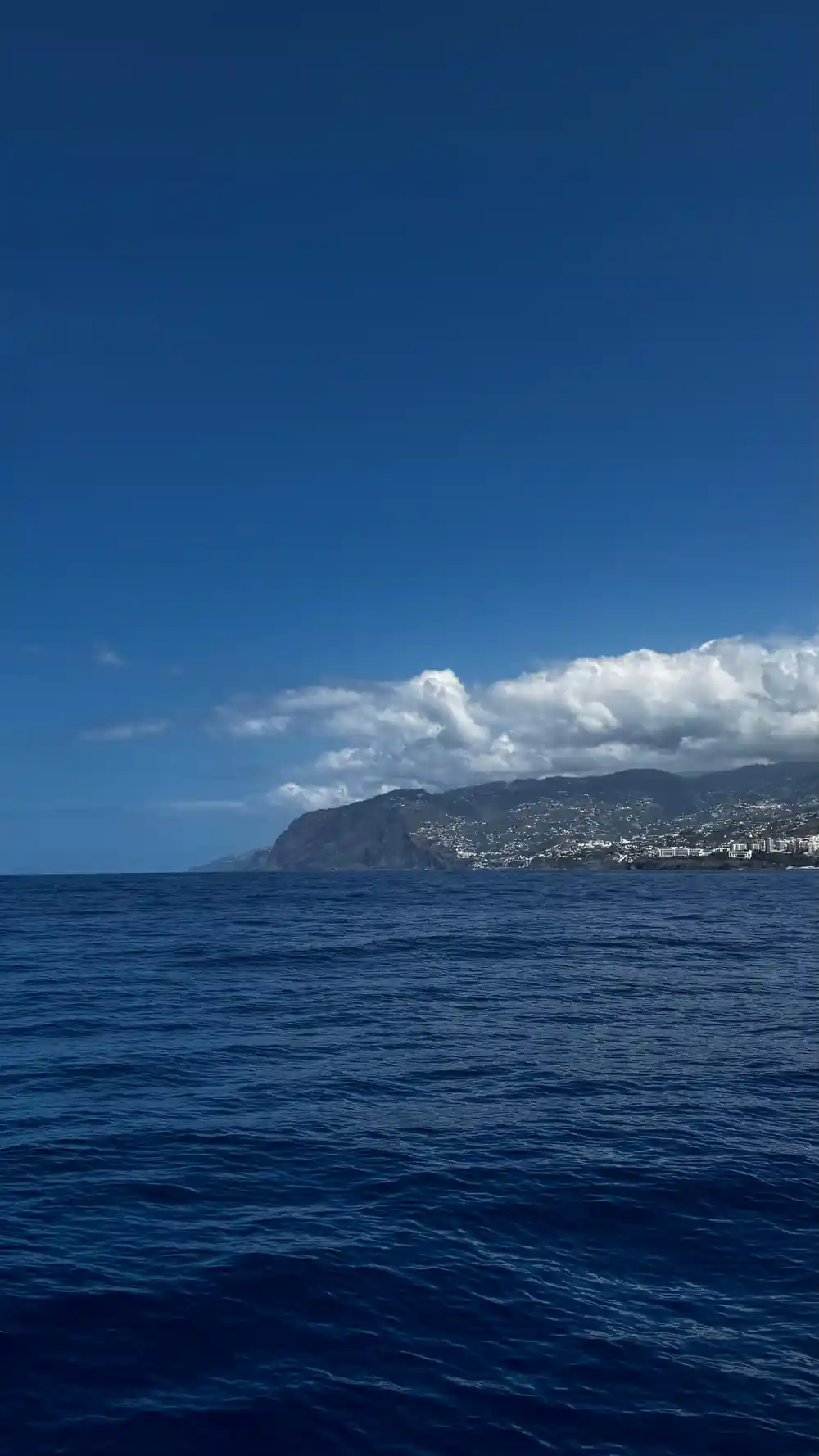
Madeira's coast drops away fast. The island is the top of a volcano and the seabed follows the same logic, which is why whales and dolphins come as close inshore here as they do. It also means a swim stop off Funchal is a stop in genuinely deep water.
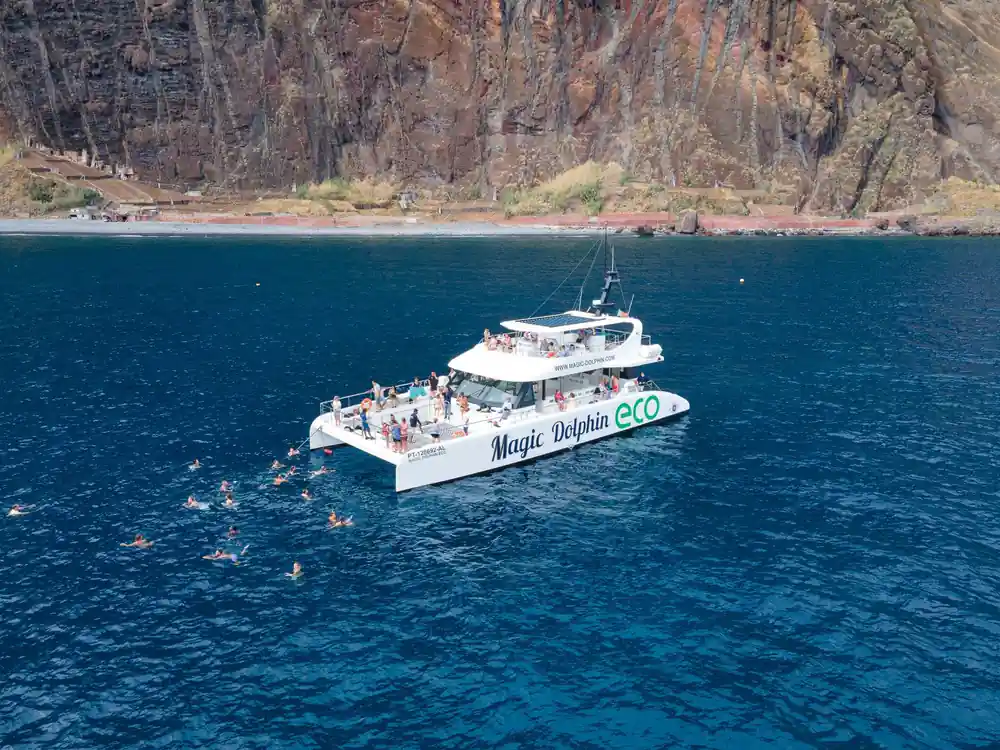
There is no wading in, no standing up to adjust a mask, no sandy shallow to retreat to. You go down a ladder into blue and you come back up the same ladder. For a confident swimmer that is the appeal. For a nervous one it is the thing to know in advance.
The visibility is the compensation. Open Atlantic water off a volcanic island is clear in a way that a busy beach with sand and surf simply is not, and the light comes down through it a long way.
What you might actually see
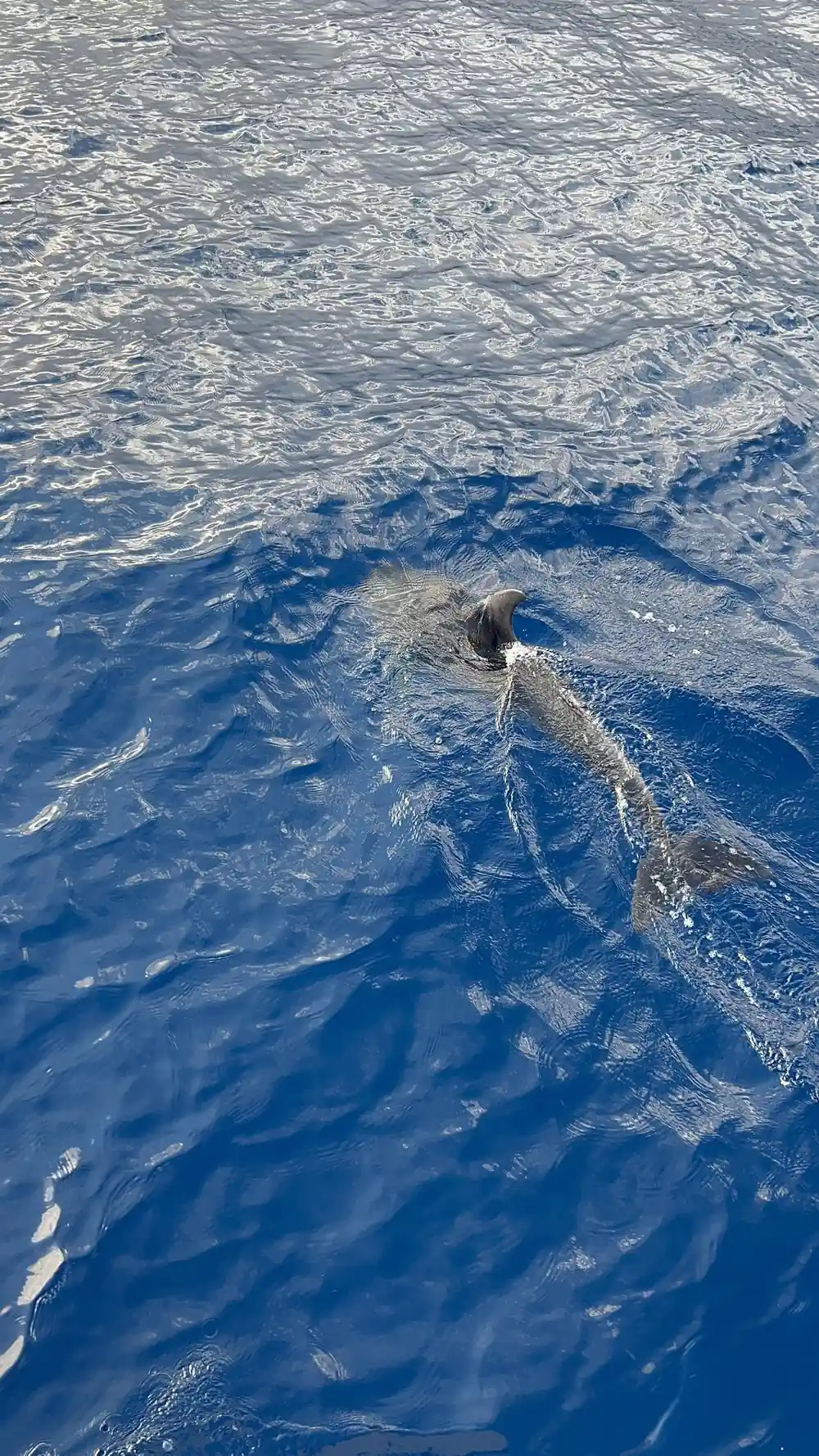
Less than you would over a coral reef and more than you would expect from open water. Madeira's marine life runs to Atlantic species rather than tropical ones, so the palette is silver and blue rather than the yellows and pinks of the Red Sea or the Caribbean.
Small schooling fish tend to gather around anything floating, and a stationary catamaran is exactly that. Look down rather than around, and look for movement rather than colour. The scale is different out here and it takes a minute for your eye to adjust to how far you can see.
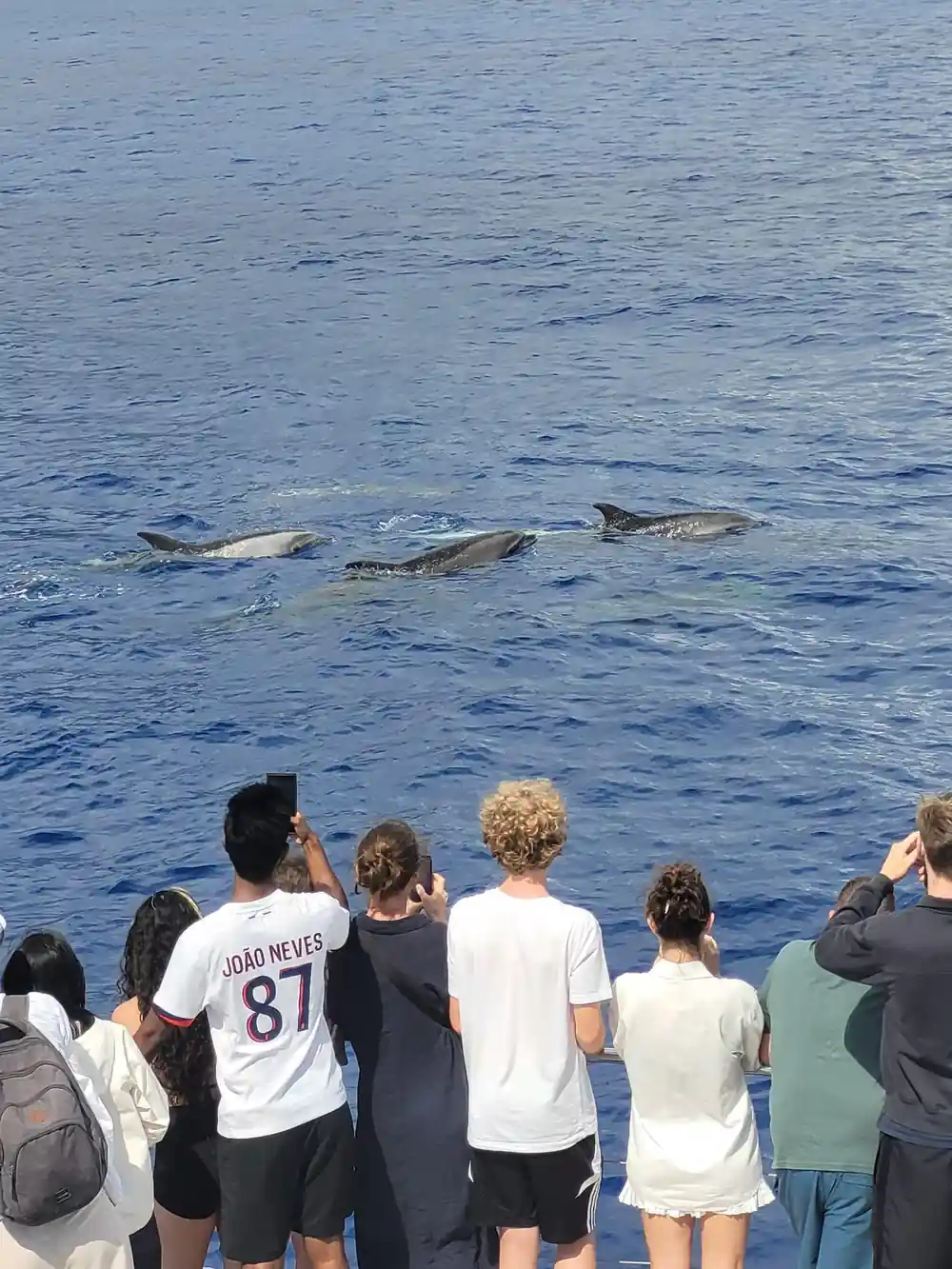
This is a swim stop on a wildlife cruise rather than a dedicated snorkelling excursion, and it is worth holding that distinction. The point is being in the Atlantic off Madeira with the island filling the horizon, which is a better thing than a checklist of fish.
Bring your own mask
Snorkel equipment does not appear on the inclusions, so plan to bring it. A simple mask that fits your face is worth more than an elaborate one that does not, and the fit test takes seconds. Hold it to your face without the strap, breathe in through your nose, and see whether it stays put.
Buying at home rather than at the marina gives you time to do that test properly and to reject the first one that leaks. It also means a mask you already know, rather than one you are meeting for the first time on a moving deck.
If you forget, going in without a mask is still worth doing. Floating in deep Atlantic water with the island above you is most of the experience, and the fish were always the smaller half of it.
Who should think twice
Anyone who is not comfortable swimming in deep water without a footing. That is not a judgement, it is just what this stop is. There is no shallow end and no gradual entry, and the honest thing is to say so rather than to imply otherwise.
Children can absolutely take part with a competent adult alongside them, and a buoyancy aid makes a considerable difference to how relaxed everybody is. Ask the crew what they carry rather than assuming, and ask before the boat leaves rather than at the ladder.
Staying aboard is a completely normal choice and plenty of people make it. The upper deck during a swim stop is a quiet and pleasant place to be, with the engines off and everyone else in the water.
Sun, salt and the practical bits
Apply sun cream before you get on the boat rather than after you get out of the water, because a wet back and a moving deck is the worst possible combination for doing it properly. Reef-safe formulations are the decent choice given where you are putting them.
Wear swimwear under your clothes from the start. Changing space on a catamaran is limited and the swim window is not long enough to spend a chunk of it queuing. A quick-dry towel takes up less room than a hotel one and dries faster in the wind on the way back.
Rinse your gear in fresh water when you get back. Salt is unforgiving on mask straps and snorkel valves, and a mask that failed on its second outing usually failed because nobody washed it after the first.
Where the swim sits in the trip
Inside three hours that also has to cover getting out to where the animals are, the watching itself, and the return. The swim is one element of a sailing rather than its purpose, and the timing flexes with what the wildlife is doing on the day.
That is the right priority. A pod of dolphins found late is worth more than a rigid schedule, and a crew that broke off from a good sighting to keep a swim stop on time would be making the wrong call.
So take the swim as a bonus that usually lands. When it does, you get fifteen or twenty minutes in water most visitors to Madeira only ever look at from a promenade, off a boat that has already shown you the coast from an angle no road reaches.
See which sailings have space
Check datesBefore you book
Is snorkel gear provided?
Does the swim stop always happen?
How deep is the water?
How do you get in and out?
Can children swim?
What will I see underwater?
Can I stay on board instead?
What to bring
- Mask and snorkel, not provided
- Reef-safe sun cream, applied early
- Swimwear worn under your clothes
Key facts
- Swim stopWeather permitting
- WaterOpen Atlantic
- EntryBoarding ladder
- GearBring your own