Key takeaways
- Sound carries extraordinarily well underwater, and engine noise is the main way a vessel disturbs a whale or dolphin.
- How near a boat may go, how many may gather round one pod and how long each may linger are all set in law rather than left to skippers.
- The operator states that its crew and guides are fully certified, which is the baseline rather than a boast.
- A boat that knows where to go spends far less time searching under power across a wide area.
Why noise is the problem
Cetaceans live in an acoustic world. Water carries sound roughly four and a half times faster than air and over vastly greater distances, and whales and dolphins use it for almost everything: finding food, navigating, keeping a group together, communicating across kilometres of open ocean.
A boat engine is loud in exactly that medium. It does not merely startle an animal in the moment; it fills the frequency range they depend on, which is why the effect is described as masking. A pod trying to coordinate a hunt inside a wall of engine noise is like a conversation next to roadworks. That is the harm that matters, and it is invisible from the deck.
What the rules cover
Madeira, like most serious whale watching destinations, regulates the activity rather than trusting it. They set a minimum distance, cap how many boats may gather round one pod at once, limit the length of any single visit, and dictate the manner of every movement made nearby.
The manoeuvring part is the piece most visitors never think about. A boat should approach slowly and from the side rather than head-on, hold a parallel course, and avoid sudden changes of speed or direction. It must not cut across a group's path, and it must never come between a mother and a calf. None of that is discretionary.
What a good approach looks like
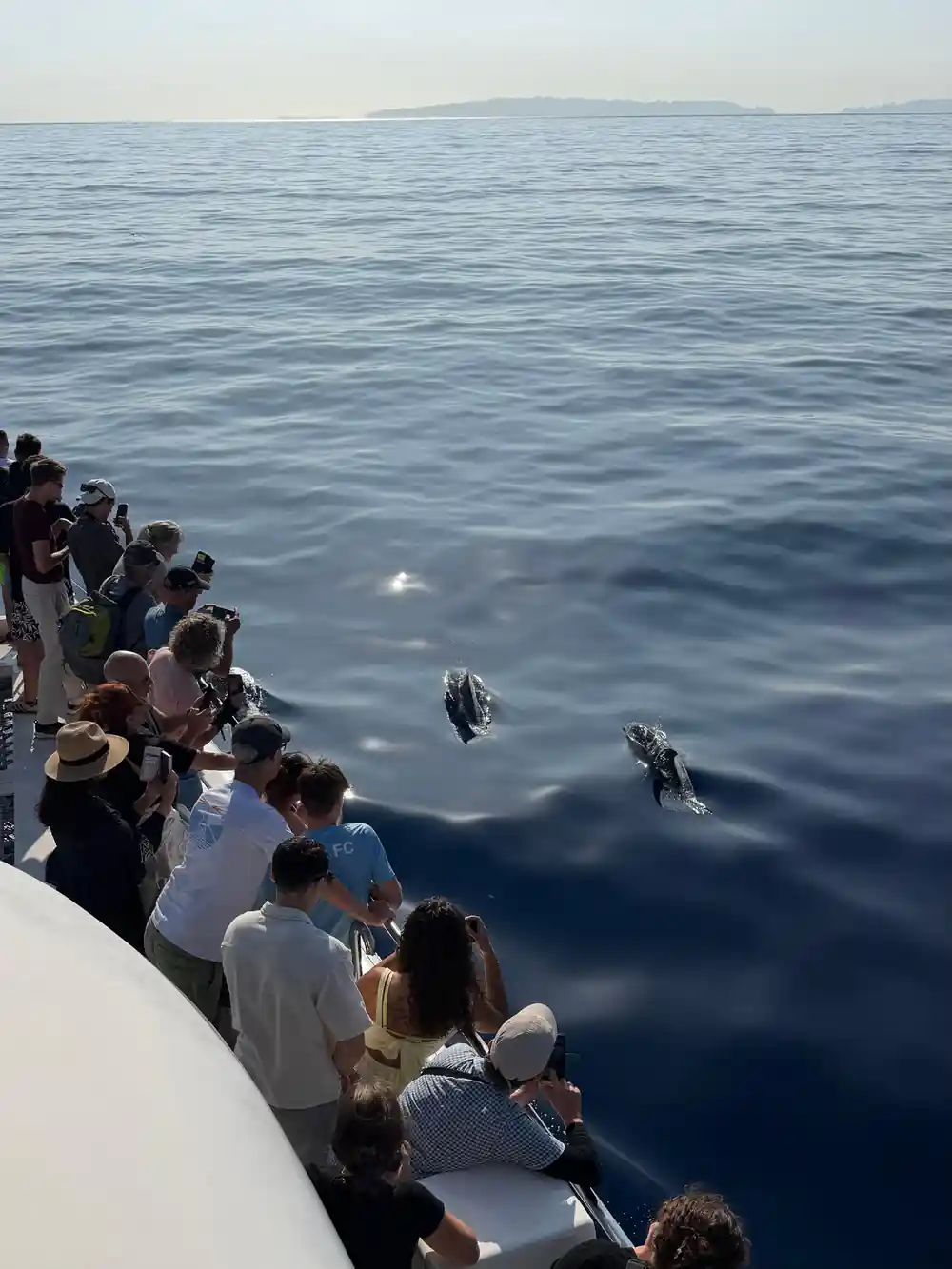
Slower and duller than you might expect, which is the point. The vessel comes down to low speed well before it arrives, settles into position off to the side of the group, and then stops doing things. Engines idle or off, no repositioning, no jockeying for a better angle.
Then everybody waits. More often than not the pod closes the gap itself, and that is the version people remember. The restraint on the bridge is what bought it. One guest here describes exactly that: holding position and letting the dolphins decide. Stillness on the bridge is not idleness. It is the whole technique, and it looks like nothing happening.
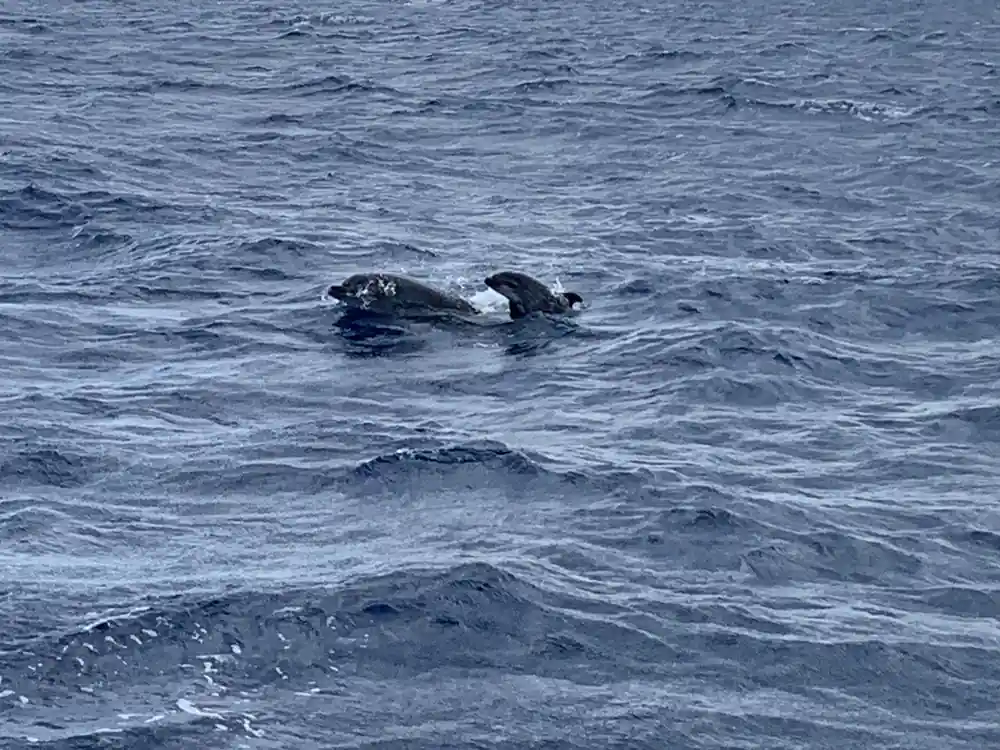
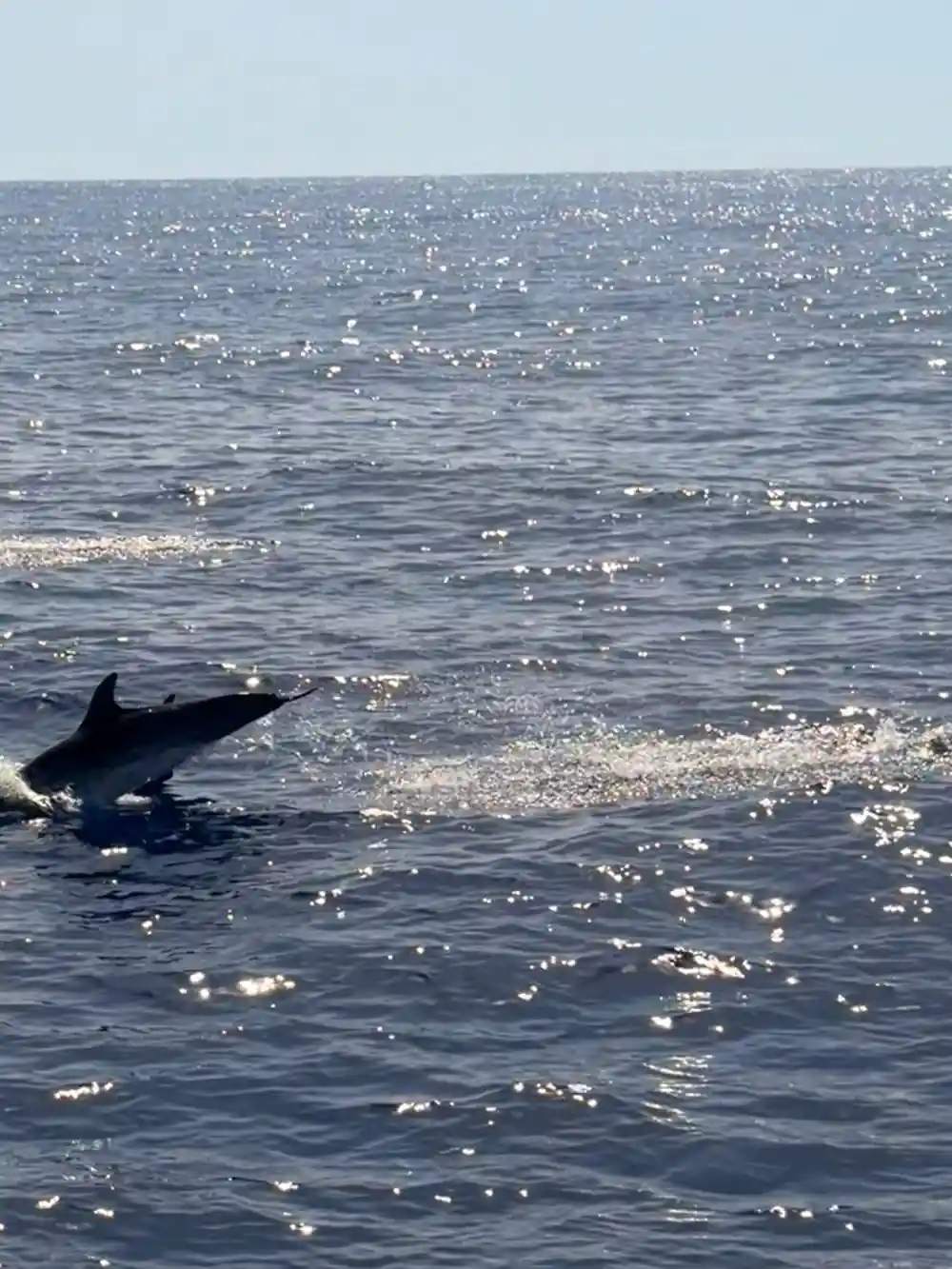
Dolphins alongside a vessel holding position off Funchal
How the spotters help
This is the part that connects the operator's method to its ethics rather than leaving them as separate claims. A boat searching blind covers a great deal of water under power, spreading engine noise across a wide area for a long time, and may never find anything.
A boat with a position from shore runs once, arrives, approaches quietly and leaves. That is dramatically less acoustic footprint for the same encounter, and it is the strongest argument that the ecological framing here is structural rather than decorative. Less searching is less noise, and less noise is the entire ballgame.
Certification, and what it means
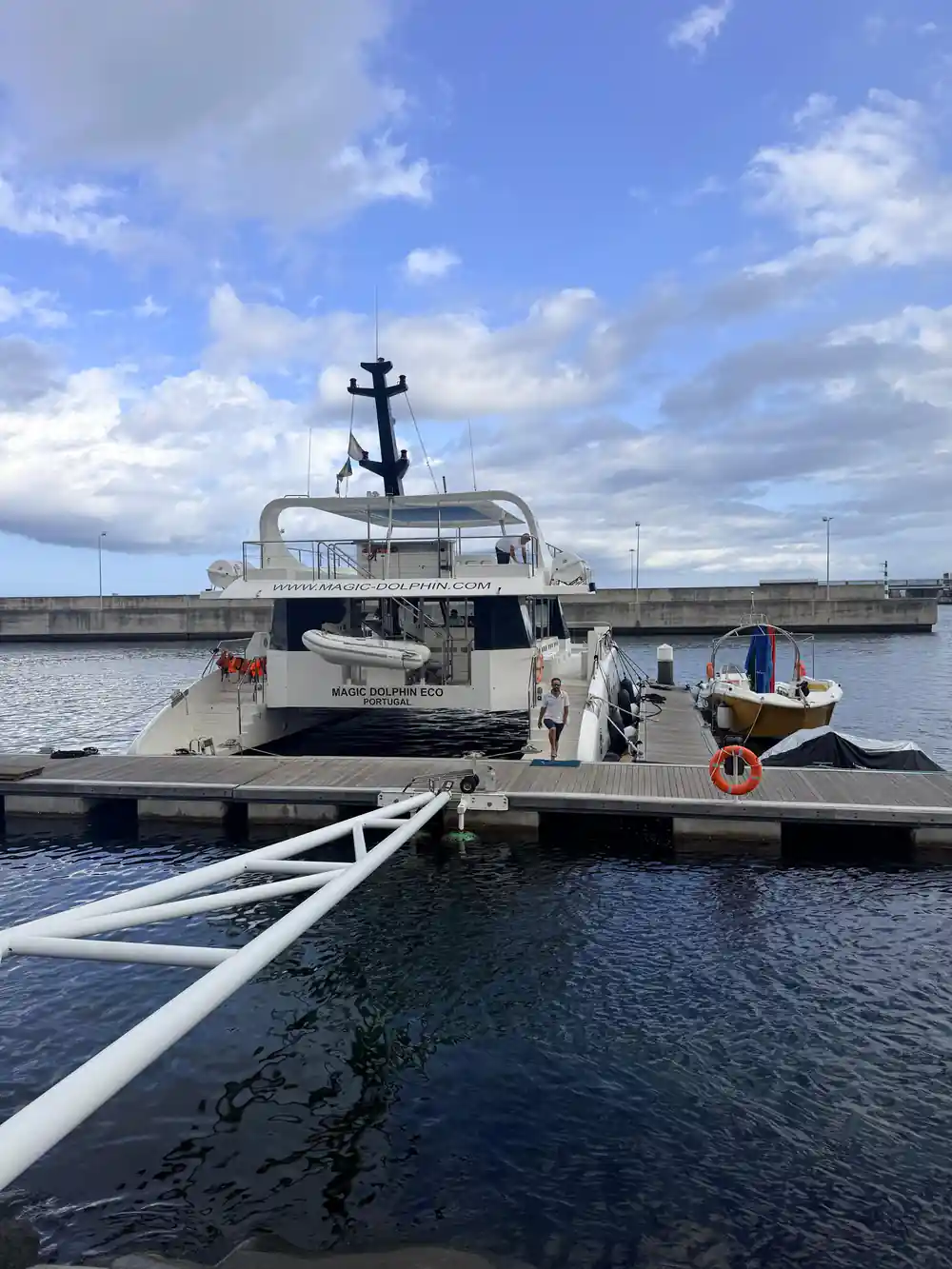
The operator states that its crew and guides are fully certified. In a regulated activity that is the entry requirement rather than a distinction, but it is worth confirming because it means the people making decisions on the water have been trained in what the rules require.
The practical value shows in the moments a passenger cannot judge. Knowing when a group is showing signs of disturbance, when to back off, and when an approach would be within the letter of the rules but wrong in spirit, are all judgements that come from training rather than instinct.
What passengers can do
Mostly, be patient and do not push. The pressure crews feel to get closer, stay longer or chase something comes from the people who paid, and the good ones resist it, but a boatload asking for more makes the right call harder to make.
Keep noise down when animals are close, since sound above water does transmit into it. Throw nothing overboard. And if the boat leaves a sighting before you wanted it to, understand why rather than complaining, because that departure is what lets another operator take a turn without the group being followed all afternoon.
Does watching harm them at all
It depends entirely on how it is done, and pretending otherwise would be dishonest. Unregulated watching measurably changes behaviour: animals dive longer, move faster, spend less time feeding and resting, and eventually leave areas where the pressure is constant. Those effects are documented and real.
Where distance is held, visits are kept short and engines stay quiet, the measurable impact on pods already used to boats looks small. There is also a genuine argument on the other side: a live dolphin generating tourism income year after year creates a constituency for protecting it that nothing else provides. Done properly, this is part of why these animals are valued at all.
The honest summary is that this is an activity worth doing carefully rather than one worth avoiding. Madeira has built a real industry on animals that were once hunted from these same clifftops, and the people who now scan the sea for a living have every reason to want the population healthy next season. That alignment of interest is not a guarantee of good behaviour, which is why the regulations exist. But it does mean the incentives point the right way, which is more than can be said for most human uses of a wild animal.